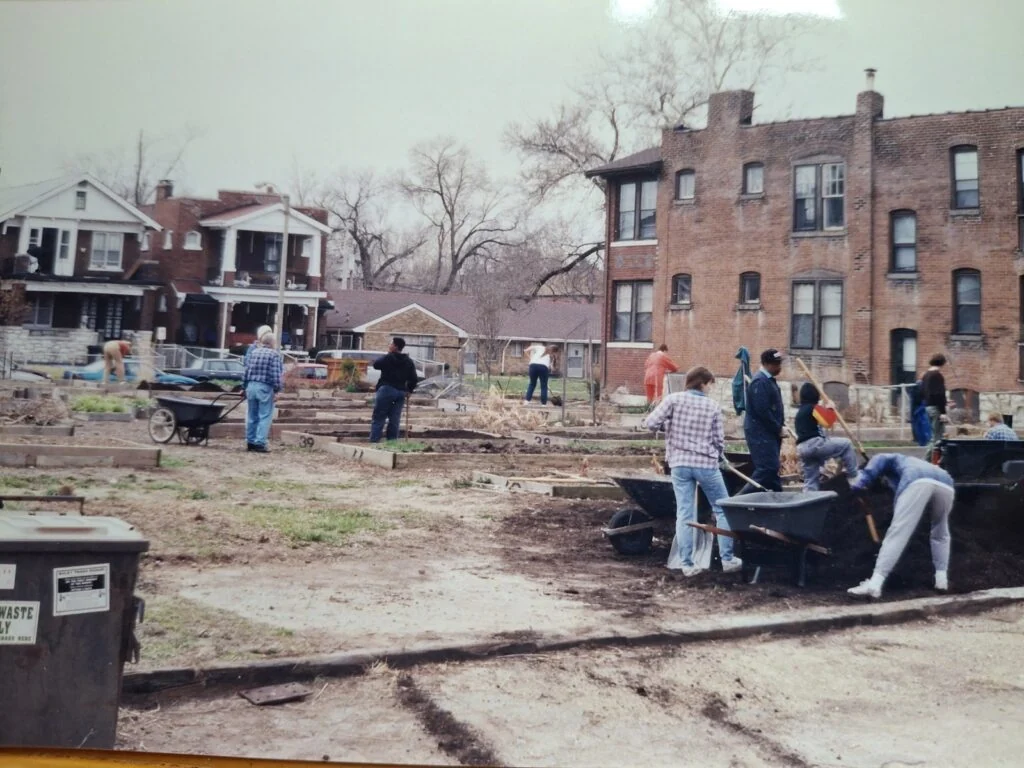
Founding the McPherson Garden, circa 1997
Nobody plans on meeting neighbors over a tomato patch, but that is often how it happens at our community gardens. Put a retiree, a recent arrival and a teenager in the same garden, and before long they’re swapping recipes, pest tips, and stories about where they grew up.
The ease of making those connections is what makes community gardens more than a source of produce. Education researcher Lillian Katz observed that people rarely just connect; they have to connect over something, like a shared activity or interest. Few activities are as direct and meaningful as getting something to grow.
You can find vegetable gardens all over St. Louis: in schoolyards, outside food pantries, in church courtyards and sometimes right in the middle of a residential block. Most began in places no one was using. The tradition goes back more than a century, to the severe depression of the 1890s that were the impetus for Detroit’s “potato patches,” and the victory gardens of two world wars.
Detroit mayor Hazen Pingree sponsored gardens on vacant lots to help residents survive the economic crisis that resulted from the Panic of 1893. The idea spread fast. Urban schools used gardens to teach children responsibility and connect them with nature, and during both World Wars, Americans planted victory gardens to free up food for export abroad. By 1944, home gardens were producing an estimated 40 percent of the nation’s vegetables.
In the 1970s and 80s, rust-belt cities like Detroit and St. Louis leased abandoned lots to community groups for beautification. The effort focused on two key benefits: improving food access in areas grocery stores had left and building a stronger sense of connection within communities. In other words, about fifty percent gardening and fifty percent community.
That’s exactly what happened in St. Louis in the 80s and 90s, when organizations like Seed St. Louis (then called Gateway to Gardening) worked with municipal land reutilization authorities to lease abandoned lots to gardeners. For the cost of a water tap and some raised beds, neighbors turned nuisance lots into vegetable gardens. These gardens brought together neighbors of many backgrounds, beautified blocks and gave everyone a place to grow healthy food. They also gave isolated groups, like the elderly and newcomers, a place for social contact and for trading tips, recipes and traditions.
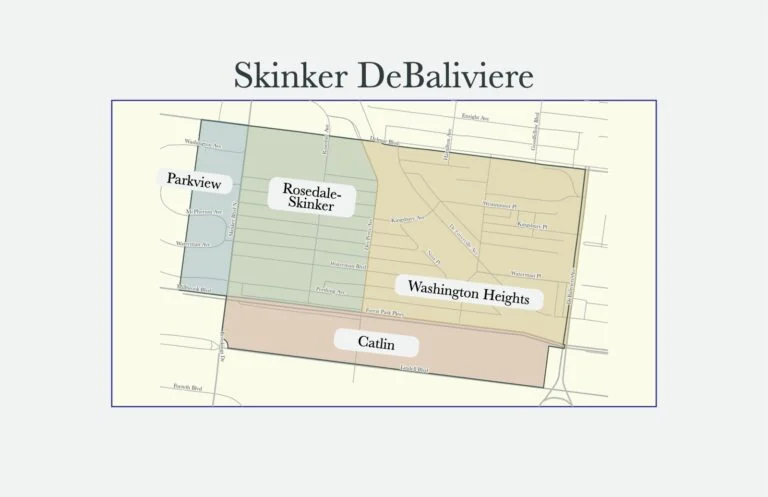
By the early 90s, Seed St. Louis, city government and other organizations had founded 70 new community gardens. Not long after, a group of Skinker DeBaliviere neighbors, including Andy Cross, Ruth Beckloff and Gwen Lazard, together with the Skinker DeBaliviere Community Council, developed plans for a garden on the 5100 block of McPherson.
The following year, neighbors on DeGiverville, including Jessie and Mary Brown and Ronnie Halliburton, developed a second garden on the 5800 block of Westminster. They named it Block Unit 1035 Community Garden to honor the Urban League’s block units and their role in developing economic, social and civil equality.
The McPherson Garden and Block Unit 1035 Garden have much in common. Both offer raised beds to rent for the growing season, water, compost and some shared tools and supplies. McPherson draws many neighbors from west of the MetroLink cut. Block Unit 1035 originally drew heavily from DeGiverville and points east but there are no rules about who belongs where and you can request a bed at either. The biggest difference is that Block Unit 1035 is fenced and McPherson is not.
You might not realize it now, but these gardens replaced problems. The vacant lots were like missing teeth, giving a block a gap-toothed appearance. They were filled with debris and garbage and often became magnets for illegal dumping. The gardens aren’t perfect, though. Membership rises and falls: people sometimes join because the concept is appealing, but when the hottest part of summer hits and watering and weeding take more time, enthusiasm can fade. Tornadoes can drop branches and bridge construction can limit access.
According to Deena Lawrence, the outgoing leader of Block Unit 1035, none of these challenges outweigh the benefits of the two Skinker DeBaliviere community gardens: getting to know other gardeners, trading advice and knowledge about gardening. Not only will you have community connections, you’ll have grown better tomatoes than you can get in the supermarket because you grew them yourself.
To request a bed at Block Unit 1035 Community Garden, send an email to bu1035communitygarden@gmail.com. To request a bed at the McPherson Garden, contact Andy Cross.
Originally published in The Times of Skinker-DeBaliviere, November–December 2026.
Read this article in the original newspaper issue.