How Catlin, Parkview, Rosedale-Skinker and Washington Heights Constitute One Neighborhood
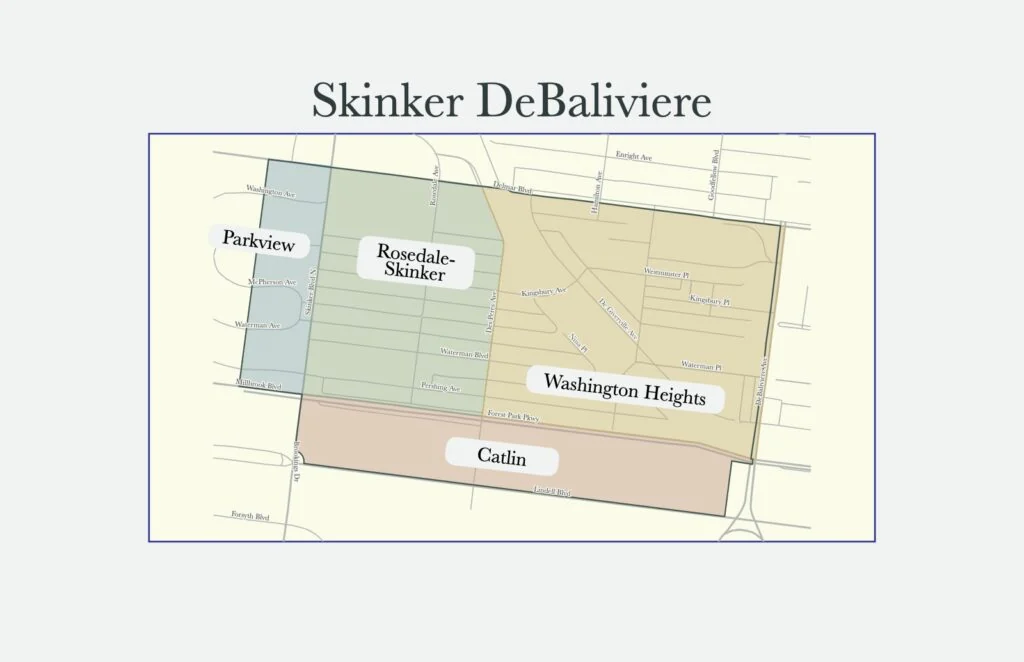
Skinker DeBaliviere is one neighborhood but, like Walt Whitman’s famous poem, it contains multitudes. The neighborhood is home to four sub-neighborhoods – Catlin, Parkview, Rosedale-Skinker and Washington Heights –each with its own history, architecture and ideas about what constitutes a reasonable amount of lawn.
The Catlin Tract is the long row of upscale homes facing Lindell Boulevard and backed by Forest Park Parkway and the lots are enormous. In Parkview to the west of Skinker, the streets curve elegantly amidst stately homes. In Rosedale-Skinker, houses and apartments coexist while, in Washington Heights, urban density is part of the plan.
All these areas meet in common spaces (like the Loop and Forest Park). They also share neighborhood organizations and have a history of discussing (and disagreeing about) what a neighborhood can mean.
I think of them as four siblings with the same surname but very different personalities.
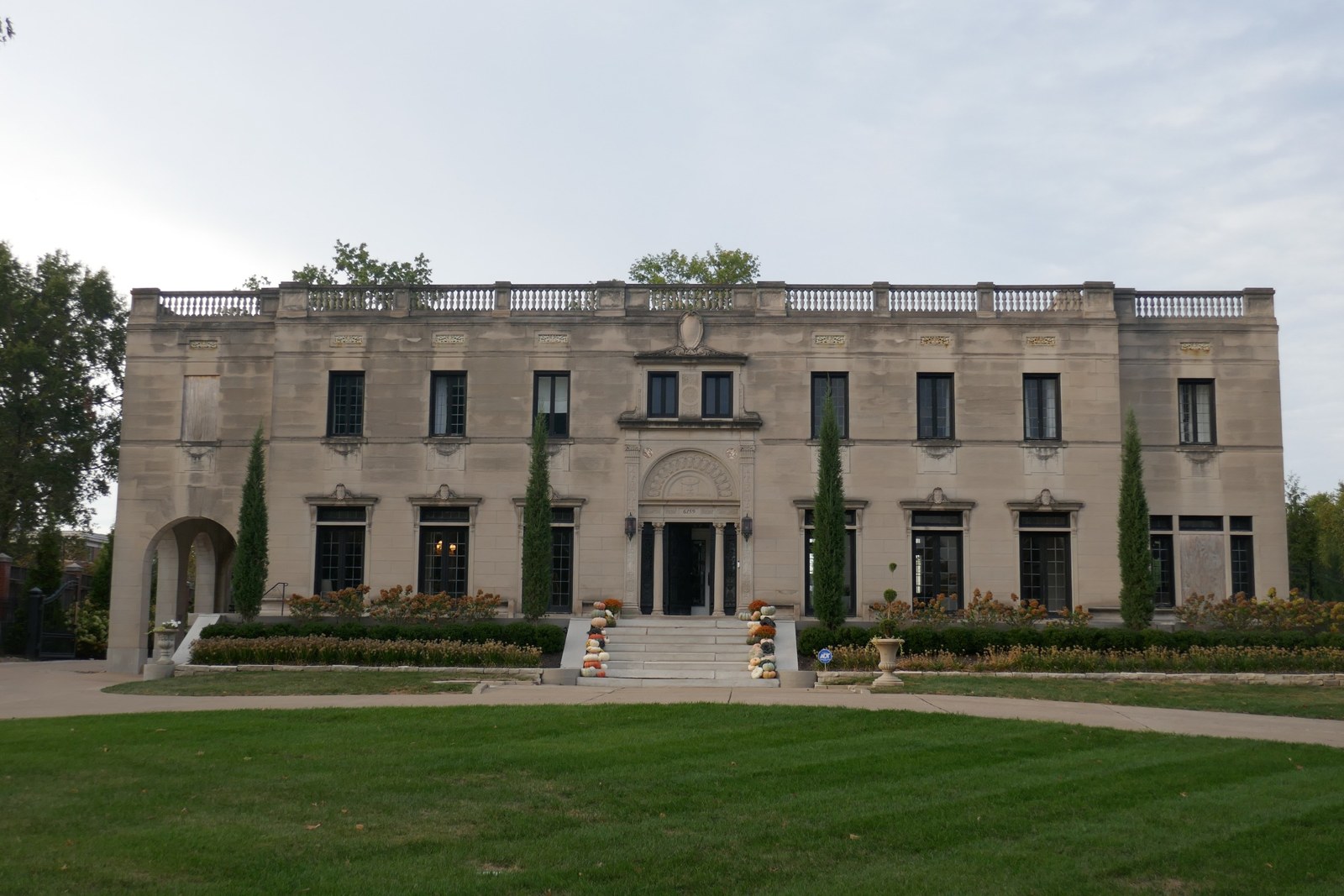
Catlin Tract: Can’t Beat the View
In 1909, William E. Hughes paid $50,000 for a building site in Catlin with 250 feet of frontage and 600 feet of depth. That’s roughly $1.8 million in 2025 dollars. Just for the land… the house was extra! He subsequently acquired another 100 feet for lawn space. This was clearly a guy who liked green spaces almost as much as he enjoyed impressing his neighbors.
By 1921, Catlin building restrictions required houses costing at least $12,500 (roughly $226,000 today). That was the minimum construction cost, not the price of admission to the entire property.
Catlin’s original proposition was straightforward: if you could afford a grand house across from Forest Park, you should surround it with enough grass to wow your friends and neighbors.
Parkview: Please Observe the Rules
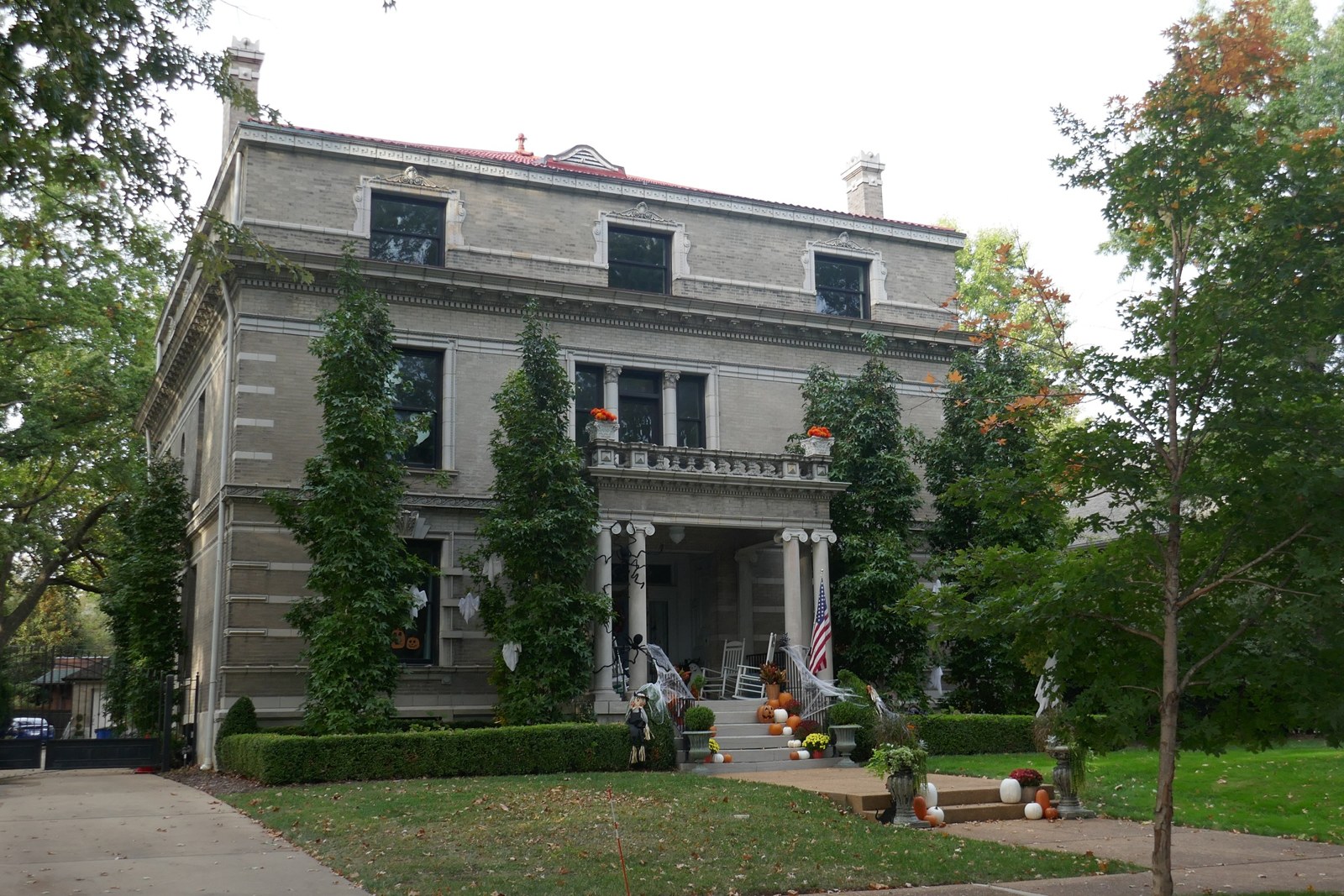
Parkview took a more lawyerly and meandering approach to exclusivity. The celebrated surveyor Julius Pitzman designed its curving streets, landscaped setting and generous residential lots. His plan rejected a street grid in favor of something more picturesque. Straight lines were for people who couldn’t afford a landscape architect.
Parkview’s prospectus included quite the list of regulations. There were building requirements, setbacks and restrictions on how homes could be used. Roomers and boarders were forbidden. Doctors and dentists could practice at home but other businesses were unwelcome.
Parkview has counted among its residents a future Missouri governor, Henry Stewart Caulfield, and St. Louis Mayor Bernard Dickmann. A drive through Parkview today still feels impressive but somehow intimidating.
Rosedale-Skinker: Practical, But Still Well–To–Do
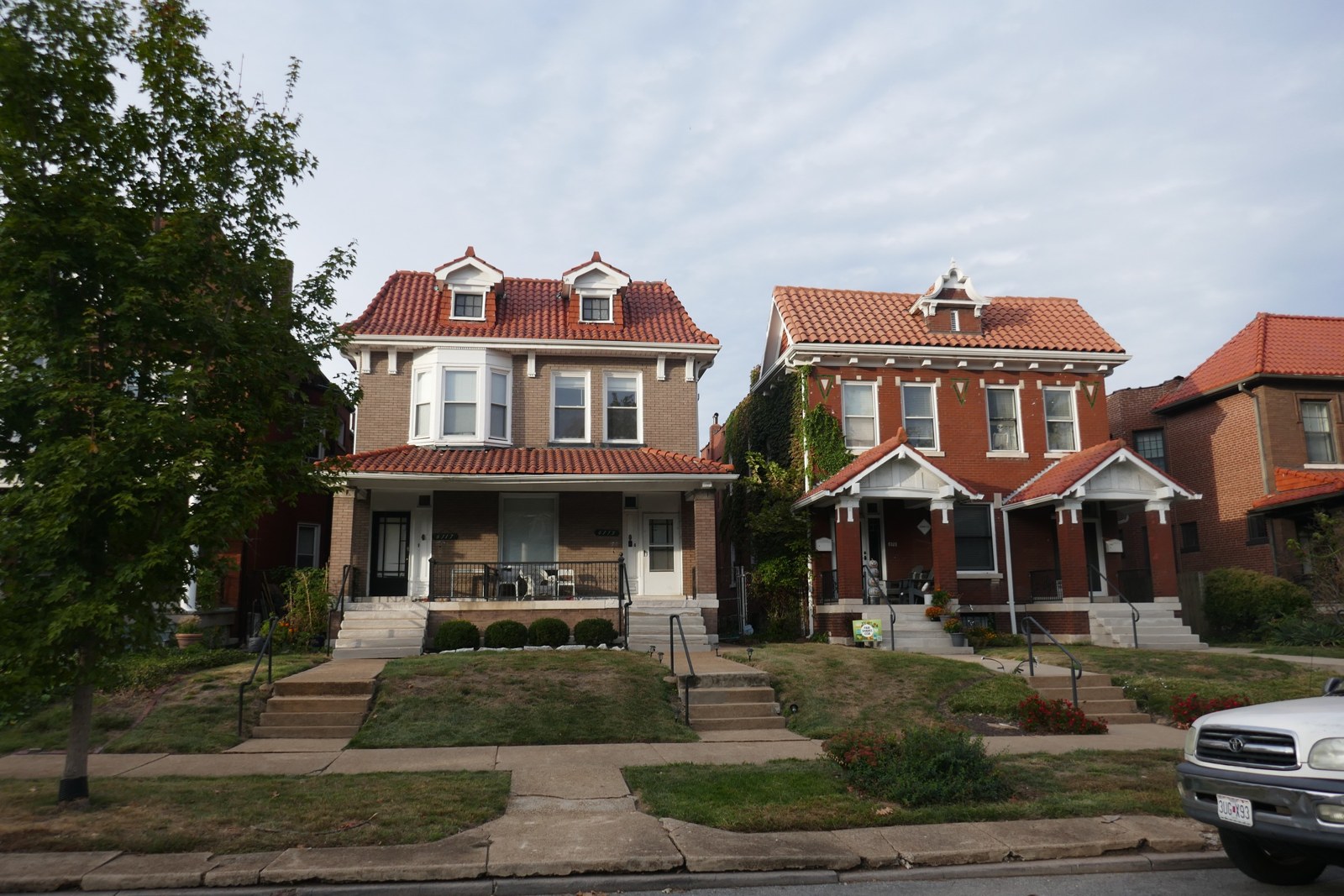
Rosedale-Skinker occupies a middle ground between Parkview’s carefully managed elegance and Washington Heights’ more urban character.
The name Washington Heights originally covered both Rosedale-Skinker and today’s Washington Heights, before the area quietly atomized.
Rosedale-Skinker is a mix of handsome single-family houses, duplexes and apartment buildings. Some of its apartments were positively luxurious. In 1921, a building at Skinker and Pershing advertised six-room apartments with mahogany interiors and maids’ rooms. Renting a home didn’t mean that the family was not well off.
Today, Rosedale is also where Washington University has concentrated much of its neighborhood apartment ownership. A 2025 property research project identified more than 350 university-affiliated housing units there, approximately 40 percent of the area’s canvassed units.
The university was and remains vital in keeping the neighborhood alive but it is also often resented for crowding out non-university investment and residents.
Washington Heights: Affordable and Connected
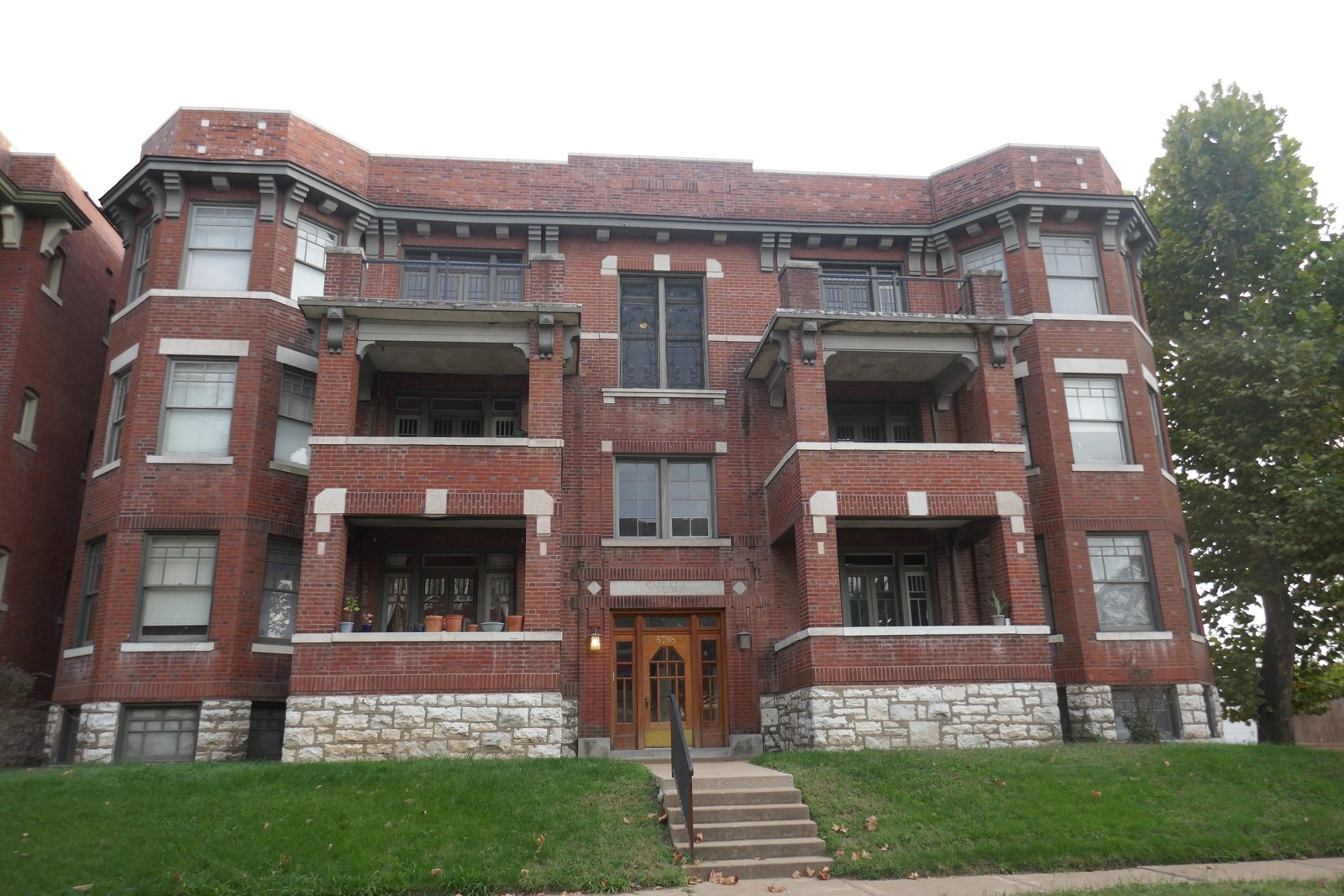
East of Des Peres lies Washington Heights, where the original developers allowed more households to share the same amount of land.
Houses, duplexes and apartment buildings are intermixed in a somewhat denser residential pattern. The neighborhood’s eastern edge also connects directly to DeBaliviere Avenue, historically home to shops, restaurants, entertainment and the occasional establishment that put truth to its nickname: the DeBaliviere Strip.
Washington Heights was not a bargain-basement alternative. Some of its houses are substantial and some apartment residents live quite comfortably. But smaller properties and multifamily buildings made different kinds of housing possible.
Its history also includes more than its fair share of the neighborhood’s organizing, integration and housing activism. Residents squared off against landlords, discriminatory real estate practices and deteriorating buildings, even as portions of the neighborhood actively resisted integration.
Washington Heights is home to a wide diversity of people and viewpoints. And in Skinker DeBaliviere, that’s a major civic virtue.
A Neighborhood In Search of Meaning
These four areas were never designed to be equal. And to be honest, they never will be.
They were designed to attract different buyers, accommodate different households and generate different returns for developers. Over time, their residents changed and their buildings acquired new uses. The neighborhood became something its original promoters couldn’t foresee.
Catlin will always have its lawns and Parkview its curves. Rosedale-Skinker and Washington Heights will always live with a mix of houses, duplexes and apartments that demonstrate the joys and angst of living close together.
But they all share the common grounds, especially the Delmar Loop, Forest Park and Washington University. They also share the neighborhood’s perpetual challenge – how to agree on what Skinker DeBaliviere means as a neighborhood and what it aspires to be as a community.
After more than a century, we’re still arguing about what it means to be Skinker DeBaliviere. And we always will because the initial layout of the neighborhood mixed together a range of price points and opportunities. They were just trying to make a profit and give people a place to live.
Given what they built, we’ll more than likely spend the next century figuring out how to live together in ways that benefit the community and our neighbors.
Originally published in The Times of Skinker-DeBaliviere, November–December 2026.
Read this article in the original newspaper issue.