Historical April–May 2011 article. Dates, prices, services and contacts describe the source period; current availability has not been established.
I have long been fascinated by census data and used to use it in my research. Interestingly, St. Louisans, and those in other cities, appear obsessed with one number–total population.
If population fell since the last census, that signifies failure. But, other numbers convey other messages. Indeed, St. Louis lost 28,895 people between 2000 and 2010. But, this is relatively small compared to past decades.
The city’s white population remains constant at 44%.
The black population fell from 52% to 49%. Just over 2% are of two or more races (not specified in the initial data released).
The voting age population remains more white than the population as a whole (49%). Why has the city continued to lose population despite the growing downtown and significant programs to rehab or build housing in many parts of the city?
There are several answers: Family size is smaller generally.
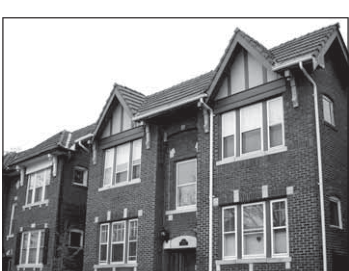
There are more empty nesters and single elderly living in homes that once contained larger families. Duplexes have become single family and multifamillies have become duplexes.
There is also the question of whether those who failed to fill out census forms were accurately captured. Then, the number of vacant units is high, particularly in certain areas. And, there has been continued movement away from areas in north St. Louis.
The question of vacancies leads into an examination of the data regarding Skinker DeBaliviere.
The census maintains there are 242 vacancies in our neighborhood – the same as in 2000. Certainly the Great Recession of 2008 has affected us with foreclosures and abandonment of dwellings but are there really that many vacancies?
Some doubt it.
From 2000 to 2008 our neighborhood seemed to be booming. Housing prices escalated and many found our housing stock desirable. Yet, the 2010 census shows a loss of 424 people from the neighborhood, 9.42%.
According to the census, we have 4077 residents. Fifty percent of the residents are white, up 7%.
The black population has fallen to 35%. Those of two or more races are 3% of our population and Asians now are 9% of our residents.
There are no data yet on median income or poverty rate. What we do have shows a neighborhood that continues to be diverse, all the pattern of that diversity has changed.
We know we have a considerable amount of students and more families with small children.
Most important, Skinker-DeBaliviere remains a success story. Contrary to social science theory (Massey and Denton’s American Apartheid), we have remained an integrated neighborhood since 1963. Unlike many neighborhoods to the north, whites did not flee en masse. Thanks to our housing programs and the dedicated work of our council and major institutions, we have provided a model.
A brief survey of other neighborhoods in the corridor shows an increase in the percentage of whites in Shaw and the Central West End.
The loss in Tower Grove East is only 1%.
This points to the desirability of historic neighborhoods such as ours which remain diverse. Perhaps the critical factor now is to work to ensure that diversity so that we don’t lose it the other direction.
Original photograph caption
Rehabilitated Washington Avenue housing used to illustrate conversion from multiple units to fewer households. Descriptive caption supplied.
Originally published in The Times of Skinker-DeBaliviere, April–May 2011.
Read this article in the original newspaper issue.
Original source: SD_Times2011_04.pdf, printed page(s) 1, 2; PDF page(s) 1, 2.
