To the Editor: (Larry Kotthoff, 5925 Pershing sent the following letter to Mayor A. J. Cervantes.)
Dear Mr. Mayor:
A recent morning’s mail brings a terse ultimatum from the City Dept. of Public Safety . … your premises have been inspected and violations have been revealed . . . to be corrected in 15 days . . or prosecution will follow. The “violations:” tuckpoint a chimney, paint exposed wood trim, paint a rear fence!
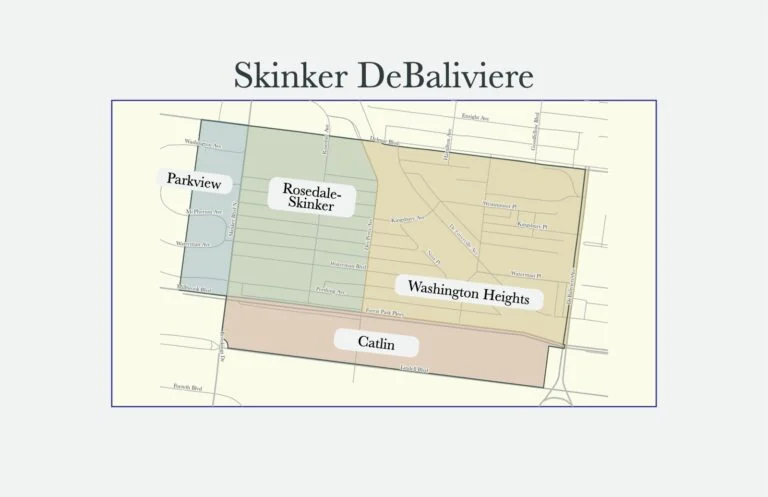
When did St. Louis become a police state, and am I some sort of criminal? I’m afraid Mr. Mayor that it is up to you to quickly explain or correct commissar tactics in the name of City business, and such stupidity as calling for the painting of a house or fence in mid-January (or any time for that matter). How about the courtesy of explaining to peasant home owners what sort of program is in progress, and the authority for it? I assume it is a make-work project with Federal funds to put some hard-core unemployed to work, hastily conceived and clumsily administered, with the Skinker-DeBaliviere area again the guinea-pigs . .. also a make-work ploy for generating some fast bucks for deserving trade-unions and building repair companies.
People in this area are putting up with a myriad of problems – some of them deliberately brought about by government as Sec. 235 for subsidized housing – but they will not tolerate for long citizen harassment by City Hall, and invasion of private rights. I will do my utmost in that direction.
Regarding above . . .
Copies of this letter were sent to Mr. Badaracco, Mr. Roach and Mrs. Leonore Sullivan. A reply by Mr. Nerviani was received, which dwelled at some length on minimum housing laws, efforts to preserve and improve neighborhoods, etc. However, Mr. Nerviani avoided the obvious intent of the letter, which was to object to the harassing, nit-picking aspects of the program — ‘paint your fence .. . in 15 days .. . or , — and even worse the crude, high-handed, commissar attitude in the administration. Mr. Nerviani also says this program was requested by our neighborhood organizations, which I question, since ‘The Paper’ at no time publicized it.
In my opinion the whole thing is a sad commentary on St. Louis government as it has deteriorated in quality and grown in brazeness. As St. Louis is now largely shunned as a site for location of business and industry, so also responsible homeowners, potential and present, will come to know our once gracious City as a place to avoid, or flee from at the first opportunity. L. A. K.
## Newspaper’s response (uncredited)
A call to Mr. Nerviani revealed the following:
*The “authority” for the program is the minimum housing standards law which has been in effect since 1948.
*The Skinker-DeBaliviere area and three other neighborhoods in the city are currently undergoing inspection. The department inspects 15 to 18 neighborhoods a year. The area under inspection in our area extends to Kingshighway. In these areas the houses and apartments are inspected on a house to house basis. Then the owners are given any notice of violations and a certain amount of time to finish the work. If there is good reason, the time is extended as was done in Mr. Kotthoff’s case. “We don’t try to be unreasonable, but we have to be specific on the time otherwise most owners would put off the work indefinitely. In Mr. Kotthoff’s case we gave him a 90-day extension until it is warmer.” The law does not give a specific time limit. Strictly speaking, the work should be done immediately.
Mr. Nerviani reported that the building office likes to be invited into neighborhoods, but that is is not necessary since the law applies equally. One of the purposes is to prevent neighborhood deterioration which causes the kind of panic Mr. Kotthoff speaks of Mr. Nerviani also reports that he rarely receives a complaint since most residents are quite glad to see the law enforced because all the painting and fixing up gives the neighborhood a much better appearance.
Originally published in The Paper, February 1972.
Read this article in the original newspaper issue.
Original source: SD_Times1972_02.pdf, printed page 2.