此内容暂无简体中文译文,以下为英文原文。
Historical February–March 2023 article. Dates, prices, services and contacts describe the source period; current availability has not been established.
Over the past few issues of THE TIMES, we’ve introduced some of the leaders and influencers in the neighborhood associations of Lewis Place, Fountain Park, and Academy/ Sherman Park.
These articles have profiled the personal stories of community leaders with bits of history and described the services provided. For this issue, I will cover both the West End and Visitation Park since both communities are so closely aligned on a major resident-led “blueprint” for community planning called WE COLLAB. (www.wecollabstl.com/ draftplan) To get a sense of place, note that the West End and Visitation Park combined are bordered by Delmar to the south, Union to the east, Page to the north, and Skinker to the west. Visitation Park is nestled near the southeast corner of this area. For years, the close proximity of the two neighborhoods has resulted in a rich shared history, culture and set of common goals leading to this precedent-setting plan. Though Visitation Park is a smaller neighborhood it is rich in history. Pilgrim Congregational Church built around the 1904 World’s Fair was one of the first white churches to welcome blacks in 1953. Windemere Place was once home to Chuck Berry, Ntozake Shange, author of “For Colored Girls Who Have Considered Suicide” and Sydney Redman, NAACP attorney and first Black member of the St. Louis City Board of Alderman. St. Paul AME Church in the West End is the oldest African Methodist congregation west of the Mississippi started during slavery in 1841. Tullia Hamilton, a Visitation Park resident likes keeping up with the history of the area and wisely noted “It is important that our residents self-identify with our community.” No doubt, knowing the history of a neighborhood is a significant tool in building that community and goes a long way in creating identity. Tullia, Walter Bonner, President of West End Neighbors, and Gordon Carlson, one of the first White residents on Etzel believe strongly in the notion that history can help community building.
As a team they wrote a book called Cabanne Neighborhood.
The writers of Cabanne Neighborhood have been among hundreds of residents from the community involved in a dynamic resident-led process meant to define for developers and the city what their community vision is for the next 20 years. WE COLLAB became a reality because of the sponsorship of the Cornerstone Corp. and funding from Invest STL. Very capable residents moved the needle from idea to execution securing funding from Invest STL to develop the plan. Keaira Anderson, former Executive Director of Cornerstone Corp., Lisa Potts, Director of Prevention Partnerships at the Mental Health Board and a board member of Cornerstone and Treena Thompson, Program Officer with the Lutheran Foundation skilled in grantsmanship and program development.
To know these dedicated leaders, you would only have to hear their comments . Treena talked about economic diversity and engagement, “Our planning group has
been intentional about economic diversity and representation.
We have had to rethink what engagement looks like …learn how to pivot and overcome mistrust with strategies that fit the lives of our neighbors.” Lisa Potts excited about residents being involved in an upcoming presentation of the WE COLLAB plan to the City and the Board of Alderman said “We want to demonstrate what resident-led planning looks like not just say resident-led. It’s important to develop leaders within the neighborhood so that the plan is implemented with success in the long-term.” Keaira Anderson added, “My hope is that we will have residents that will become leaders and their children will come to this neighborhood ten to fifteen years from now!” Through carefully crafted organizational structuring the WE COLLAB initiative quickly transformed from a small team to a much larger set of teams. Their goal was to dig deeply into the community starting with setting up a Steering Committee of residents overseeing the planning process, a neighborhood Ambassadors program for outreach, and conducting a series of events that included listening sessions, group discussions, review of plans, and door-to-door campaigns.
From the start, this group has been committed to racial and economic equity.
This meant that a) families who were poor, long-term residents, or elderly would not be displaced, b) initiatives would be developed to create building blocks from rental to homeownership for Black families that might not be able to afford rising housing prices, and c) ensure development efforts in the West End and Visitation Park will not adversely affect their neighbors to the south and north.
It is too early to measure the success of this plan, but we can say with certainty that the dedicated and smart start-up efforts of the WE COLLAB constellation of residents, advisors, and stakeholders give them a foundation for great success. Steering committee members like Celeste Metcalf and Gordon Carlson and Monique Thomas, current ED of Cornerstone want residents and their children to say we started with resident-led collaboration and we continue with resident-led accountability and growth.
The entire Ward and the City will benefit if they are successful!
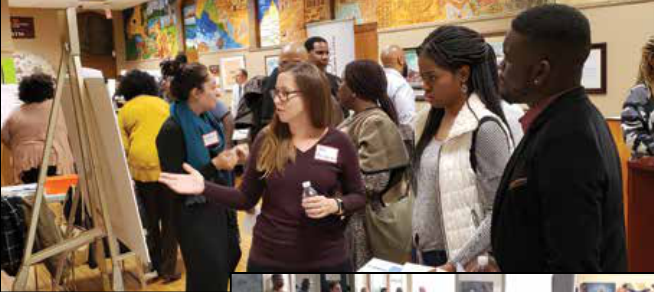
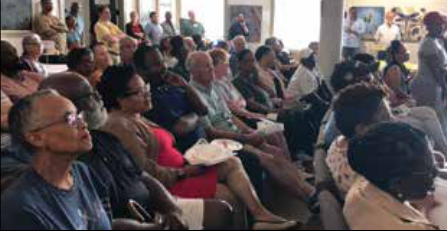
Original photograph caption
WE COLLAB resident meetings including West End and Visitation Park.
Originally published in The Times of Skinker-DeBaliviere, February–March 2023.
Read this article in the original newspaper issue.
Original source: SD_Times2023_02.pdf, printed page(s) 1, 4; PDF page(s) 1, 4.





