此内容暂无简体中文译文,以下为英文原文。
Historical April–May 2021 article. Dates, prices, services and contacts describe the source period; current availability has not been established.
We all want to keep the edges of our yards nice, but one difficult problem is invasive species. Invasive species reproduce quickly, grow fast, outcompete or kill the plants we want. Many invasive plants were originally introduced as landscaping, crop or forage plants, but, because of their abilities to grow fast and spread quickly, they have become nuisances or worse. Invasive species are recognized to cause economic or environmental harm. Sometimes invasive species can even be a threat to human health.
These species are carefully monitored by local, state and federal governments. Studies suggest that invasive species may cause billions of dollars in economic losses.
The environmental toll is just as high. Historically as much as 40% of threatened or endangered plant and animal species are threatened by invasive species. Scientists have also documented that invasive plants are especially common and spread quickly along roads and railways.
In our neighborhood, this means in alleys and outside fences. Three of the most common invasive plants in Missouri are also common in our alleys and along our fences.
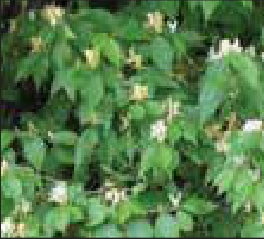
The three are bush honeysuckle, johnsongrass and wintercreeper. Bush honeysuckle was first imported to North America as an ornamental plant in the mid 1800s.
It grows fast, outcompetes other vegetation, is drought resistant and can kill other plants.
It can reach 10 to 15 feet in height and has recognizable flowers and bright red berries.
The berries appear in the fall and are appealing to birds and small wildlife.
The seeds spread by these animals sprout and grow quickly.
The entire plant including roots should be removed before they set berries in the fall. Merely cutting them back only makes them grow back vigorously. Johnsongrass is a tall perennial grass brought to the US as a livestock forage plant.
It reproduces quickly, even in very poor or rocky soil.
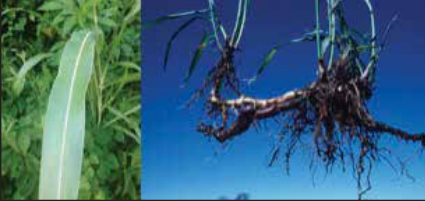
It grows from 3 to 8 feet tall, and has leaves similar to corn, but narrower with a distinctive white rib down the middle. Like many invasive species, it can reproduce several ways.
It sets seed from May to July. One plant can produce almost 30,000 seeds, so it is very important to remove it as soon as possible in the spring.
As an established plant, it also produces rhizomes which, if broken up, produce more plants. Care must be taken to get all of the rhizomes and root system when removing older johnsongrass. Wintercreeper is an aggressive perennial woody vine.
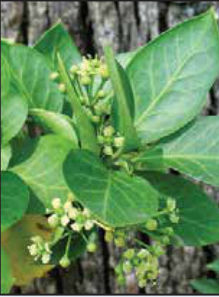
It grows quickly and can attach to any vertical structure or surface.
It can overtop and kill even tall trees if left uncontrolled. Like bush honeysuckle, its berries are eaten by birds and small mammals and the seeds spread large distances, so spring control is best. Like all invasive plants, if let grow, wintercreeper can be very difficult to get rid of.
It can even regrow from small pieces of root. Getting rid of invasive plants can often be difficult, but there are some common themes that make the work more successful. Learning to recognize and remove the plants at a young age is important.
They are persistent plants, so checking the spot again later can be important; they regrow easily.
Finally, removing them in the spring prevent the plants from blooming and reproducing, which not makes your property look better, but can help prevent spreading the plant to a neighbor’s property. So keep an eye out this spring for invasives!
Original photograph caption
Bush honeysuckle illustration.
Originally published in The Times of Skinker-DeBaliviere, April–May 2021.
Read this article in the original newspaper issue.
Original source: SD_Times2021_04.pdf, printed page(s) 4; PDF page(s) 4.





