此内容暂无简体中文译文,以下为英文原文。
Historical April–May 2010 article. Dates, prices, services and contacts describe the source period; current availability has not been established.
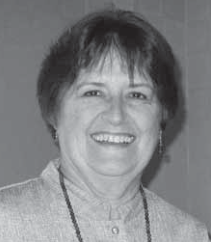
Marj Weir In the seventies when I was involved in editing The Paper, we faced extreme financial challenges.
The cost of typesetting combined with our limited income drove us to using an electric typewriter, provided by a wonderful neighbor, Joe Botz, and typing on adding machine tape in order to control our column widths and to allow long column lengths.
This was arduous, but it illustrates the lengths to which so many neighbors have gone over the years to keep our unusual publication going. Over the years the generosity of many in our community and the loyalty of our advertisers has made it possible to continue.
I am proud of The Times of Skinker DeBaliviere, into which The Paper evolved, and hope that our wonderful community continues to support and value it for years to come. Sue Rothschild My turn as editor of the Times in the early 90’s was the last years of doing layout of the paper by hand instead of computer. By then many articles were on computer disks, but I still took everything to a typesetter to get the physical copy.
The layout work was done at Venita Lake’s house, where she had a good table to spread out all the master sheets on, and supplies to paste up all the stories, photos, cutlines, headlines and ads.
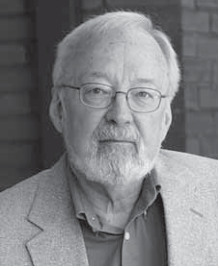
It was fun collaborating with Venita and King Schoenfeld on how to make it all fit. King Schoenfeld I began shooting news photos for The Paper when I was just over 30 years old and recently married.
I discovered my true avocation: trying to put a story into one photo image that got your attention. Hours in the darkroom were a monthly ritual, finding the right black and white images to drop off for Marj Weir next door. What I didn’t realize at the time was how this job pushed me into the life of the neighborhood, meeting its wonderful people and gaining a sense of contributing to its life.
After 30-some years, the Times has assembled a great archive of our neighborhood’s history, much of it in photographic images and published in the Times recent book. Is this a great neighborhood or what? Peggy Hermes (Griesbach) (by email from Rome!) The early ‘80s proved an interesting time to serve as editor – as per the curse “May you live in interesting times.” While the paper promoted and celebrated events that brought the neighborhood together – the annual Art Fair and House Tour, the melodramas staged at Grace Methodist followed by dinner at St. Roch’s, Washington Heights picnics, Rosedale Halloween parties, and so on — we also reported on the issues that divided the neighborhood.
The hot-button topic was development.
Residents weren’t shy about expressing views on renter displacement, gentrification, tax abatement, and just who would get the nod to rehab or build.
The Paper sought to give voice to all positions and perspectives. Many of the most vocal stayed in the neighborhood and worked together despite their differences.
The Times continues to reflect the character of the neighborhood. Though I retired early, I’m very grateful to the others who’ve persevered. Chris Lange Layout of The Paper was usually done on my dining room table at 6175 Kingsbury.
It took two to three days of cutting and pasting after the writing, editing and photography and design was done. Lots of coffee and comraderie was required.
It was so much fun.
It scared me to realize that I could do this forever for no compensation. So it was time to relinquish the helm and let some one else in on this fun. Venita Lake From September 1982 to June 1983, we had an editorial board made up of King Schoenfeld, Jo Ann Vatcha and myself. Our responsibilities were “collecting and editing, assigning story areas, and determining overall style and contents of the publication.” I had a much longer tenure as layout supervisor…In looking back from the time we moved into the neighborhood in 1974 until today, many things have changed, although some stories continue to repeat themselves.
In October 1982, I wrote the lead article, reporting on the resignations of both the Skinker-DeBaliviere Community Council’s executive director and its secretary, and the subsequent meeting of the council which had already started the process of rewriting its constitution and by-laws …[also] that residency would be a requirement. At one time or another, most of the editors helped with layout. Karen Bynum, King Schoenfeld, and Elizabeth Freeman, among others, spent many hours, often late at night, putting the paper to bed.
We also kept up with the latest news and gossip and planned many other activities as we worked, so it was a fun social occasion too. Karen Bynum When I remember my time as editor of The Paper, what comes to mind first is the fun we had doing it. “Back in the day” before we all had computers in our homes, putting out a neighborhood newspaper was a real hands-on experience. Our clip art was “clipped” from the Yellow Pages. Cutting and pasting was done with an X-acto knife and rubber cement.
My troglodyte tendencies will probably be exposed here, but it seems that it was more creative and satisfying when layout meant big boards on the dining room table.
Most of us who worked then were stay at home moms with pre-schoolers and babies. Working on The Paper was a chance to be with grown-ups and make adult decisions—a refreshing change from our daily tasks.
This newspaper looks and reads more professionally done. Many of the issues it covers are of larger scale and of greater regional importance, but it still serves the same basic mission: to tie all the neighbors of this wonderfully diverse area together.
I am proud of my association with its history and am grateful to all who have kept it going. Pat McLafferty I think I was at a neighborhood party in 1981 when Peggy Hermes convinced me that I was capable of being the next editor of “the Paper” (yes, I’m sure alcohol was involved)!
She had just completed three years in this position and made it sound exciting and manageable.
The neighborhood had just survived the “Mexican restaurant” controversy which pitted neighbor against neighbor and we all looked forward to the paper for updates. Peggy encouraged me to pursue political issues and not be afraid to “edit the copy”. (She did not actually explain that I would be “editing” articles contributed by my friends and neighbors.) I soon realized the amount of work it takes to put out a monthly paper: meeting deadlines, getting those “late night” articles, getting the copy to the printer, and then PAYING the printer.
But looking back through old issues, not only are the articles wonderful, and a great witness to our struggle, but the pictures are invaluable.
I have nothing but admiration for those true editors and staff who have been involved with the paper for all these many years. Bless you all! Katie Kurtz In looking for volunteers to help distribute, we met Mary and Hitch Powell.
We would sort, bundle and deliver to each block the first Friday of the month. That has become a long-standing tradition, First Fridays, switching off houses.
My water broke with Jim the last Friday of January 1987 (we must have gotten them early for February), while we were sorting. Paul took me to the hospital, leaving Mary and Hitch to finish the job.
I can’t remember the year, but we changed the name from The Paper to The Times of…
We felt that The Paper didn’t really describe who we were and whom we served.
We used to have board meetings pretty regularly to plan out who would write what, which topics were of interest. Ray Bruen was a regular writer about history; of course, Tom Hoerr, briefly there was a column written by Sam Green and Paul Kurtz about insurance issues; we started the column Macho Menu, which highlighted our male chefs. Venita did a lion’s share of layout, if I remember correctly. Nancy Farmer was a wonderful resource, I would pick her brain about topics important to the Council. What a great experience. Note from Jo Ann Vatcha: There are many more who served as editor in the early 70’s , including Jody Creighton and Mary Parker, and two who are no longer with us, Sharon Mier, and Jean Eberle, who passed away recently. Thanks to King, Chris, Karen, Marj, Sue, Venita, Peggy, Katie, and Pat for pausing to remember!
Original photograph caption
Marj Weir. Descriptive caption supplied; photographer not credited.
Originally published in The Times of Skinker-DeBaliviere, April–May 2010.
Read this article in the original newspaper issue.
Original source: SD_Times2010_04.pdf, printed page(s) 1, 5; PDF page(s) 1, 5.





