此内容暂无简体中文译文,以下为英文原文。
Historical February–March 2002 article. Dates, prices, services and contacts describe the source period; current availability has not been established.
The Skinker-DeBaliviere Housing Corporation recently honored outgoing Board President Susie Feinberg and Director Karleen Hoerr at a luncheon at Riddle’s Penultimate Restaurant in the Loop. Chris Manzo, newly elected president of the board of directors, and Gary Boehnke, housing manager, presented both longtime board members with framed copies of a very important document, releasing the original Deed of Trust.
The salute to Susie and Karleen clearly demonstrated the housing corporation’s success with the 12 buildings in Rosedale Square on the 6000 and 6100 blocks of Washington Avenue.
The turnaround of Rosedale Square began in 1989, when ownership of . the property was returned to HUD after a developer failed there. Mayor Vincent Schoemehl persuaded the federal regulators to entrust the buildings to a newly formed not-for-profit neighborhood-based housing corporation, which would complete the rehabilitation of the buildings in exchange for ownership free and clear.
With that promise, the newly formed housing corporation went to work to bring stability to Washington and other trouble spots in the Skinker-DeBaliviere Neighborhood. Led by the dynamic team of Karleen and Susie, both real estate agents and activist neighbors, the housing corporation’s original Board of Directors included former .Times Editor and Historic District Committee Chair Katie Kurtz and James McLeod, Vice Chancellor at Washington University and a former President of SDCC. Other board members in the early 90’s were long-time Waterman resident John George Storey (28th Ward Democratic Committeeman from 19xx to 19xx); the visionary Kathleen Hamilton, followed by Tom Scatizzi, from the Central West End Savings and Loan; George Johannes, architect and neighbor; and Amrit Gill, who has gone on to develop other properties in the area. Since the beginning, the idea was to involve the neighborhood in the turnaround effort. Susie Feinberg remembers how “Vince’s initiative was modeled after West End Townhouse.” Previously profiled in these Neighborhood Chronicles, West End Townhouse was formed by Parkview resident Phil Lucier, who felt that public companies, such as his own Continental Telephone, had a responsibility to assist neighborhoods. Before Lucier’s untimely death in a car bombing, believed to be a case of mistaken identity, he had formed a non-profit corporation and provided incentive grants to entice others to rehabilitate and rent homes and apartment buildings in the neighborhood. West End Townhouse, and later the Skinker DeBaliviere Housing Corporation had sound volunteer leadership and a goal of salvaging solid buildings, especially rental property in bad condition, starting as far back as the 60’s.
When no one in the private sector stepped forward to rescue troublesome buildings, the housing corporation became, as Susie said, “developer of last resort.” Not all of their projects have been rehabs.
The housing corporation also purchased some pretty disreputable buildings on Des Peres. Repeated drug activity and other crimes, including the shooting of a policeman there in the 70’s, had made getting control of the laundromat on the edge of the railroad tracks at Westminster and DesPeres a high priority for the neighborhood.
The housing corporation became the catalyst for purchasing and demolishing the laundromat, as well as putting control over the property in neighborhood hands.
As Susie Feinberg puts it, “who else could have gotten that torn down?” This success led to others: a ramshackle shop on the western side of DesPeres and a row of tiny, severely dilapitated singlestory apartments, known as a “ranchette”, were also cleared to become part of what former SDCC Executive Director Cal Stuart had called “the greening of Des Peres.” Throughout the 90’s, the housing corporation tackled trouble spots like these.
With Rosedale Square, the effort had to be comprehensive and have a long-term plan. Initially, as Susie remembers, “tenants weren’t paying rent, and the so-called “rehab” had been a disaster,” with choppy room arrangements and architectural features obscured. Taking one building at a time, the rehab started. Professional management was given through Personalized Property Management Company, owned by former neighbor Pat Sweets, whose emphasis on finding good tenants and proper maintenance overcame many obstacles. Today, in 2002, her daughter, Sarah Mensing, works with the company. and continues that neighborhood link.
With the completion of the Rosedale Square Apartments, Karleen Hoerr stated that she feels ” the housing corporation has made a gigantic difference. Luckily, we were given the opportunity to get things going on Washington Blvd.,” leading to increased homeownership as well as property values which at first stabilized and then rose to the level of the rest of the neighborhood.
In addition to the Rosedale Square success, the housing corporation has also acquired many buildings and transferred them to developers who could transform them into assets for the neighborhood.
A drug house on the 6100 block of Waterman became a single-family home; two houses on the 6000 block of McPherson and three buildings on the 6000 block of Washington were sold to owner-rehabbers.
A three-unit building on the 6000 block of Westminster was also beautifully developed as a result of the housing corporation’s efforts. Vacant lots are also part of the housing corporation’s inventory.
They have recently sold five lots on the 5700 block of McPherson to Kingsbury Square’s Martin Jaffee; other lots include the “green” area on the east side of Des Peres, the southwest corner of Washington/Des Peres, the community garden lot on the 5900 block of McPherson, and several lots, previously Mills Properties, on Delmar.
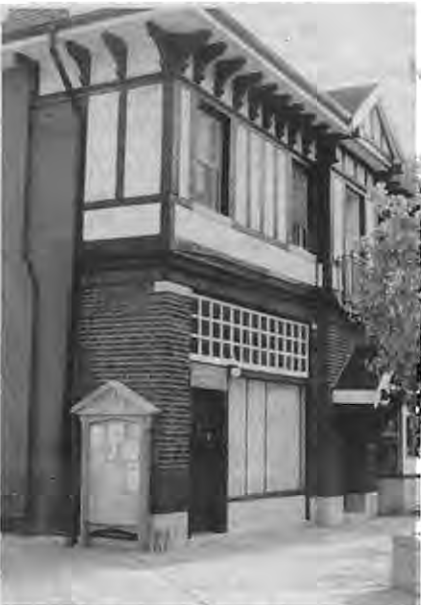
The housing corporation was able to acquire the building at 6008 Kingsbury, which houses the Council Offices and has completed extensive rehab of the two apartments on the second floor.
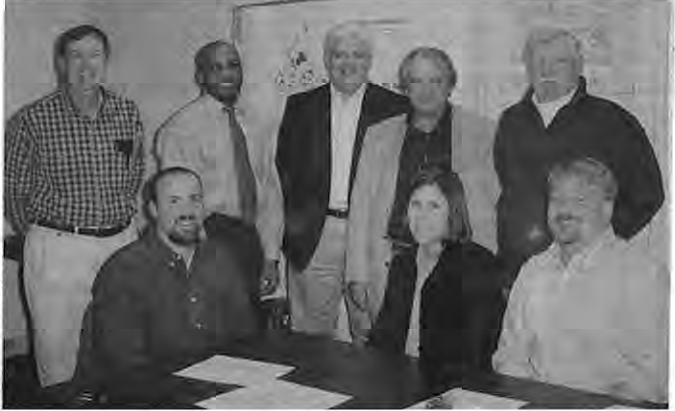
With the completion of more than a decade at the helm, in 2001, partners Hoerr and Feinberg stepped down from the leadership of the housing corporation, turning over the reins to new leaders. President Chris Manzo, an architect who lives on the 6000 block of Washington, had learned first-hand how the housing corporation worked when he bought a four-family building from the organization and transformed it into a townhouse for his family, along with two rental units. New directors also include: Stephen Kramer, a Vice President with USbancorp Community Development Corp. and resident of the 6100 block of Westminster; Kevin Short, investment banker with Clayton Capital Partners, who lives on Washington Terrace; Jennifer Olmstead, resident of the 6100 block of Washington and an urban planner with Development Strategies, Inc.; and Richard Wilkes, 5900 block of Kingsbury, Director of Communications, Metropolitan St. Louis Police Department. Providing continuity are long-time directors George Johannes, architect, and George Storey.
The corporation was able to hire professional staff in 1997. Gary Boehnke has been Project Administrator in charge of completing the rehabs of Rosedale Square and other buildings.
The Skinker-DeBaliviere Housing Corporation’s tradition of becoming “developer of last resort” continues into the new century with its recent acquisition of 5888-98 Delmar, a mixed-use building at the southeast corner of Delmar and Hamilton, adjacent to Lucier Park and Hamilton School.
The board has formed a sub-committee, made up of Chris Manzo, Steve Kramer, and Jennifer Olmstead, to formulate a plan for the building and for their lots both east and west.
The committee and board are also participating in a cooperative effort of the Delmar Committee and SDCC’s Safety Committee (working on liquor issues), to coordinate efforts to turn around the intersection of Delmar and Hamilton.
The Skinker-DeBaliviere Housing Corporation is a twentyfirst century success story, made so because of its recognition of solid strategies: neighborhood involvement, volunteer leadership, dedication to reinvestment in the community, and the contributions of dynamic individuals like Karleen Hoerr and Susie Feinberg.
Original photograph caption
SDCC office building recently renovated by owner, the SDCC Housing Corporation. Photographer not credited.
Originally published in The Times of Skinker-DeBaliviere, February–March 2002.
Read this article in the original newspaper issue.
Archival transcription note: Source has unfilled 19xx to 19xx dates for John George Storey’s political service. Placeholders retained.
Original source: SD_Times2002_02.pdf, printed page(s) 4; PDF page(s) 4.





