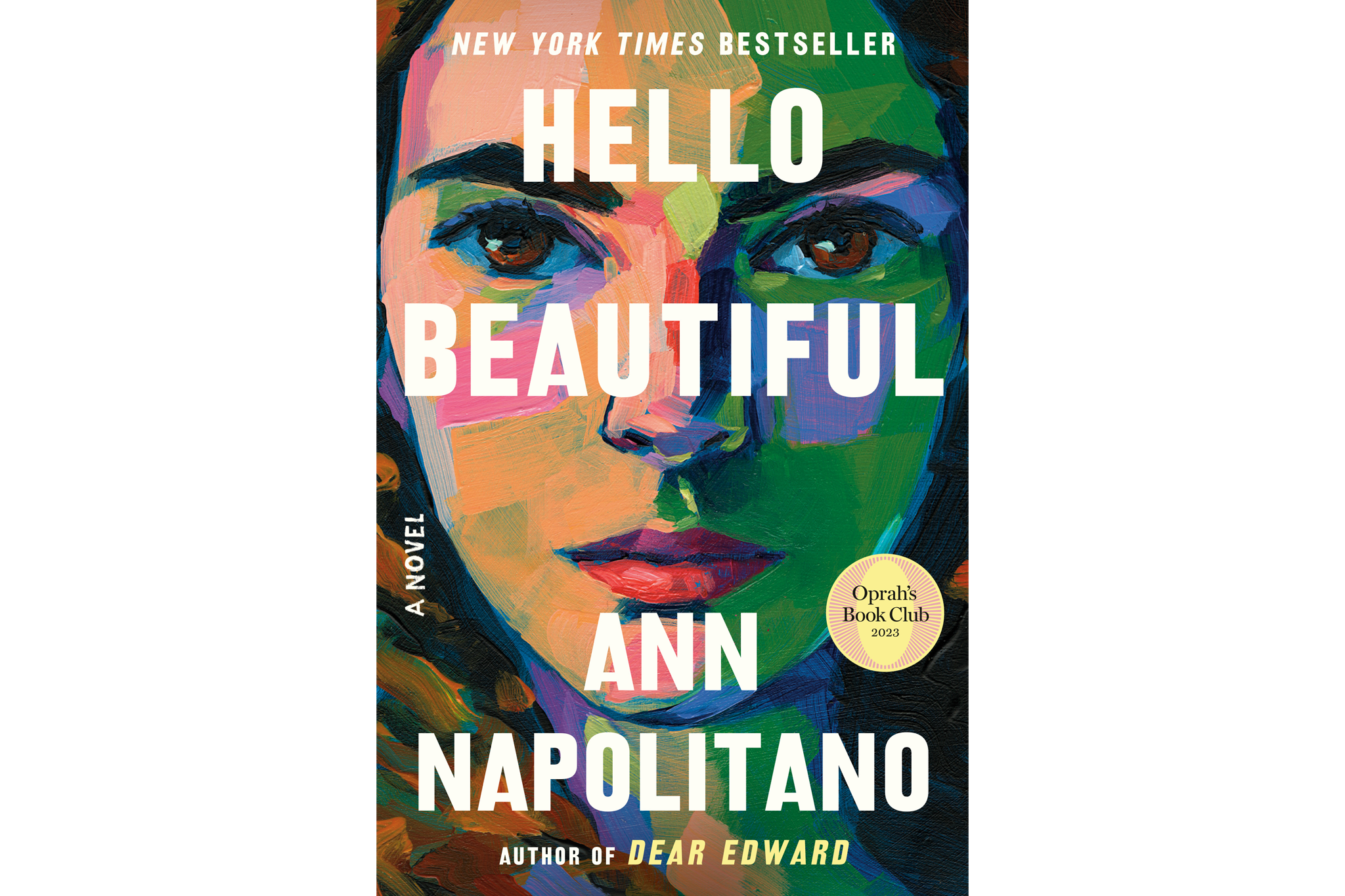
I just finished Hello Beautiful by Ann Napolitano and wanted to write this review immediately — mostly because after reading the reviews, I expected more. And I didn’t want time to soften my opinion.
The novel is told in the third person, with chapters shifting among the perspectives of the main characters.
At the story’s center is William, a young man shaped by childhood tragedy and neglect. After earning a basketball scholarship to Northwestern University, he meets Julia Padavano and from here, the story follows William’s search for identity and purpose and the impact it has on everyone around him.
The sisters each represent a distinct personality.
Julia is the ambitious, controlling, and responsible eldest sister, who falls in love with William and initially welcomes him into the Padavano family.
Sylvie is the bookish, romantic and unconventional sister who shares William’s sense of being adrift and yearning to find her way.
Cecelia, one of the twins, is artistic and free-spirited, whose life choices begin the family’s unraveling.
Emeline, the other twin, is nurturing and devoted to keeping everyone connected.
The Padavano matriarch and patriarch round out the family.
Rose is a devout Catholic mother with narcissistic tendencies who withdraws when conflict arises.
Charlie is an alcoholic father whose Walt Whitman quotations and dreamer’s view of life somehow erases the financial hardships he creates for his family.
The novel’s connection to Little Women is anything but subtle or cleverly done. In 1868, it seemed touching when sisters snuggled in bed due to an actual need for physical warmth, but in this “modern twist,” sisters repeatedly sleep spooning on a living room couch while a husband sleeps alone in the bedroom down the hall. Is this plausible? Anyone out there spooned with her sister recently… and repeatedly… during sleepovers… as adults?
My biggest frustration was the writing style. The characters are developed through endless exposition and internal monologue rather than meaningful dialogue. I found myself wishing someone would say ANYTHING substantive to ANYONE. The story moves at a slow pace as characters endlessly analyze themselves, only to arrive too quickly at an overly neat and unrealistic conclusion.
The similes also became distracting. They were horribly overused and frankly, silly — “like a piece of mail without a slot” actually made me groan out loud.
I almost felt guilty disliking this book. It was Oprah’s 100th Book Club selection and received glowing reviews. I usually avoid Oprah picks because they often leave me emotionally drained, but this novel didn’t move me nearly as much as it exhausted me. I kept wondering how much longer it would take to reach the end.
One final criticism: the setting never rang true. The Padavanos are portrayed as a deeply Italian family living in Pilsen, a Chicago neighborhood long known for its rich Hispanic heritage. The disconnect distracted me throughout the novel. Why set the story there if the neighborhood’s culture plays virtually no role?
Overall, Hello Beautiful was a fair attempt to handle a story about family love, its rifts and resolutions. The book offered some moments of insight, but for me it was weighed down by excessive introspection, unrealistic character interactions, overwrought prose and a story that reached quick conclusions after dragging the reader through lengthy character thought processes.
Worth the read? Not in my opinion, but I hear Napolitano’s Dear Edward is better. Maybe give that book a try!