Historical June 1999 article. Dates, prices, services and contacts describe the source period; current availability has not been established.
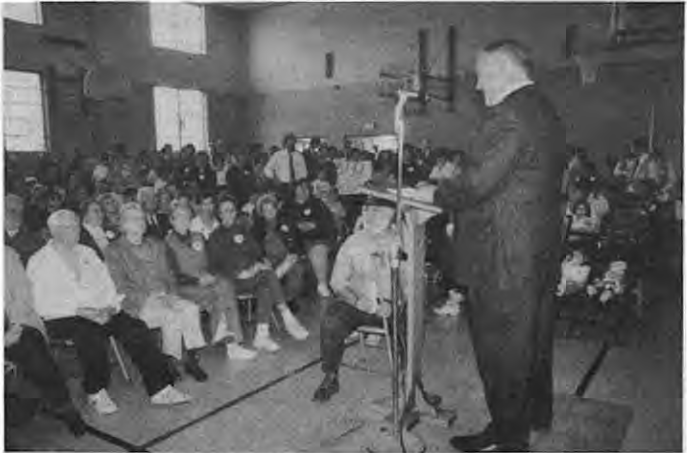
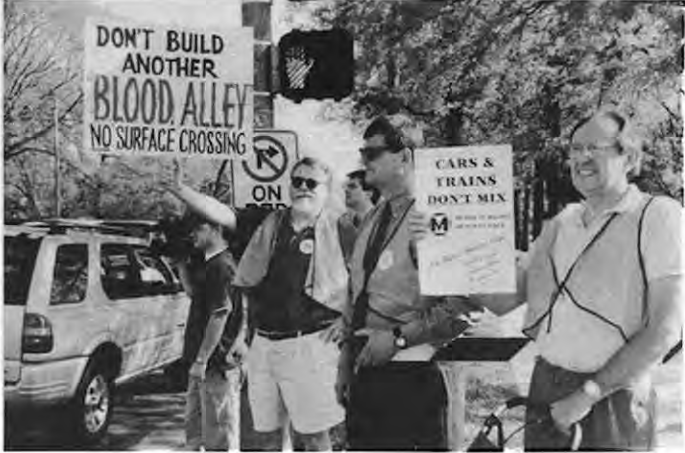
Part I Rally/Demonstration On Monday, April 19, residents from along the proposed MetroLink expansion route from DeBaliviere to Clayton came together at the St. Roch school gymnasium to protest an above ground train. Historic Neighbors coordinated the event.
After an invocation by Msgr. Sal Polizzi of St. Roch, several speakers spoke of the advantages of an underground system.
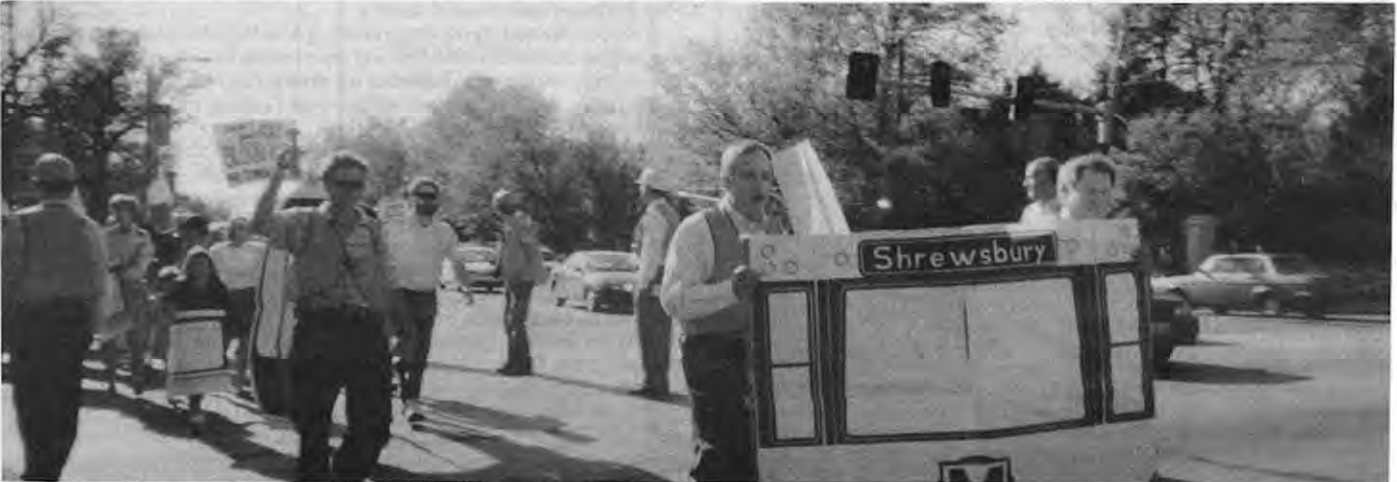
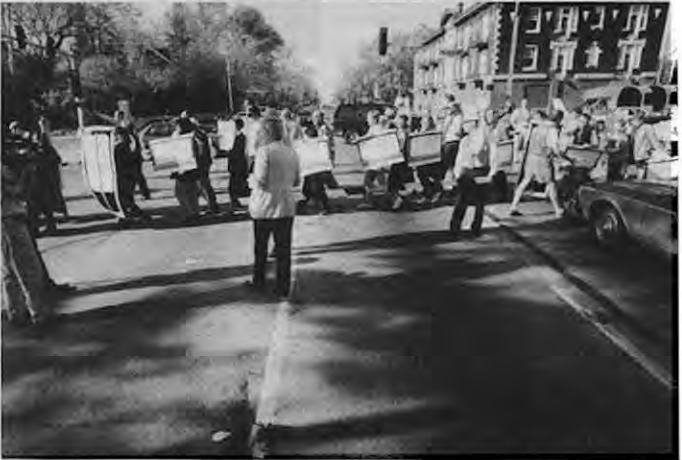
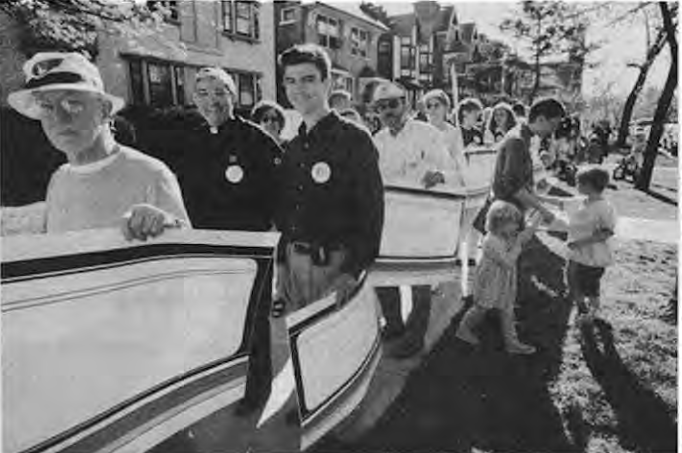
They included a University City Council member and Sharon Lentin, staff person to Councilwoman Edith Cunnane of the County Council. Stephen Lampkin, a resident of Parkview in University City also spoke. Gary Hayes, SDCC president, emceed the event. Alderman Lyda Krewson spoke of her wish to have the train under ground at Skinker. Many of those attending then walked to the Forest Park ParkwaySkinker intersection. Carrying cardboard replicas of train cars, they tied up traffic at the intersection when they crossed every 4 minutes.
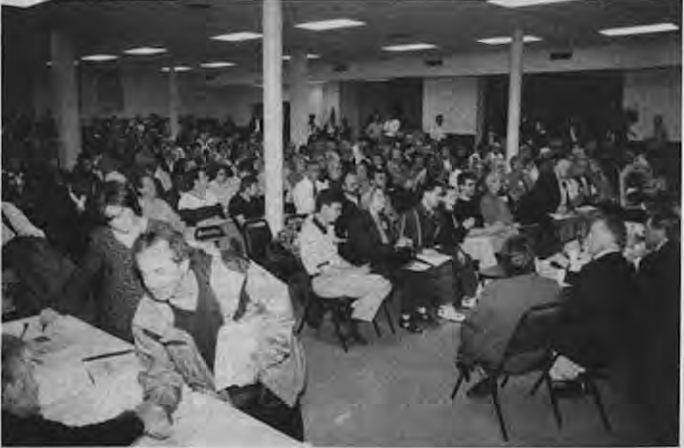
According to some of those in attendance, they were trying to demonstrate the deleterious effect an at-grade train would have on traffic at that already congested intersection. Part II Community Meeting A week later, on Monday, April 26, about 250 people gathered for an informational meeting about MetroLink at Grace Methodist Church. Gary Hayes again served as emcee.
The meeting was attended by a number of public officials including Alderman Krewson, Alderman Irving Clay Jr., Comptroller Darlene Green, President of the Board of Aldermen Francis G. Slay, and Mayor Clarence Harmon.
The first speaker of the evening was Dick Hocking of the Parsons Group, designers of the expansion. Hocking said their efforts began in July 1998.
They looked at prior studies and thought through possible combinations of design elements.
He said that many other cities were using light rail.
It provided cost economies and a number of alternatives.
He mentioned that expansion would necessitate significant change to the Forest Park station.
There would be tracks under DeBaliviere and Forest Park Parkway to the West. Passengers would be able to go down from either side of DeBaliviere.
It was possible that a parking garage with commercial space could be erected on the west side of DeBaliviere.
If the train were to continue underground it would be located in the middle of the right-of way of the Parkway and Millbrook.
On the west side of the intersection at Skinker there are major sewers.
A platform would be built on the west side of Skinker for a station and there would also be a station at Big Bend.
If the trains ran at-grade, tracks would rise up in the median of Forest Park Parkway.
The streets would retain their basic configuration. Hocking said that they were also looking at an underpass for Skinker. That will require an additional right of way by the stations and left turn lanes.
The street would contain a 90 foot right of way and use a 35 foot section in the middle.
The tracks would be completely separated from traffic; traffic could not cross the tracks in the middle of blocks. At Skinker, there would be split platforms. Westbound would be just west of the existing intersection. Eastbound would be just east of the existing intersection.
Another alternative would have trains running on the south side of the Parkway at grade.
The platform would be west of Skinker with access from the south side of the street. At Big Bend, there would be problems with utilities on the south side. At peak times, they are considering having trains every 8 minutes.
The trains would run every 12-15 minutes at off peak hours and every 30 minutes in the early a.m. and late p.m.
If the at-grade system is chosen, Hocking said there would be improvements to the signal system. No streets would be closed and there would be alley access.
There would be an exclusive right of way for transit within the public right of way.
There would be preemption signals.
If the south side of the Parkway is used, there would be railroad gates.
In the middle of the street, the system would rely on traffic signals.
There would be discrete signals to advise the train operator.
There would be no left turns from the Parkway to DesPeres if the trains ran down the middle of the Parkway. At Skinker, there would be left turns only on green arrows.
For a Skinker Blvd. MetroLink underpass, there would be a cut and cover tunnel.
There is some concern about the level of the grade-4% on the east and 6% on the west. Paul Hohmann, chair of the SDCC transportation committee, and Dan Schesch, committee member then presented their concerns about the MetroLink expansion. Hohmann said they were not NIMBYs.
They want to repeat the same success of the existing MetroLink. Safety is important for everyone. Hohmann added that nobody is going to want at-grade crossings. Schesch then showed a video compiled from footage he shot when visiting systems in northern California.
He showed that pedestrians and vehicles could cross the track in front of moving trains.
Some of his footage showed systems that had no separation from traffic lanes throughout their routes.
He also showed statistics he had compiled which established that the current MetroLink system was safer than others at grade.
For example, he said that Sacramento had 18 times the accidents St. Louis had. Hohmann and Schesch then showed a segment of NBC Dateline about cars hit by locomotives when they drove around gates. Schesch also said that MetroLink was the fastest system in the U.S. Other light rail systems were 75% or less the speed of St. Louis’s system.
He added that MetroLink was the most popular light rail system, with 79% of its riders new to public transit. Lois Weinberg of the Catlin Tract (Lindell) spoke in favor of an underground system. Joe Keaveny of the Parkview Agents said a survey that had undertaken showed a preference for below ground. Elected officials then had an opportunity to speak. Ald. Clay announced that State Senator Lacy Clay would sponsor a public hearing on this matter. Darlene Green said that as a member of this neighborhood, she was concerned about safety, not stopping MetroLink.
She said that we should spend whatever it takes for a system that is safe. Mayor Harmon said that he has expressed concern about running this link at grade.
He remains skeptical.
The city is paying for a study by the Streets Dept. dealing with the Skinker-Parkway intersection.
He will get his report long before June 30, when East-West Gateway will make a decision about the nature of the route. Aldermanic President Slay said that he keeps hearing that a decision has already been made and assured the crowd that this was not the case.
He said alternatives are still being discussed and considered. Slay said he would take the crowd’s concerns back to East-West Gateway. Ald. Krewson said that it was necessary to take another look at Skinker and Forest Park.
A new alternative for that intersection had been announced that night-going underground at Skinker-that would address safety concerns.
Following the comments of elected officials, a number of those in attendance made statements or directed remarks to the various speakers.
The meeting was large and boisterous with applause or boos greeting various remarks.
Original photograph caption
SDCC President Gary Hayes addresses rally before march on April 19 at St. Roch’s Gymnasium. Photo by Ed Stout.
Originally published in The Times of Skinker-DeBaliviere, June 1999.
Read this article in the original newspaper issue.
Original source: SD_Times1999_06.pdf, printed page(s) 1, 4; PDF page(s) 1, 4.
