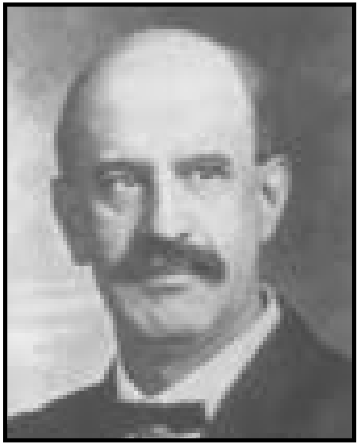
© 1980, Kenneth Robin Kress. Historical February 1980 profile. The original byline is preserved here; Ken Kress is the newspaper’s established author-name variant.
In 1972 the 86th district of Missouri was redrawn to reflect changes in population revealed by the 1970 census. This change in boundaries also brought about a change in the political character of the district: it became Democratic. In the election that year 28-year-old Democrat. Stephen Vossmeyer. was elected to the Missouri House of Representatives.
Since ’72 Vossmeyer has remained, through three elections. the district’s representative. Along the way he has earned a law degree from Washington Univershy, and opened a law office in the Central West End.
Today Vossmeyer is almost 36. He stands over six feet tall. weighs about 200 pounds. On a recent day at his office, he was dressed casually in shirt and tie.
The office, which he helped design. is a mixture of padding and chrome. To the right of the entrance a secretary sits before a television-like screen (part of a computerized word processing system). Opposite the entrance is a conference room containing a long, clear-glass table.
When Vossmeyer sits down to talk. the secretary brings in a mug of coffee and a glass of water. Cradling the mug etched with a map of the world in both hands. Vossmeyer leans back and begins talking.
“I got into politics in an odd way.” he recalls.
“I was one of those students that opposed the war in [Vietnam]. In January of ’67 my father died and left me $6.000. I did two things I learned to fly and I spent two months in Europe. While driving around in Europe. I picked up the European edition of Newsweek and read in the Periscope section that Eagleton. a dove. was going to run. I decided maybe the thing to do was to get into politics. So I wrote Eagleton in ’68 to ask if he needed help. He said sure. but he didn’t know if he could pay me.
“I remember . . in June of ’68 I came in with cutoffs and no socks. I started out passing out matchbooks in shopping malls. One time Tom [Eagleton] needed a speech for the Harvard Club on foreign policy. All of a sudden I started writing speeches on foreign policy.” (Vossmeyer studied international affairs and foreign policy in school.)
“After the primary. I stayed on. went to DC as a legislative assistant. When we started, there were only five of us. I wound up specializing in foreign and international affairs.
“Eagleton is a superbly right person. He has a wonderful sense of humor, and he doesn’t take himself too seriously.
“I got to see politics at a level very few people get to see. I got to see government in action I got taken by it. It’s a really heady thing: I decided I’d like to try it.
“I was born and raised in St. Louis. I lived in this district during my Washington University days. The district has changed immensely since I was first elected. I bought a house at 6050 Westminster and the neighborhood was really shaky then. Now there’s no question. The question is now what can we do to help. One of the major things a legislator does is to do everything he can to make sure the government doesn’t do anything to screw you up.
“From a nuts and bolts point of view – . . [my priority] is serving the area. If you serve the area well you’ll be a more efficient legislator. and the longer you do something if you’re serious about it the better you get.
“We deal with 300 bills on the floor each session. You don’t know what’s in all the bills. So you talk to sponsors. and you talk to opponents. I try to decide on an issue-by-issue basis try not to be a knee jerk anything.
“My outlook is tough on law and order, liberal on social equality. I’m for ERA and making sure people are not excluded because of religion or sex, or because they are handicapped. Everyone should have an equal chance out of the starting gate. I’m conservative fiscally. but willing to spend money if it looks like we’re getting a decent return.
“[For instance] there’s a chance the way the laws are set up in Missouri, if you get assistance, you get Medicaid. There’s no tying it to need. so there’s a negative incentive to get off assistance. The services being provided day care, food stamps. medicaid you lose more [getting off assistance] than you can gain by being employed. What we would like to be able to look at is a formula to let people get off [assistance] slowly: try to graduate it [assistance benefits] or tie it to income. I want to revise it so that there’s no negative incentive to stay on, and a positive incentive to get off, and that’s one of the incentives – that they don’t lose Medicaid benefits while getting off assistance.
“The social services department is in disarray. You are getting poor service and poor value for your dollar. I’m the chairman of a social services appropriations sub-committee, where a billion dollars are spent. And I’m working with Wayne Goode on a Medicaid Management Information System — to get better information and a better means of detecting fraud.
“I’ve got a 100-page revision of the mental health laws that will go in either today or next week. Essentially Wayne Goode and I put the bill together. That will be my major legislative priority. It’ll be a lighter year. as far as pushing bills. But it won’t be [a light year] in Oversight and Appropriations.” Vossmeyer is chairman of the Governmental Review [or Oversight] committee. and a member of the Appropriations committee.
“Never has state government needed oversight more than it needs it now,” he said.
“Teasdale runs the government by pronouncement. It’s a tragedy that with the good leadership of Ken Rothman [current Speaker of the House] we haven’t been able to move further. The tragedy is that the governor has been such a nothing. The governor doesn’t know or doesn’t care what is going on in state government.
“Over a period of time I’ve gotten to know what the district wants. I have friends, go to parties. go to meetings. You wind up talking to an awful lot of people. The way you get your information is not clear and set. The ways are varied.
“If there’s an issue I’m on the ‘wrong’ side of. I have to decide whether it’s important enough to make my own decision. When my best judgement doesn’t coincide with theirs [the electorate] then the issue needs an extensively long look.
“[The relocation assistance bill was] one of the dumbest bills I’ve seen. Amateurish, technically incorrect. The only way redevelopment would occur in a city would be if people ran it [a building] down to the point where no one lived in it anymore. You would have to wait until all the conditions of living got so bad everyone moved out.
“The sponsor of the bill [Rep. Dotty Doll, D-Kansas City] had it in for the University of Missouri at Kansas City. If there’s a reasonable bill that pays reasonable costs, that’s fine. I would be glad to support it.
“[The bill had] a whole series of technical problems– things that didn’t make any sense. As best I can remember it —if you owned a business with only one location you could get relocation costs, but if your business had another location, you couldn’t get relocation funds. It wasn’t tied to criteria. Technically it was just horrible. A crazy quilt of provisions. You can put perfume on a pig, but it’s still a pig.
“I would support one that had a reasonable amount for moving expenses. I’d make .sure people were current on their rent. We’ve got section 8 housing. Developers should not be the guarantors of lifetime mortgage payments. Under that bill, interest on a mortgage might have to be subsidized up to thirty years.
“This city needs a tax base. You’ve got to have a tax base to make this city work.
“I view myself in a way of being a technocrat. It’s one thing to say I’m for x, and another to get a bill for x. Last session I was house sponsor of a nursing home bill. That was my bill, an enormous bill covering all different areas.
“We spent time working on it. on the whole area of delivery of services. [And we got] one of the strongest nursing home laws passed in one year.
“I’m planning to run for re-election. I had a chance to go back (to Washington. D.C.) after Carter was elected I’m licensed to practice law there but I especcially love this city and this area. I can get up and walk to work. It’s nice to work in surroundings like this. We designed this place. everything functions together. It’s a lifestyle.”
Originally published in The Paper, February 1980.
Read this article in the original newspaper issue.
Archival transcription note: Several small scan/OCR defects remain in this long interview; consult the original page before reusing exact quotations. No unverified wording is presented as independently checked.
Original source: SD_Times1980_02.pdf, printed page(s) 5; PDF page(s) 5.