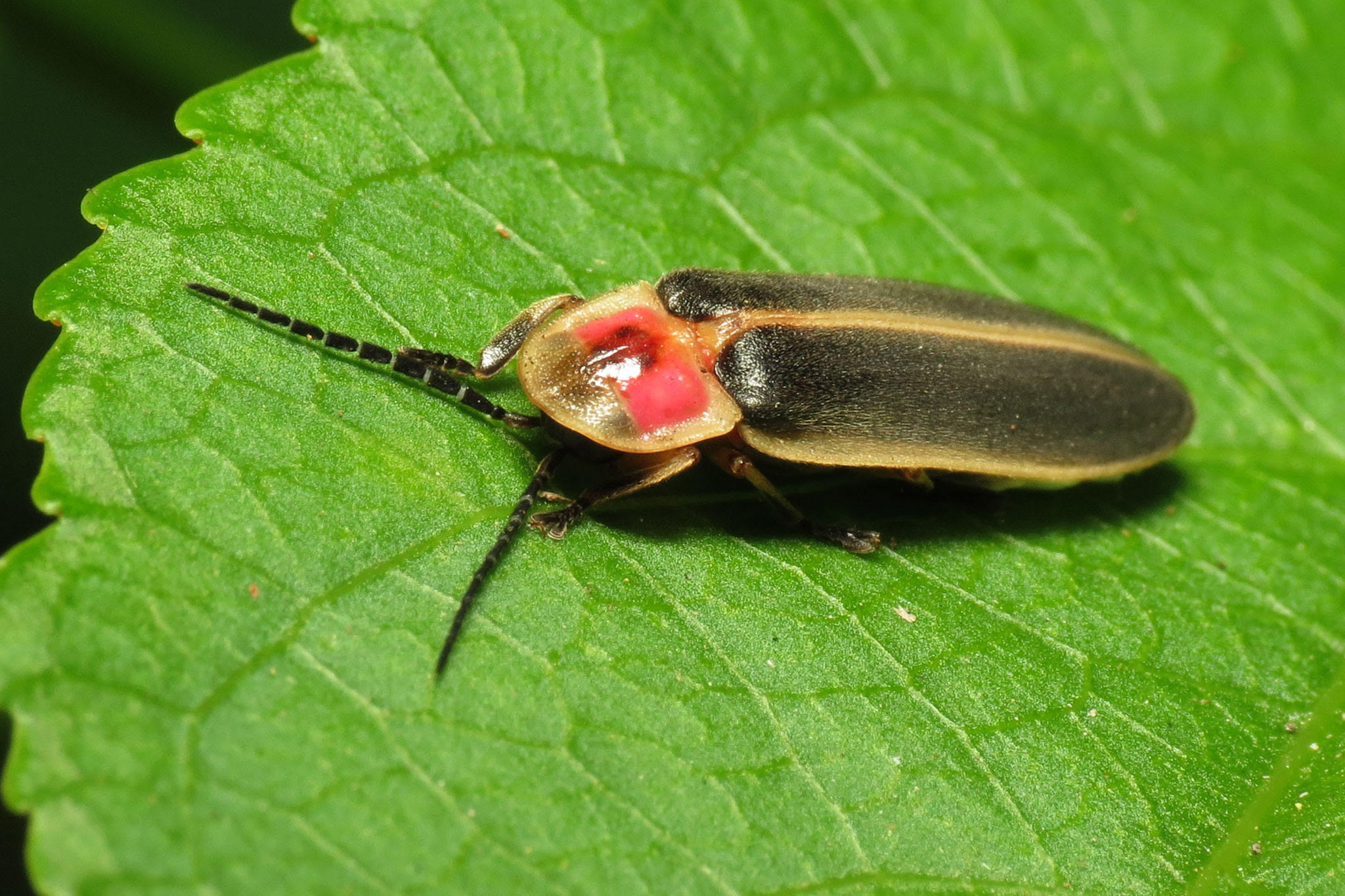
Close your eyes at the end of a hot summer day, and you’ll hear it — the humming whine of cicadas rising and falling. Open your eyes as day fades to night, and you’ll see it — hundreds of fireflies blinking on and off like tiny warning lights. Together, the song of cicadas and the flashes of fireflies are memorable signs of a typical St. Louis summer.
For people who have lived here a long time, the pairing is as familiar a summer thing as fireworks on the Fourth or sweating under the giant fans at the Muny. Cicadas mark the heat of the day; fireflies mark the cooling of the evening. Behind the racket and the glow, though, are insect behaviors that are stranger and more interesting than they first appear — and a reminder that wild creatures still share our urban environment, ones worth studying and protecting.
The sound you hear might come from any of more than 20 cicada species found in Missouri, according to The Insect Guide website. Most of a cicada’s life is spent underground as a nymph, feeding on sap from tree roots — rarely enough to harm a healthy tree. When conditions are right, nymphs emerge from the soil, molt into their adult form and begin calling for mates. Because each species’ song is slightly different, researchers can identify a species by its call alone, the same way birders identify birds by song.
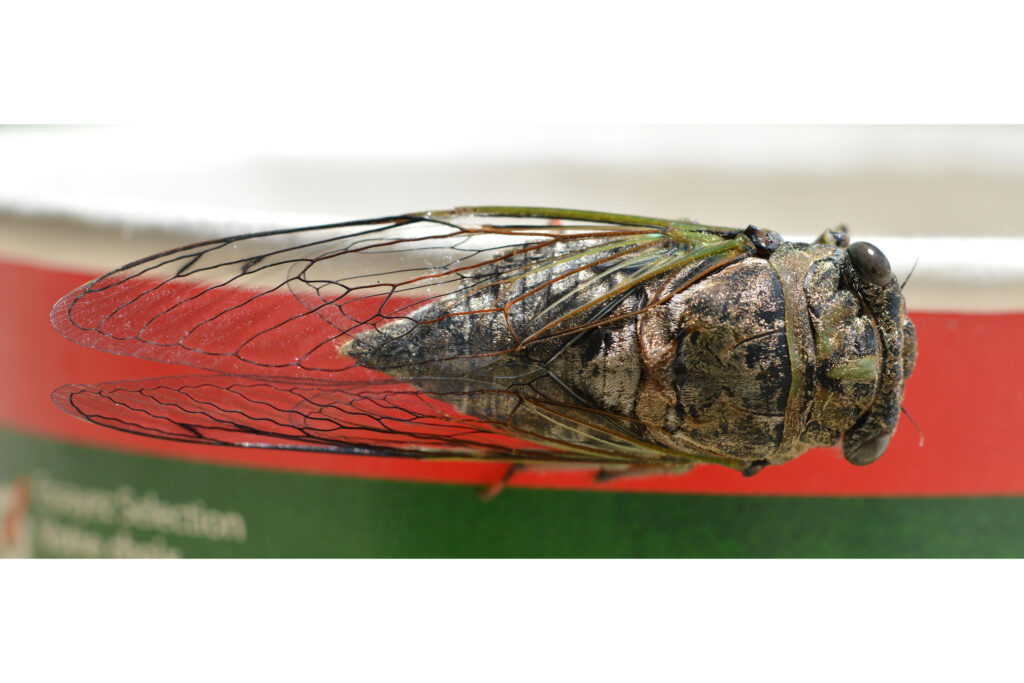
Cicada species generally fall into two categories: annual and periodical. Annual cicadas are the ones St. Louisans hear every summer, their pulsing whine building to a crescendo before fading away. Periodical cicadas are rarer and far more dramatic, emerging by the billions on 13- or 17-year cycles. In 2024, two periodical broods — Brood XIII and Brood XIX — emerged simultaneously for the first time since Thomas Jefferson was president. The swarms of billions were deafeningly loud.
Despite the volume, cicadas are a favorite meal for birds, mammals, reptiles and even other insects — making their sheer numbers, as much as their song, a survival strategy. Fireflies face their own predators as day fades into night. But what draws the eye isn’t survival — it’s how they manage to make their own light.
Fireflies produce that light chemically, through an organ in their abdomen. The species you’re most likely to see over a St. Louis lawn is the Big Dipper firefly, whose distinctive yellow-green flash traces a J-shape as it rises through the air. As with cicadas, the flash pattern varies by species and serves the same purpose — attracting a mate. The fireflies hovering a few feet above the ground are mostly males, signaling in a pattern specific to their kind. Females tend to stay low in the grass, are harder to spot and typically answer with a shorter flash of their own.
Also like cicadas, fireflies spend most of their lives out of sight — in their case, as larvae in the soil and leaf litter, where they hunt slugs, snails and earthworms for a year or more before emerging as adults.
It’s not yet clear how climate change is affecting cicadas, but the outlook for fireflies is more troubling. Because fireflies rely on darkness to find mates, the rapid spread of artificial light at night — along with habitat loss and pesticide use — is believed to be driving population declines worldwide.
So for one more summer, St. Louis still has both: the pulsing hum from the trees and the blinking lights over the grass — a small reminder that some parts of summer haven’t changed, even if the world around them has.