Historical February–March 2026 article. Dates, prices, services and contacts describe the source period; current availability has not been established.
The damage from the May 2025 tornado caused heartbreak in St. Louis. Wind ruined roofs, tree limbs crushed cars, and big trees that had been the backbone of our neighborhood came crashing down or were so damaged that they had to be removed. Although the loss of those living monuments was difficult, the work to renew, rebuild, and replant has been encouraging.
The losses are still clear in Forest Park. Many spaces still feel strangely barren. Repairing our homes comes first, of course, but replacing our lost trees is something to plan for.
In Forest Park, a plan to replace large old trees and diseased ones was already in place when the tornado hit.
According to Forest Park Forever’s Dominic Jansky and city arborist Jason O’Malley, although six thousand trees were damaged or destroyed by the storm, Forest Park already had extensive plans for replanting.
They have adjusted these plans to include an additional sixteen hundred trees this fall, and that increase will be maintained for the foreseeable future. O’Malley emphasized that tree replacement is not just the process of planting new trees, but must include plans for their ongoing care, because young trees need it to establish strong roots and withstand weather extremes. Since helping new trees recover from the shock of transplanting is so great, O’Malley recommends watering new trees regularly, even over the winter, as weather allows. Watering during the day can even help insulate plants from freezes, as long as the ground is not frozen when you water. Newly planted trees are susceptible to damage caused by sudden temperature swings. St. Louis, because of its location in our continental climate zone, is prone to freeze-thaw cycles and temperature swings. One common consequence is frost cracking.
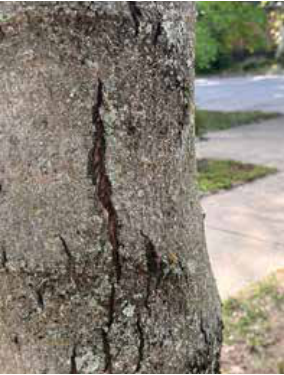
It works like this – sunlight warms the tree, and cells expand. Then, the temperature drops quickly, and some parts of the tree contract more quickly than others, causing the bark and even the wood to split open.
These splits are places where bacteria and fungi can enter and weaken the tree. Young trees, recently exposed trees (where nearby trees have been lost), and trees with thin bark, like maples and sycamores, are prone to this damage.
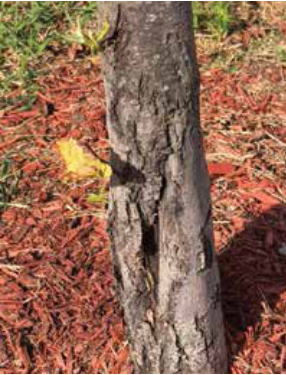
Another related and common type of frost damage is sunscald. For this type of damage, the daytime warmth and sunlight cause parts of the tree to come out of dormancy and start pulling water into cells, but freezing temperatures at night kill these activated cells, leading to sunken, discolored areas that often first show up the next spring or summer when the rest of the tree has come out of dormancy.
With a little planning, especially in autumn, damage from the freeze-thaw cycle can be prevented. One good option for young trees is commercial tree wrap. Wrap the trunk in late fall, after leaves have dropped, but before the first hard frost.
If you use tree wrap, however, remove it in the spring.
It can harbor pests under the wrap where you can’t see them. Keep trees mulched, too. Mulch helps soil retain moisture, and the insulation mulch provides helps moderate temperature drops. Mulch should be in a ring, a few inches away from the trunk.
The ring ideally can reach out as far as the branches extend, but several feet from the trunk works just fine for newly planted trees. Avoid bark damage when mowing or trimming. Damaged bark makes frost damage more likely. And one thing to not do – avoid fertilizing new trees in the fall, which can cause them to work on developing new growth. That new growth increases the risk of frost damage if it happens too late in the fall. Caring for a newly planted tree may take a little extra effort, but the rewards can last for many years.
With proper watering, mulching, and care in the first few seasons, trees can become an important part of the neighborhood, providing shade, cleaner air, stormwater control, and beauty for years.
Original photograph caption
Split bark illustrating tree damage.
Originally published in The Times of Skinker-DeBaliviere, February–March 2026.
Read this article in the original newspaper issue.
Original source: SD_Times2026_02.pdf, printed page(s) 4; PDF page(s) 4.





