Historical September–October 2025 article. Dates, prices, services and contacts describe the source period; current availability has not been established.
When I was in college learning about anthropology, identity was theme that appeared over and over.
In one class, we talked about how students could expand their vision of their “self” into the objects that surrounded them.
They weren’t just their body and mind but also their clothes, their book bag and laptop, the space they occupied. Despite not being a physical part of the person, all of these things mattered in how they were perceived and how they understood themselves in that time and place.
In a very similar vein, the apple tree on the McPherson barricade seemed to be attached to the identity of the neighborhood. Situated in such a prominent place, the tree was something which people would see everyday on the drive to and from their homes, even if only peripherally.
It was also a seasonal experience which neighbors would partake in when the apples were ripe and could be picked and eaten.
It was even something which had the potential to bring temporary visitors together as a talking point during the various seasons.
When I was a child, my dad made a special picking tool for us so we could pluck down apples that were out of reach. Quickly, it became an unofficial tradition to pick from the tree during its peak season. Sometimes we made the apples into pies. Sometimes we gave apples to friends. Sometimes we bit into the crisp, sugary fruit right then and there, savoring those watery bites in the hot summer sun.
When the tree began to get sick, it was very sad.
This beautiful living thing which held so much significance was fading away, and it felt like it couldn’t be stopped. Over the course of several years, its branches began to thin and its shape morphed into something which looked unnatural as dead bits were cut away and discarded.
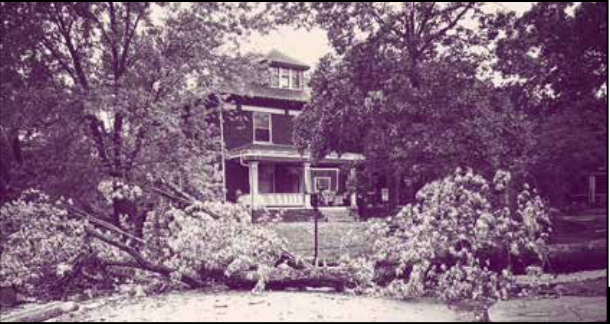
When the tornado finally destroyed it, it felt like such a loss.
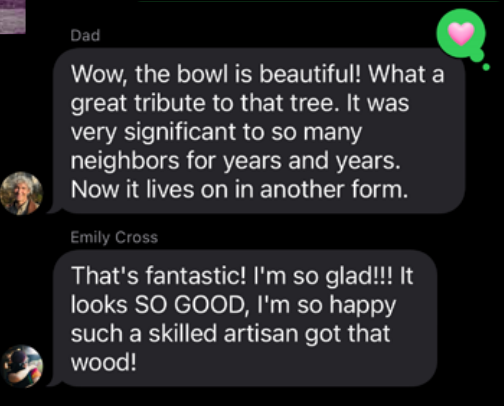
But despite its unfortunate turn, this old tree’s story wasn’t over yet. Thanks to my sister, Emily, my dad saved the trunk at her request so that we could give it to a wood turner who could utilize this valuable resource.
After months of the trunk sitting uncollected in our driveway, I took it upon myself to post it on Facebook Marketplace for free in the hopes that someone with some skill could turn it into something beautiful once again. That same day, I received a message from someone asking to pick it up, and with minimal back and forth, the collector agreed to send some photos of his work so we could see what he had done with the wood.
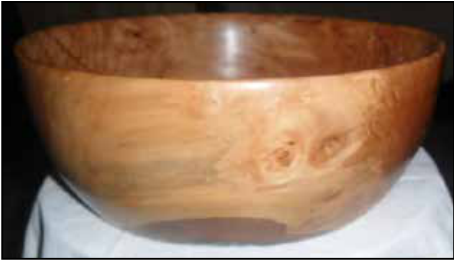
After only a few weeks, the wonderful artist showed us the first bowl he had produced with the apple wood.
He also sent pictures of some of his other previous work, which was impressive, to say the least. Obviously, my family and I were thrilled with
the results.
It can be very difficult to let go of things that are personally meaningful, and to me, this tree was more than just a thing that bore fruit, but a symbol of my childhood, of my neighborhood, and of community. I’m so grateful to this wonderful artist for taking something that held so much value and preserving it, changing it into something which can live out a new life. And, despite my love and appreciation for what that tree has given me and this community, I’m reminded by this story that it’s possible that a new chapter can begin once the old one is finished.
I look forward to seeing what new growth sprouts from the empty spot on the barricade. There’s so much potential and so much time for new memories to be formed around it.
Original photograph caption
Fallen apple tree accompanying Sarah Cross memoir.
Originally published in The Times of Skinker-DeBaliviere, September–October 2025.
Read this article in the original newspaper issue.
Original source: SD_Times2025_09.pdf, printed page(s) 4, 6; PDF page(s) 4, 6.





