Historical September–October 2024 article. Dates, prices, services and contacts describe the source period; current availability has not been established.
Fall is the perfect time to clean up your garden and flower beds, especially when the heat of late summer has kept you inside. One important thing you can do as you clean up is care for the soil.
When the soil has problems, it often has certain characteristics; it can look grey and dull, have a hard surface, shed water, and have spindly, weak-looking plants. Even if you don’t have any problems, covering your soil can help keep it healthy for the coming year.
There are two main strategies for improving the soil for next year – mulches and cover crops. Mulches can include things like landscape fabric or stones, which can look attractive, but must be removed for replanting.
This can be difficult. Stones or gravel can provide great drainage and is sometimes used for Mediterranean gardens. Landscape fabric can prevent weeds for a time, but is difficult to remove later, when it wears out and weeds have poked through. Many types of wood-chip and bark mulches can help your soil keep its moisture and can help soil texture as they decompose, but they may decompose slowly, and depending on what kind of tree the mulch is made from can make soil more alkaline or acid over time. Leaf mulch is a great choice; it is simply ground-up leaves that have been aged. Spread in vegetable or flower beds, it keeps moisture in the soil, decomposes quickly, and can prevent weeds from sprouting.
It is a good idea to spread a thin layer of compost on your soil. Compost increases nutrients over time and can help soil avoid compaction.
There are many kinds available at garden centers, but cotton burr compost can be a good choice because it is a byproduct of cotton production. Farmers traditionally burned it to dispose of it, but composted and spread on a garden bed, it adds nutrients and structure to soil. Cover crops can be useful when improving a garden bed for next year. Cover crops serve numerous purposes and are generally very easy to grow.
They suppress weeds, prevent erosion, and can leave behind valuable nutrients, just like adding fertilizer or compost.
When a cover crop is grown with the specific goal of adding nutrients to the soil, it is called green manure. Often green manures are legumes (members of the pea/bean family) because they can add nitrogen to the soil.
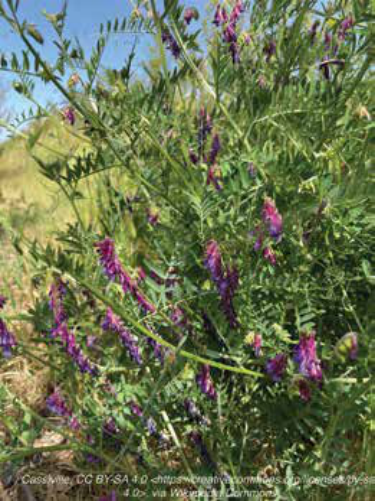
Some examples are hairy vetch or field peas. Oats and buckwheat are other common green manure plants. Seeds for green manure are available at some seed stores. One great place is OK Hatchery. For green manures, it is important to remember to cut the plants no later than the flowering stage – after flowering, a plant like buckwheat will reseed itself and can become bothersome. At this point, the plant material can be left on the surface to prevent weeds and decompose, or it can be turned in to the soil. Whatever you choose – mulches, compost, cover crops, or green manure – covering your soil for the winter will help keep out weeds, prevent erosion, maintain good structure, and add nutrients, so don’t forget to cover your soil
Original photograph caption
Cover crop illustration accompanying soil article.
Originally published in The Times of Skinker-DeBaliviere, September–October 2024.
Read this article in the original newspaper issue.
Original source: SD_Times2024_09.pdf, printed page(s) 6; PDF page(s) 6.





