Historical April–May 2024 article. Dates, prices, services and contacts describe the source period; current availability has not been established.
Our neighborhood recognizes the value of diversity.
We know it enriches us culturally, helps us build strong ties to our community, and can spur us to civic engagement.
However, city dwellers may not appreciate the benefits of biodiversity in the same way.
We should appreciate it though, because it also has important benefits for us as humans. Biodiversity is often defined as “all of the varieties” of living things and their interactions in an area, like a habitat or an ecosystem”.
This includes not just plants and animals, but everything that is alive, including microscopic life. Biodiversity has measurable benefits, just like human diversity. Among those benefits are increased health and food security, better water, healthier soil, and buffering from natural disasters.
There are many geographic units in which biodiversity is measured.
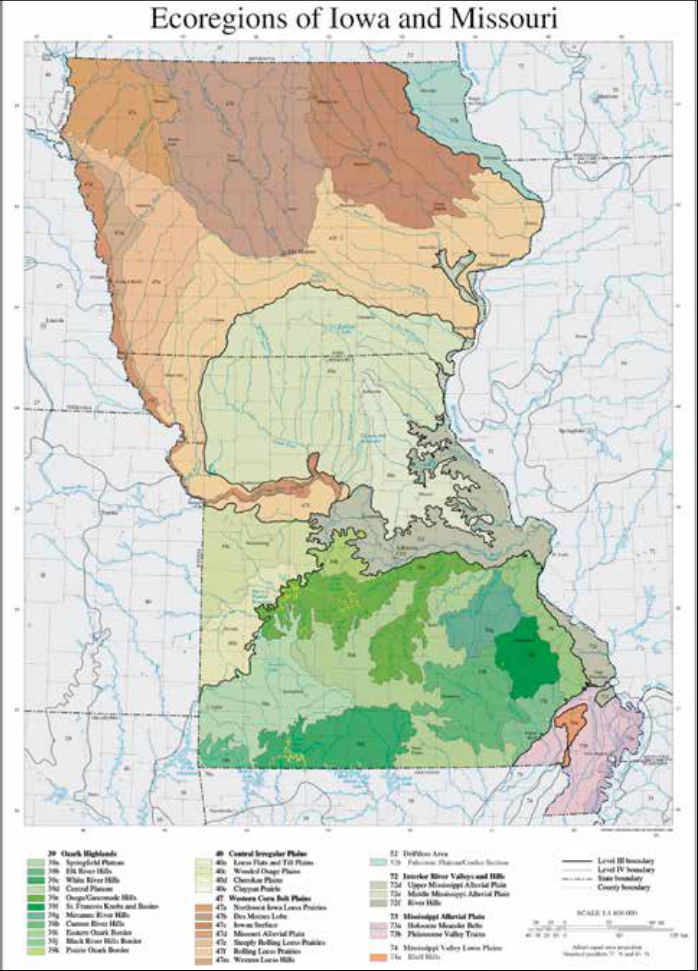
The EPA defines the Skinker DeBaliviere and St. Louis area as within the River Hills ecoregion, which is part of the Interior Rivers and Hills region of our continent. Often plant species are taken as an indicator of biodiversity. For our region there are currently 3074 recorded plant species for example. Of these 1648 are considered native.
In contrast, there are 1264 plant species observed in St. Louis, many of which are introduced and non-native. So, St. Louis has significantly less biodiversity than our larger ecoregion, and we can help change that.
The number and variety of species in urban areas is often significantly lower than more natural areas.
This has a number of causes, including increased amount of hard surfaces where plants can’t grow, stronger focus on ornamental planting, reduced open water, the presence of chemicals harmful to some species, and other factors. What can we do to help maintain biodiversity? One of the easiest things is to monitor it. iNaturalist and Seek are simple nature observation apps for your phone.
The observations you make go into a geotagged database, and can be examined by others.
When your observations become reliable and focused on natural species, they can become research grade.
These crowd-sourced observations help scientists measure biodiversity and species frequency over time. You can also take an active role in encouraging wildlife in your garden.
There are many books written about gardening practices that encourage wildlife, and there are some simple techniques that we can all do to help encourage and maintain biodiversity in our urban landscape. One is extending flowering seasons, by planting native plants with a variety of bloom times. Having flowers blooming at different times is beneficial for different species of plant pollinators. Consider providing bird feeders and water sources, especially in the winter months. Be aware that providing a water source requires some planning and ongoing care. Bird water sources should be in a shaded, open area so that birds can avoid predators like cats. Be prepared to add water occasionally and, once a week or so, it is a good idea to clean it with a weak vinegar solution. Providing cover for animals is important too. Native bushes and shrubs can provide safe places for birds and animals to live, and materials for nest building and food – and if these plants are native to the region, it is even more beneficial for encouraging wildlife and supporting biodiversity. Many Missouri native plant sources have recommendations about which shrubs to choose.
Some of the most beautiful and fragrant include Ninebark, Butterfly Milkweed, Red Buckeye, Silky Dogwood and Fragrant Sumac.
The Missouri Grow Native website has a resource guide about plant suppliers (https://grownative.org/resource-guide/) that can help you shop for the plants you want.
There are a few key points to remember about adding shrubs and bushes for wildlife; the more you put in, the more cover and food you are giving wildlife; varying blossom and fruiting times is great, because it supports wildlife over extended times and can support a higher variety of wildlfe; and finally, leaving the dead leaves under shrubs and bushes is important for wildlife too.
It helps maintain soil health, provides homes for many kinds of insects that feed birds and can even provide places for amphibians to live and breed.
Finally, if you want to attract more wildlife and increase the biodiversity of your garden, aim for more sustainabile practices. Use fewer pesticides or stop using them altogether. Substitute natural for chemical fertilizers. Use mulch to prevent unwanted plants and conserve soil moisture. Mow less and mow higher. You will be surprised at the increase in wildlife diversity you will see in your garden. And that is something we all will benefit from.
Original photograph caption
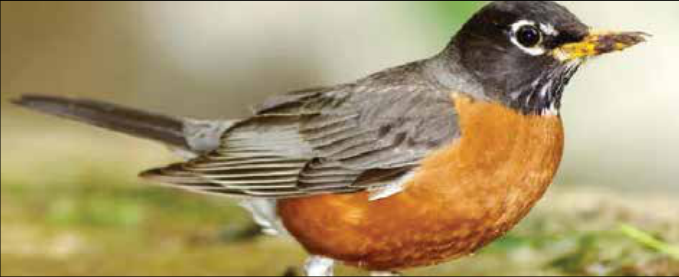
Robin illustration accompanying biodiversity article.
Originally published in The Times of Skinker-DeBaliviere, April–May 2024.
Read this article in the original newspaper issue.
Original source: SD_Times2024_04.pdf, printed page(s) 4; PDF page(s) 4.





