Historical February–March 2021 article. Dates, prices, services and contacts describe the source period; current availability has not been established.
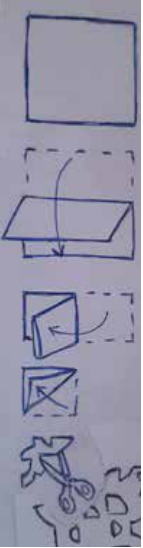
As we continue to social distance, there are many ways enjoy the art and science of our winter season! Art: Six Steps to Make a Snowflake Join your neighbors and place snowflakes in your windows for walkers to observe! 1. Find piece of paper. People often use a square paper, but any shape works. You can use scrap paper, wax paper, tin foil, recycled newspaper or even giftwrap! 2. Fold the paper in half. 3. Fold the paper in half. 4. Fold the paper in half again.
To make a six-sided snowflake, fold your paper into thirds. 5. Cut shapes on the edges. Try cutting different shapes to make your snowflake your own. 6. Unfold and there is your snowflake! You can color your snowflake or add flair to make your snowflake unique! Science: The Observation of Snowflakes Here are two people in history who observed and created images of snowflakes. Frances Chickering, from Maine, showed snowflake images in her 1864 book Cloud Crystals: A Snow-Flake Album.
She observed snowflakes as they fell on her windowsill and quickly made paper cutouts of their forms (Source: http://www.snowcrystals.com/facts/facts.html) Wilson Alwyn Bentley (February 9, 1865 – December 23, 1931), from Vermont, was called Snowflake Bentley.
He was the first known person to take detailed photographs of snowflakes. Snowflake Bentley caught flakes on black velvet and took pictures in a special way before the snowflakes melted. (Source: https://en.wikipedia.org/wiki/Wilson_Bentley) You can observe snowflakes nature too! Fact: Each snowflake is not unique. Identical snowflakes have been found before. Observe: Next time it snows, see if you can find two snowflakes that look alike. Can you make or draw a snowflake that looks like one you observed? Fact: Every snowflake has six sides Observe: Count the sides of the next snowflake you see.
It isn’t so easy! Fact: Snowflakes are not at all white. Because of the snowflake’s tiny surface, the light scatters in so many directions that it can’t absorb or reflect consistently, and the color comes back as white. Observe: What colors do you see in a snowflake? (Source: http://abc7.com/snowflakesall-different-what-color-is-snow-forecastweather/1600701/) Reading Corner Interested in learning more?
Here are a few non-fiction books about snow: • The Story of Snow: The Science of Winter’s Wonder by Mark Cassino (Pre-K to Grade 2) • Wonderful Water by Laura Miller (Age 8-12) • Snow Crystals by by W. A. Bentley and W.J. Humphreys (Grade 5+) Word of the Month Observation: The act of careful watching and listening: the activity of paying close attention to someone or something in order to get information (Source: www.learnersdictionary.com) Question for Kids Corner: Send them to kidscorner@sdtimes.org by March 10th
Original photograph caption
Six step snowflake folding illustration.
Originally published in The Times of Skinker-DeBaliviere, February–March 2021.
Read this article in the original newspaper issue.
Original source: SD_Times2021_02.pdf, printed page(s) 5; PDF page(s) 5.





