Historical November–December 2020 article. Dates, prices, services and contacts describe the source period; current availability has not been established.
Planting wildflowers in your garden has many advantages.
They are beautiful, support pollinators and wildlife, and well adapted to the region. Wildflowers growing untended are the best representation of the gardening rule, “the right plant in the right spot.” Wildflowers growing well in a particular spot will probably do well in a similar spot in your garden.
There are a few things to note if you want to grow wildflowers from seed you have collected. Plants that are described “Missouri Native” are not necessarily the same thing as true wildflowers. Many wildflower varieties growing in our area have been bred by seed producers to produce better color or bloom time or some other characteristic.
These plants may be hybridized. Seeds from hybrid plants may not resemble the parent plant or thrive as well as it did. Wildflowers that attract pollinators and native grasses are common choices for collecting seeds, but identifying plants can be difficult in the fall when plants are dry and brown.
There are several apps that help with this problem. Seek and its parent app, iNaturalist, use your phone’s camera for image recognition.
These apps function even in the fall when plants can be more difficult to identify.
They also can provide great information about ideal growing conditions.
To collect wildflower seeds, timing is important.
In general, seeds are viable when the seed head or flower has dried out. Viable seeds are often brown and plump.
When they are ready, they may fall easily from the seed head or capsule. Don’t collect more than 10% of the seeds from wild plants.
This ensures that the plant will reseed where you found it. Many seed collectors will clean the seeds, removing other material.
This helps remove insects that can reduce viability. Wild seeds should be kept dry and in a dark cool place. Many people store them in the refrigerator.
This helps seeds remain viable over longer periods of time. Many wildflower seeds also need a period of cold storage in order to germinate.
This storage is called “cold stratification.” To grow plants from seeds collected from wild plants, many seed savers plant in the late fall or early spring directly on the ground. Choose a spot like the one where you collected the seeds. Often wildflower seeds do better just thrown on the ground than started in pots inside.
It is smart to remove all other vegetation from spots where you want to seed wildflowers. Other plants (like weeds) often outcompete wildflowers in the early growing stages. Planting is easy. Scatter the seeds, walk on them to compress them on the soil and assist them with water the first few weeks of growth. Although wildflowers and grasses may not be as striking in appearance, once established, they are very hardy, can reseed themselves and attract all sorts of beneficial and attractive insects. You will also be happy, because you and nature have just collaborated on a project that benefits you both!
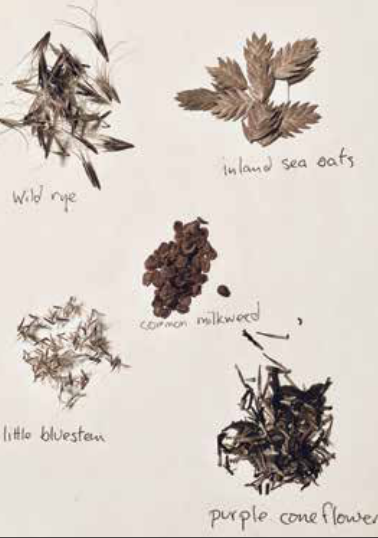
Original photograph caption
Wildflower seed specimens with handwritten plant labels.
Originally published in The Times of Skinker-DeBaliviere, November–December 2020.
Read this article in the original newspaper issue.
Original source: SD_Times2020_11.pdf, printed page(s) 4; PDF page(s) 4.





