Historical November–December 2018 article. Dates, prices, services and contacts describe the source period; current availability has not been established.
Imagine a world where soil is gone.
It has happened in the past.
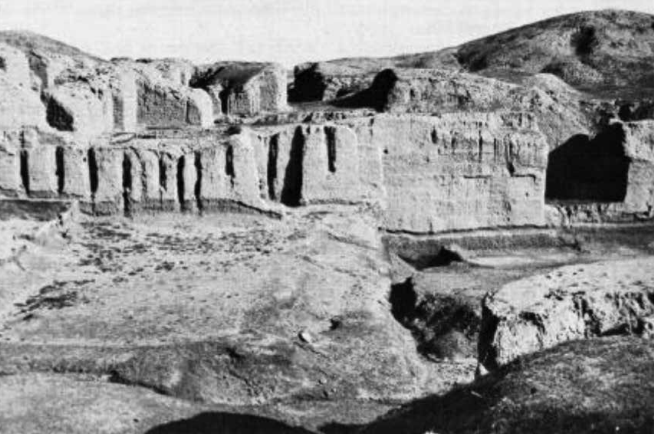
The cradle of civilization, Mesopotamia, is one example. Archaeology has shown that over-farming led to soil loss which led to famine and then to population decline.
In the fertile crescent, the evidence shows that within a few hundred years, Mesopotamian topsoil became so depleted that population was reduced by 96%, the area became desert-like, and sand covered up many of the larger cities.
There are similar archaeological sites around the world.
The dust bowl, from recent history, is another example. Soil conservation and composting is needed to prevent another “Dust Bowl” crisis. Even middle school students understand what would happen if soil eroded away.
A 7th grade middle school science class, when asked what would happen if soil eroded away, gave answers like, “If all soil was gone that would affect plants and humans, because plants are used for oxygen and food.” Another student wrote, “If all soil was washed away, plants and trees would die, which would kill animals and eventually us.” My favorite answer was “All living things would slowly suffer a painful and agonizing death.” Although middle school answers range from the delicate to the gruesome, the truth of each is clear; without soil, humanity would most likely perish.
In the millennia since the collapse of Mesopotamia, farming practices have evolved to help soil remain in place and productive. Farmers realized that keeping soil from eroding and adding organic material helped maintain soil productivity.
In addition, better plowing methods and terracing prevented soil erosion. Over recent centuries, humans developed scientific explanations of how soil came into our world.
The story of soil science is, like much scientific history, full of quirky humans doggedly pursuing strange ideas. One such story is that of Darwin and worms.
In his later years, Charles Darwin withdrew from public life.
He still wrote scientific articles, but of a more limited scope than the theory of the evolution. One of these articles measured how fast worms added material to soil.
From it, he eventually was able to suggest a rate at which soil is added by the decomposition of organic matter by worms and other organisms. Over time, such thinking led to the development of soil science.
As our understanding of soil advanced, it became important for states to monitor soil quality.
The University of Missouri Extension is one way the state does this. One Missouri Soil Specialist for soil is Debbie Kelly.
She is very clear that the erosion of topsoil is a very serious problem facing our state. Soil compaction and degradation are also problems in urban areas. Two things that help these problems are adding organic material and adding compost. So, how can you make a difference? One word: Compost.
It is an essential part of soil. Adding it to flower beds and lawns can improve soil in several ways.
It improves soil structure, which means reducing soil compaction and improving drainage.
It adds necessary nutrients and helps balance soil pH. Poor soil pH is a common problem in urban lawns and garden beds.
A common method of adding compost to a struggling lawn is applying a thin layer and raking it in.
There are long books describing the methods of building a great compost pile, but in short, there is one method that works for anyone: Pile up kitchen and garden waste and let it sit.
The process time varies depending on what is being composted, how it is deposited and how it is turned.
The fact remains, when you pile it up, it starts to decompose and become compost. Managing the process by layering, making sure it has the proper mix of organisms, or turning can speed up the process, but it isn’t necessary.
If you need more compost than you can make, there are many types composted from industrial waste. Cotton burr compost is often cheap and available in garden home centers.
It is often available in organic versions too, because otherwise it may contain the herbicides used to produce the cotton originally.
If you aren’t prepared to keep a compost pile in your yard, a small change is helpful. Consider keeping a kitchen compost bucket for vegetable scraps and empty it into the yard waste dumpster. By doing this, you are reducing trash and helping create compost in our city, even if you won’t have it for your lawn and garden beds. Creating and adding compost to your soil is helping maintain soil and by doing that you may be helping prevent what one middle school student describes like this: If all soil was washed away, I think that trees, cars, buildings and a lot of other stuff would go with it. Civilization and a lot…just a lot.
Original photograph caption
Ruins of Kish, one of the world’s most important cities six thousand years ago; original illustration caption.
Originally published in The Times of Skinker-DeBaliviere, November–December 2018.
Read this article in the original newspaper issue.
Original source: SD_Times2018_11.pdf, printed page(s) 6; PDF page(s) 6.





