Historical September 2014 article. Dates, prices, services and contacts describe the source period; current availability has not been established.
Among the pleasures of delving into our neighborhood’s history have been the truly interesting stories of the clubs and music scene that was the “DeBaliviere Strip”.
The Mural Room, the Tick Toc Tavern, the Stardust Burlesque, and many more, made up the core of the Strip. Reading such wonderful books as St. Louis jazz expert and author Dennis Owlsley’s City of Gabriels make for appreciation of the individuals and music groups that contributed their genius to St. Louis’ history. One club stands out for its having been the site of a recording by jazz guitarist great Grant Green.
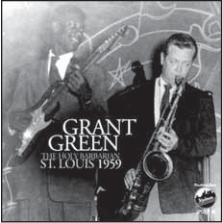
His recently discovered and re-released record is called “The Holy Barbarian, St. Louis, 1959.” As Owlsley learned from Ollie Matheus, the club owner, “the Holy Barbarian was the first interracial club in the city and both of the (musicians) unions gave me a lot of crap over that.
But it was the happiest place.” Born in St. Louis in 1931, Green left to record with Blue Note Records in 1960, shortly after the shortlived club at 572 DeBaliviere was closed after only a few weeks on DeBaliviere. Because of its recent re-release, several commentators have taken notice. Kevin Whitehead, on NPR (January 11, 2013), said that “ The Holy Barbarian, St. Louis, 1959 could be the name of a fine stage play, perhaps based on the actual circumstances of the recording. One musician on the way up, another past his moment in the limelight and one more who had his chance but never quite made it all convene on Christmas night, part of their week-long stand at the Holy Barbarian, a beatnik hangout replete with chess players and a local artist painting portraits.
The emcee chats loudly near the stage, then grabs the mic to spout what sounds like a send-up of beatnik poetry.” But, as Armand Lewis says in his Record Collector News website, “Nightclubs come and nightclubs go. Troubles with rents, liquor licenses, attracting enough patrons to cover the overhead and pay the performers and staff are all understandable reasons for high turnover.
But when local police start harassing owners, that’s a bridge too far.
This was the fate of the Holy Barbarian nightclub in St. Louis in early 1960.
The club opened in December of 1959 and was a real beatnik hangout. Abstract art on the walls, poetry readings and a racially i n t e g r a t e d policy that got the attention of the (at the time) very segregated city. Local a u t h o r i t i e s would close the club down within four months, but not before a guitar legend just on the verge of breaking through would be recorded for the only time in his home town.” The Holy Barbarian may have been the first interracial club in St. Louis, but its demise tells a bit of the sad St. Louis story. Fortunately for music history, Grant Green went on to New York and recorded multiple albums with Blue Note Records before dying young at just 43. Not so fortunate was the way the authorities shut down the innovation that was happening on DeBaliviere.
Original photograph caption
Album cover for The Holy Barbarian, St. Louis, 1959 shows Grant Green and tenor saxophonist Bob Graf. Original cover artwork.
Originally published in The Times of Skinker-DeBaliviere, September 2014.
Read this article in the original newspaper issue.
Original source: SD_Times2014_09.pdf, printed page(s) 7; PDF page(s) 7.





