Historical February–March 2004 article. Dates, prices, services and contacts describe the source period; current availability has not been established.
Thank you.
I am deeply honored. At first I felt self-conscious upon hearing I would receive the St. Louis Award.
I got more comfortable when I thought of it as recognition for a great neighborhood – in fact, for all the great neighborhoods that make up our wonderful metropolitan area. Since it would be very difficult to thank everyone who has helped me and inspired me, l won’t name specific people or organizations today with the exception my family.
I want to thank Linda and our daughters, Hope and Christine.
I greatly appreciate all who came today and those who couldn’t who wrote wonderfully supportive letters. Everyone at The Pageant today obviously loves living and working in the St. Louis area.
I would like to talk briefly about three subjects: The Loop , Neighborhoods and Downtown St. Louis and the wonderful Loop Trolley project. First—The Loop.
It took the hard work and foresight of many people to stabilize both the residential and commercial parts of this area. Mayors, council members, aldermen, city hall officials, Washington University, business owners and residential neighbors of both University City and the City of St. Louis have participated.
A key to the area’s recovery was the decision by many to embrace diversity and in the process not only stabilize but strengthen the neighborhood.
The great mix of business owners, commercial property owners and residents is one of the greatest strengths of The Loop.
The Loop is racially diverse – not just with visitors and workers. Minorities and women own businesses in The Loop. Minorities and women own buildings in the area. It’s exciting to look around The Loop – and not just at the pink spiked hairdos and the elaborate tattoos on some of the more colorful visitors, although it is a fun place to people-watch. What’s really exciting is that three blocks in one direction there are $500,000 homes and three blocks in another direction there are $50,000 homes – and they’re all good homes.
There is economic diversity. You also notice residents and visitors of all ages in The Loop. Several large buildings and many smaller ones house older adults who interact with the many students that live in and frequent the area. People are alive in The Loop.
They argue politics and discuss music, art, sports, and other topics.
The gradual turnaround of The Loop began in the early 1970s in University City.
A few years earlier, a pro-active Council and City Hall helped set the stage for revitalization by passing legislation that limited occupancy of first floor storefronts to retail shops, restaurants and galleries.
Each time a sidewalk-level office closed, a retail store or restaurant opened in its place and attracted a few more pedestrians.
A redevelopment plan for Delmar east of the City Limits was passed by the City of St. Louis 10 years ago, due to the efforts of equally dedicated City residents, mayors and aldermen. Through the years, the hard work of many has resulted in a vibrant, revived business district along the 6000-6600 blocks of Delmar in University City and the City of St. Louis.
As the new logo depicts, The Loop has extended past the arbitrary city/county boundary and across Skinker to the Wabash Station and the Delmar Loop MetroLink stop. By working together we have created a six-block district of more than 30 international and American restaurants whose menus offer Ethiopian, Lebanese, Chinese, European, Persian, ltalian, Nigerian, Greek, Japanese, Mexican, Korean and Thai cuisine in addition to barbeque, deli, fondue, and contemporary and classic American selections. Soon Vietnamese, Chinese Noodle, Nuevo Latino and Pan-Asian restaurants will join the mix.
In addition to sidewalk performers, live music is featured regularly in 10 venues ranging in capacity from 50 to 2,000 – grouped along six blocks. Many consider The Loop to be the live music center of St. Louis, partly because of the number of clubs, but even more because every genre of music is showcased here.
It is also nice having the two top record stores and a musical instrument shop in the mix.
With 14 apparel and accessories stores from which to choose when shopping for clothes (with more coming next month), The Loop also is becoming known as a boutique district. Add eight galleries that feature art and decor items from North and South America, Asia, Africa and Europe, three screens showing independent films at the Tivoli, four specialty food and wine stores, vendors at the Market in The Loop, four furniture and home furnishings stores, 18 gift and specialty shops, two book and magazine stores, two tattoo studios, eight hair salons and next month an art deco martini bar and bowling alley – and the variety available in The Loop becomes extremely impressive and inviting.
It is truly one of the most exciting and interesting Restaurant, Shopping, Arts & Entertainment districts in metropolitan St. Louis and the entire Midwest.
Now to the second topic: Downtown St. Louis and Neighborhoods: It took about 30 years for The Loop in University City to get where it is today.
It has taken only about three years to expand The Loop into the City of St. Louis.
In addition to publicizing the proximity of MetroLink and the new street, sidewalk and lighting improvements, the strategy for revitalizing this stretch of Delmar was two-pronged: to fill in holes in the streetscape with the new Pageant and Regional Arts Commission buildings, and to purchase and renovate the historically significant buildings that were in the worst condition before tackling other buildings.
Some similar efforts by excellent companies are going on in Downtown already.
But what if each of the 30 major corporations that make up Civic Progress purchased and renovated two large downtown buildings with financing support by major banks? Can you imagine people reading a headline that said, “60 Buildings In Downtown St. Louis To Be Renovated In The Next Two Years!” And then to take it a step further, what if the 97 corporations that make up the Regional Business Council each bought four small to mid-size buildings in the commercial intersections of neighborhoods in north St. Louis, south St. Louis and mid-town with financing support by neighborhood banks? Can you imagine an addendum to that headline that said “388 Buildings in Neighborhood Commercial Districts Throughout St. Louis To Be Renovated In The Next Two Years!” Yes, there would be some risk.
Some of the buildings might lose a little for a few years, but they also might break even or show a profit.
The way real estate in St. Louis has appreciated over the last 10 years, it would have been a wonderful investment if it had been done a decade ago. Long term, it might be an excellent way to invest in the future of the St. Louis region as well as the companies involved.
It could attract businesses from other states to downtown St. Louis and new owner-operated businesses to neighborhoods in north, mid and south St. Louis.
They would have a stake in their neighborhoods and would add to the stabilization process.
They and their neighbors could take pride in the progress of their areas.
The quality of life for everyone could improve. Next comes the question of how to connect these neighborhoods to the other and to MetroLink. That brings me to the third and final topic: The Loop Trolley Project. About five years ago at a neighborhood meeting, people were asked for ideas that would spur economic development east of Skinker Boulevard.
It occurred to me that building a fixed-track vintage trolley system would help the area on several levels.
It would attract retail and office development along the route and would attract residential development for several blocks on each side of the route; it would better link the area to the MetroLink system; it would be an attraction to neighbors and visitors to enjoy; and it would be environmentally sound.
The proposed 2.2 mile route would run from University City City Hall (near the lion gates) east on Delmar Boulevard to DeBaliviere Avenue and then south on DeBalliviere Avenue to the Missouri History Museum and back.
It would connect the Loop with two MetroLink stations (Delmar Loop and Forest Park).
The colorful electric trolley cars would operate on two sets of tracks (one each direction) in the existing traffic lanes, just as the diesel-fueled buses do now along with automobiles.
In December 2000, an approximately $200,000 feasibility study was completed by Metro. Among its conclusions were ridership projections of 446,000 annually. Although it would cost more to build the fixed-track vintage trolley system rather than a rubber-tire bus-like system, the operating costs of the two systems would be about the same. Ridership on the vintage trolley system would be 70% greater! Historic trolleys operate very successfully in other cities including San Francisco, Portland, Kenosha, Dallas, Memphis and New Orleans. Several of these cites are adding more fixed-track vintage lines, because they know trolleys attract economic development, stabilize neighborhoods and attract tourism income.
The non-profit Loop Trolley Company that was formed to further this project has received unanimous resolutions of support from numerous neighborhood organizations, as well as the University City Council. Congressman Gephart and other elected officials on both national and local levels have shown their support. People are excited about this project. Almost every day, I am asked, “When is the trolley going to start operating?” The answer is that even if everything goes just right with fundraising and engineering, it will be at least three years from now, but it will be worth doing it the right way.
It is important for St. Louis that the first new trolley system is built in a first-class manner.
It can be a prototype for growth and stabilization in other neighborhoods in the region. Not only can the trolley be an attraction, it can be a source of pride for the metropolitan area. Thank you all for coming to The Loop today. Again I want to thank the committee for this great honor.
This is an exciting time to be living in St. Louis and University City. Life is good when family, friends, co-workers, businesses and government can band together to make an area a better place to live. Thank you.
Original photograph caption
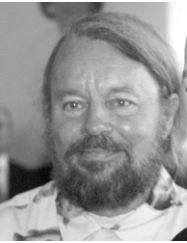
Joe Edwards, StLouis Award recipient; source speech portrait. Photographer not credited.
Originally published in The Times of Skinker-DeBaliviere, February–March 2004.
Read this article in the original newspaper issue.
Original source: SD_Times2004_02.pdf, printed page(s) 4; PDF page(s) 4.
