Historical November–December 1999 article. Dates, prices, services and contacts describe the source period; current availability has not been established.
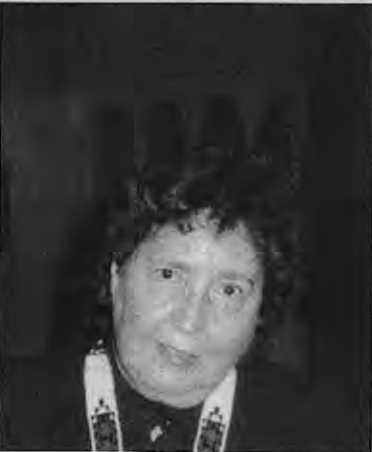
For ten years, Mary Ann Cawley-Shickman dispensed books along with her own brand of warmth and humor at Skinker DeBaliviere’s neighborhood library, the tiny, old Kingsbury Kiosk. Many neighbors will recall her summer reading programs that urged their children to visit the library and read, read, read.
Now that she’s retired, she has time to write her own life story, The Madness of Mary Ann…a Kaleidoscope of Life Experience.
This newly published book, available at Left Bank Books ($12), is a quirky account of Cawley-Shickman’s disastrous early childhood, her battles with bipolar disorder, the doctors who helped her (and who didn’t), her marriage, travels and multi-faceted career. Father Walter Ong, S.J., calls the book “very different, but appealing to a lot of people locally. Even the flaws have charm.” It also shows Cawley-Shickman, he adds, to be “very open and accepting of people.” One chapter deals with a littledocumented piece of local history: “the Farm,” an early-1960s haven for creative thinkers, located in Defiance, Missouri.
The people who visited the Farm, largely St. Louis University graduates, included SLU history professor and neighborhood resident Jim Hitchcock, as well a social worker Jack Lane and psychiatrist Jerry Wessel, M.D. Cawley-Shickman’s experiences there had a few comical repercussions. One member of the Farm community was David Farrelly, a bearded, iconoclastic fellow who once asked Cawley-Shickman if he could camp out at her 13th-floor apartment for a few days. One night he arrived home late and tiptoed into an apartment—on the 14th floor. “He came in saying, `Your Uncle David is home,'” Cawley-Shickman writes. “The elderly lady who lived there got hysterical. David tried to calm her, but that just made It worse.” But the Farm also had much more serious repercussions in Cawley-Shickman’s life.
Her conversations there awakened in her a strong sense of social justice and stimulated her to act.
From that point on, she became deeply involved in the Civil Rights movement and the anti-war movement of the 1960s and ’70s.
This book captures Cawley-Shickman’s full but difficult life. Seen in that light, it is an affirmation that courage and perseverance—mixed with kindness and good medicine—can triumph over very difficult odds indeed.
Original photograph caption
Mary Ann Cawley-Shickman. Photographer not credited.
Originally published in The Times of Skinker-DeBaliviere, November–December 1999.
Read this article in the original newspaper issue.
Original source: SD_Times1999_11.pdf, printed page(s) 3; PDF page(s) 3.
