Historical November–December 1999 article. Dates, prices, services and contacts describe the source period; current availability has not been established.
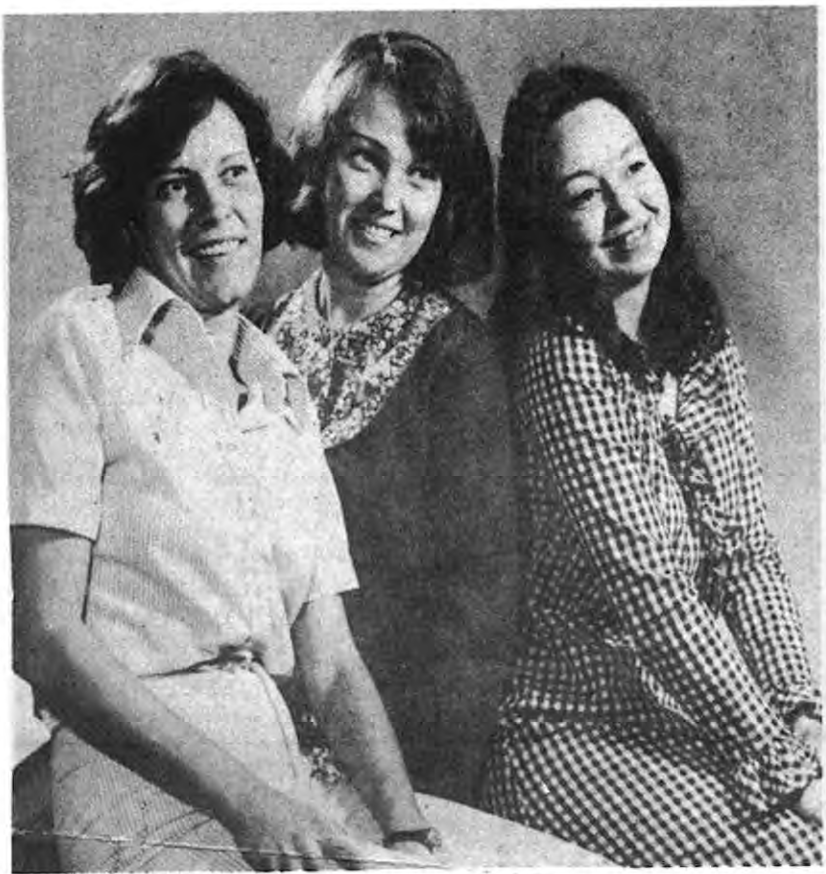
For three young women living on McPherson Avenue in the west end of St. Louis, the tie that binds their neighbor. hood together can be found in archives detailing the city’s history. So for almost a year Mrs. Kathleen Harleman, Mrs. Susan K. Tepas and Mrs. Georgiana Stuart researched the history of the Skinker-DeBaliviere area.
The end result of their labors has been compiled in a little booklet called “The Neighborhood — A History of Skinker-DeBaliviere.” The Skinker-DeBaliviere area is bounded by DeBaliviere Avenue on the east, Lindell Boulevard on the south, Westgate Avenue on the west and Delmar Boulevard on the north. 22 Within it are the Parkview Heights and Rosedale-Skinker Neighborhood associations, and Washington Heights Neighbors, a third community organization.
All are concerned with preserving the residential character of the area and the charm of many of the old houses and apartment build. ings.
The threesome undertook the project primarily because, as Mrs. Stuart put it, “We live in the area and really believe in it.
We had been casually discussing the fact that there was a lot of old St. Louis history interwoven with the history of the area, and decided people ought to know more about it.” Then too, as is pointed out in the introduction to the 50-page chronicle, 1973 is the 100th anniversary of the subdivision of the Kingsbury Farm—land that was owned by one of St. Louis’s earliest settlers.
The booklet offers not only a genealogy of Kingsbury descendants, including such familiar names as Chouteau, Cabanne, Gratiot, Labbadie. Papin, Waterman and DeGiverville, but also an 1873 surveyor’s map of the farm to aid the reader, The booklet traces the background of the Skinker-DeBaliviere area through its myriad of property owners from 1779 to the turn of the century when the River des Peres was still flooding and causing residents great trouble.
There are gray areas of con fusion in the work, which occur mainly when time sequences shift back and forth from the late 1800s to the early 1900s. Because development of the Skinker-DeBaliviere area was interwoven with the development of Forest Park and the 1904 World’s Fair, there are references to streets such as Kingshighway, which is described as “a muddy lane running through a flat swampy meadow” which included the land that is’now Portland Place and Westmoreland Place.
There is a brief discussion of how Thomas Skinker and William Forsythe, two of the most powerful landowners in the area, figured in the acquisition of land for what was to become Forest Park, and how Forest Park catapulted St. Louis to world-wide prominence as the site of the Louisiana Purchase Exposition in 1904.
On the other hand, there are gaps between 1920 and the present. And although there is much discussion of the colorful history which shaped the area, the not-so-colorful aspects of how the area declined in the 1950s is skimmed over.
But the authors compensate for these blank spots by admitting that they didn’t have enough time to do the job as thoroughly as they had wanted.
The booklet can be obtained for $1 from the Skinker-DeBaliviere Community Council office, 6008 Kingsbury Avenue.
It represents an extremely competent effort on the part of three housewives and mothers who somehow managed to squeeze trips to the Missouri Historical Society, various public libraries, city hall and Washington University’s libraries between trips to the grocery, the “Stay N’ Play” neighborhood day care center and schools. Actually, the three women spent nearly every Tuesday for almost a year researching,- writing and rewriting. Their diligence is especially impressive because none of them had ever done any writing outside of academic studies. Mrs. Stuart, whose husband Calvin is executive director of the Skinker-DeBaliviere Community Council, has completed over 20 hours toward her Ph.D. and is a former resident of south St. Louis. Mrs. Tepas, who is from western Pennsylvania, has completed her master’s degree and Mrs. Harleman, who is from Florissant, has worked for an advertising agency.
The three live within a few doors of one another and all were drawn to the prospect of writing the booklet by a mutual love of the area in which they live—so much so, in fact, that they plan to dig in again to fill in some of the gaps missed in their initial work. “Our husbands were just great about the time we took away from almost everything at the end,” Mrs. Tepas recalls, “but they almost flipped out when we told them we planned to do it again.” She said that the husbands had been “fantastic… in their support of the novice authors.
In closing their booklet, the women point out that their prediction of a healthy future for the neighborhood rests in the people who live there. “They (the people) are working together for the future, and it is the people living here who make Skinker-DeBaliviere not just an area, but a Neighborhood.”
Original photograph caption
Georgiana B.Stuart, Kathleen Harleman and Susan Tepas, authors of The Neighborhood. St.Louis Post-Dispatch photo, August 9, 1973.
Originally published in The Times of Skinker-DeBaliviere, November–December 1999.
Read this article in the original newspaper issue.
Original source: SD_Times1999_11.pdf, printed page(s) 6, 7; PDF page(s) 6.





