Historical March 1995 article. Dates, prices, services and contacts describe the source period; current availability has not been established.
There is an adage in veterinary medicine, probably the same one is used in human medicine, that cases come in threes. Recently, that has been true for us, as we have had three cases of dogs with liver disease. Dogs and cats are susceptible to many of the same liver disorders as humans: hepatitis (viral or bacterial), cirrhosis, cancer, and others.
The liver is a very resilient organ with large reserve capacity and some regenerative powers.
As a result, a patient with active liver disease often times does not show any signs, or feel ill, until much of the liver is damaged or destroyed. Many times the earlier stages of liver disease are detected when performing routine blood screening tests, possibly for other problems.
The first set of tests for liver disorders do not reveal if the liver is able to adequately perform; they only are an indication of whether there are liver cells dying, or if the liver is congested, not allowing the normal flow of bile through itself. Further tests are needed to determine the physical structure and size of the liver and if the liver is doing its job. Generally a liver biopsy is needed for an exact diagnosis of liver disease.
A biopsy can be obtained with a needle through the skin, or by exploratory surgery.
The needle method is less traumatic, but less informative, than the exploratory surgery. Treatment of liver disease is not easy and results are often difficult to predict. Bacterial infections are the most curable with antibiotic therapy. Many times we treat degenerative liver disorders with special diets and drugs to try to slow down the process and assist the body in functioning with limited liver usefulness.
When diagnosed early, some animals will remain clinically healthy, feeling well, for a few years with liver disease. Unfortunately, liver disease is frequently diagnosed in its late stages and the pet will not survive beyond a few months of the diagnosis.
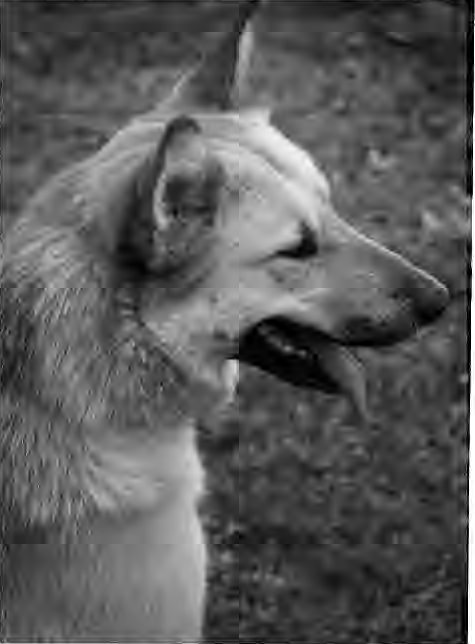
Original photograph caption
Annie, one of Georgi Fox’s healthy dogs. Photo by King Schoenfeld.
Originally published in The Times of Skinker-DeBaliviere, March 1995.
Read this article in the original newspaper issue.
Original source: SD_Times1995_03.pdf, printed page(s) 6; PDF page(s) 6.





