Historical February 1995 article. Dates, prices, services and contacts describe the source period; current availability has not been established.
We hope that all readers of the Times will vote on March 7th in the city primary election (for Alderman and for President of the Board of Aldermen).
The office of President is important for the aldermanic Board, of course.
The President is also one of the three officials, along with the Mayor and Comptroller, who make up the important Board of Estimate and Apportionment, which decides what funds will be allocated in running our city.
We asked each of the 7 candidates to provide a statement and then to answer six questions that the editors thought would be of special interest to readers of the Times.
We offer their responses here unedited.
However, we have grouped the answers from all of the candidates under the six questions for our readers’ convenience.
We asked each of the 7 candidates for the aldermanic presidency to provide a statement and then to answer six questions that the editors thought would be of special interest to readers of the 77mes.
We offer the unabridged responses of those who replied.
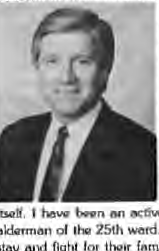
However, we have grouped the answers from all of the aldermanic presidential candidates under the six questions for our readers’ convenience. President of the Board of Aldermen Statement from Paul Michael Beckerle We are all familiar with the challenges facing our city: fighting crime, better schools and housing, stable communities. Our city government should be addressing that set of challenges with vigor and tenacity.
It should be focused on better solutions for the people, not sweetheart deals for the privileged.
I am running for President of the Board of Aldermen in the March 7 primary election because I believe in the future of this city and I think that it’s time city government got serious about saving it.
My record of honest public service speaks for itself.
I have been an active and innovative legislator during my ten years as alderman of the 25th ward.
The voters of this city. those who have chosen to stay and fight for their families, deserve a full-time Aldermanic Resident who will work hard, get innovative. put them first and put the bad guys and backroom deals last. Surely, the City must be more efficient, and do a better job of keeping people safe from crime, and of creating economic opportunity.
We must also tackle one of our most pressing problems. housing. Government must help rebuild and strengthen our communities by making it cost-effective to develop middle-class owner-occupied housing for working families.
My plan for the conversion of multiple-family housing Into single-family units is a necessary step toward a safer. and stronger St. Louis for your family and mine.
This is an important election for St. Louis. and I would very much appreciate your vote on March 7. Statement from Tom Braford I’m running for President of the St. Louis Board of Aldermen because I’m concerned and alarmed by what I see going on In the City of St. Louis. I’m concerned about the perceived lack of opportunity, but most of all I’m concerned that an increasing number of is are at risk of “falling through the cracks” because we no longer have an adequate community of support.
My campaign is about that and about building the kind of coalitions that can make a difference. It’s about opening up communications and building relationships between those at the top and those at the bottom—between those that have and those in need.
The work that I’ve done has always been based on ingenuity, stick-toitiveness, and an ability to work with and bring out the best in people.
I have a B.S. in Education with a major in Political Science.
I have the experience we need to revitalize the city.
As a probation and parole officer, I established the first GED program for ex-offenders after receiving training at the Missouri Highway Patrol Academy.
As a specialist in the field of affordable housing, I served as a graduate level consultant for Washington University and the Housing Law Clinic at St. Louis University.
I am a graduate of Coro Neighborhood Leaders training program. Coro is a national organization that selects and trains leaders dedicated to public service.
I have lived in many parts of the city. both north and south. Statement from Phyllis Young My husband and I purchased our home in Soulard In 1976. and have been rehabbing ever since!
My interest in rehabbing extends to my neighborhood, the adjacent neighborhoods and the entire city.
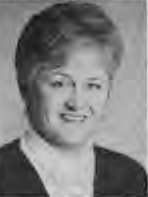
I have served as 7th Ward alderman since 1985. Unlike most people who run for office as the product of a ward organization, I earned my job through my neighborhood involvement.
I became involved in government as an extension of my interest in rebuilding my neighborhood.
I served as president of my neighborhood organization.
I served on the boards of the St. Agatha Day Care Center, Neighborhood Housing Services, and the Citizens Advisory Committee of the Community Development Agency.
I volunteered at the St. Peter and Paul homeless shelter.
I did so because I believe that strong neighborhoods are our best tool against bad influences in our city.
When it comes to measuring results, no other candidate can match my solid record of producing new housing and new jobs. That’s because I’ve worked full-time as an alderman for the last ten years.
I will work full-time as President of the Board of Aldermen.
I have worked closely with businesses to create jobs and business tax revenue for our city.
My rapport with the business community will allow me to forge the kind of creative public-private partnerships that are needed to address our most pressing problems.
The 7th Ward which I represent is a microcosm of the city.
When I became alderman the ward was fractured by fighting among the diverse groups.
I have successfully worked with all these groups to forge a common agenda for progress and the results are visible throughout my ward: neighborhoods reborn, downtown revitalized. and former foes working side by side.
As the first woman president of the Board of Aldermen.
I will build upon those successes to strengthen neighborhoods and job opportunities throughout our city.
The good ol’ boys and special interests have run the show for long enough. It’s time for a real neighborhood leader to take charge!
With your help it can happen. I’d appreciate your support on March 7th. What are your priorities for use of Community Development Block Grant Funds and Sales Tax Revenues? Beckerle: The CDBG funds are best spent on neighborhood stabilization and a home repair program for citizens on fixed incomes, particularly the elderly. Sales tax revenues. such as the 1/2 cent increase passed by city voters in 1993. are being and should continue to be spent on capital improvements, including city parks. Braford: I would establish a privately managed community development trust fund that would issue credit vouchers to individuals based on the same demographic formula used by HUD in initially awarding the funds to the city.
I would further create a protected economy within the most highly impacted areas of the city by restricting use of those vouchers to that area. Interest earned on the fund would support administrative cost, marketing of the programs, and provision of information and technical assistance.
A periodic clearing of accounts would satisfy IRS requirement.
The net result would be the creation of an economic magnet, drawing goods and services to these areas In much the same way that sporting and gambling facilities draw money to downtown and Laclede’s Landing.
This would also serve as a stimulus for innovation and entrepreneurship within the impacted areas.
I would use sales tax revenue to maintain repair and replace infrastructure and for special needs on a limited basis. Young: The top priority for use of block grant funds should be the creation and rehabilitation of housing.
A sound housing stock brings stability to city neighborhoods. Sales tax revenue fluctuates with the economy.
As such, prefer to see that money go to capital improvements to rebuild our aging infrastructure, rather than used on new programs which would have to be abandoned when tax revenue falls. What specific means do you plan to address crime In city neighborhoods? Beckerle: I strongly support the new initiative to raise the authorized strength of the city police to 1650 officers. By adding the 23 officers funded by last year’s federal crime bill. the number reaches 1673.
However, this is only part of the solution.
We also have difficulty attaining the authorized strength of the force because of attrition within the police department.
We currently do not retain experienced officers with more than 20 years service; they are a valuable resource which we cannot afford to lose at the current rate.
I support a new pay matrix to raise the salaries of 20-year veterans to $40,000/year. This.
I think would go a long way toward keeping our most experienced officers on the job and do the city a world of good. Braford: Crime is a symptom of larger problems, perceived and real. Lack of opportunity and a decreased infrastructure of family and community support are the real issues. Community Development Block Grant funding would address the first. Encouraging private sector funding of neighborhood initiatives, including various citizen driven crime prevention measures, would address the second. Young: I support the expansion of the Community Oriented Policing (C.O.P.S.) program and the hiring of additional police to patrol our neighborhoods.
I also encourage the development of citizen mobile patrols and block units to work with the police in spotting and reporting crime. Do you support city residency for police and other city employees? Beckerle: Absolutely.
We need more people moving into the city. not city employees moving out. Under no circumstances would I support any loosening of the residency requirement. Braford: I would maintain the requirement in the short run.
However, we have to give people a reason to live here, not penalize them for doing so. Therefore.
I would eliminate the requirement through an emphasis on incentives.
In addition to the two incentives already mentioned, i.e., creation of a protected economy and private sector funded initiatives, a third incentive would be a shifting of property taxes from improvements to land.
This would have the double benefit of encouraging improvements while discouraging land speculation, which skims off the value through windfall profits that communities create. Young: Yes, I feel very strongly that the residency requirement for police and other city employees should be maintained The aldermanic Public Safety Committee, of which I am chairman, included this requirement In our recently issued report for Improving police department operations. What is your position on a city-county merger? Beckerle: I think that a merger of St. Louis city and county is long overdue, and perhaps inevitable.
It makes a world of sense for the City of St. Louis to become the 61st municipality in St. Louis County.
The division of city and county is an archaic system which. if it ever did make sense, certainly makes no sense now. Braford: If we are to deal effectively with the serious social and economic problems that confront us. i.e., inequities in schools, housing, job opportunities, and the inefficiency and ineffectiveness of local governments, we must continue to move in the direction of a merger.
I support a continued incremental approach.
The largest barrier in the city seems to be a concern in the African-American community that a merger would result in a dilution of their power base.
This is already happening, however, as the natural result of integration of neighborhoods.
I would further work toward seven Aldermen elected city-wide. with everyone having seven votes as a precursor to merger. Young: While the idea has merit, it has encountered strong political opposition both in the city and county.
The hard reality is that we must instead look at individual service needs where we can forge a consensus to take a joint approach to addressing the needs.
This approach has worked well with the Zoo-Museum district, Regional Hospital, Metro-Link, etc. What is your position on the Forest Park Master Plan? Beckerle: As chair of the Board of Aldermen’s Parks and Environmental Matters Committee, I have devoted many hours to the planning process for the Forest Park Master Plan.
I fully support the process and the plan it laboriously developed.
I believe that it is the best balance of interests and the most sensible approach to the future of Forest Park that anyone could have hoped for. And after some difficulty achieving a quorum: I am pleased to report that my committee has passed the plan with a “do pass’. recommendation, and I am hopeful that the full board will do what is best for Forest Park and pass this plan. Braford: I firmly support “no net loss of green space” and further believe that expansion in Forest Park should be limited to the confines of existing buildings and parking and not beyond that point. Young: I led the fight to defeat the Art Museum parking expansion proposal in 1992.
As a member of the aldermanic Parks Committee.
I pushed for language in the master plan which encourages any expansion of existing park facilities in adjacent areas, rather than within Forest Park. What do you think is the major issue facing city neighbors? Beckerle: Housing and neighborhood stabilization.
I think it is time for city government to get more aggressive in its dealings with irresponsible landlords and other “bad actors” in our neighborhoods.
I think our neighborhoods and our city are worth fighting for.
I intend to lead that fight as president of the Board of Aldermen.
As alderman of the 25th ward, I have sponsored legislation enabling the city to more easily track down irresponsible property owners or those in violation of housing laws, and legislation allowing the city to strip a property owner of income from any rental units in the city if the owner has twice failed to appear as a defendant in city housing court.
These will be valuable tools in our struggle against this difficult problem.
I have also led the fight against the uneven application of the Section 8 housing program. Although subsidized housing is needed to insure society’s safety net, the application of this program is destroying our communities, and we must stand up for ourselves.
We must show both criminal and simply negligent elements in our community that we will no longer tolerate the weakening of our city.
It is only through real solutions to these and related problems that a lasting remedy to our crime problem is possible. Braford: There is no one central issue for all neighborhoods. Issues vary widely from neighborhood to neighborhood.
If there is one common thread, however, it is the lack of extended support that has seen increasing numbers of people fall through the cracks neighborhood by neighborhood throughout the city. Young: I think neighborhood residents have lost confidence in the city’s ability to address problems plaguing our city: crime, deteriorating housing. and a crumbling infrastructure. Crime has decreased in my neighborhood. and property values have risen as rehab activity blossomed.
My involvement in these successes have given me the tools and know-how to tackle these issues citywide as President of the Board of Aldermen.
Original photograph caption
Paul Michael Beckerle. Photographer not credited.
Originally published in The Times of Skinker-DeBaliviere, February 1995.
Read this article in the original newspaper issue.
Original source: SD_Times1995_02.pdf, printed page(s) 1, 4, 5; PDF page(s) 1, 4.
