Historical December 1990 report or notice. Original dates, prices and contacts describe the source period; current availability has not been established.
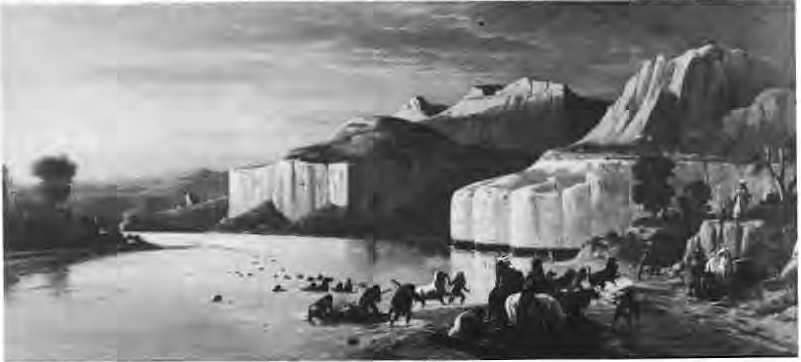
Images of the Western frontier by 19th-century painter Carl Wimar (1828-1862). considered one of the most important early artists who depicted the American West. will be on exhibit from Jan. 26- March 24, 1991, in the Washington University Gallery of Art in St. Louis.
The exhibit, titled “Carl Wimar: Chronicler of the Missouri River Frontier,” is the first comprehensive examination of his work and its social and historical context, as well as the first exhibit of his art in more than 40 years.
In conjunction with the exhibit, the gallery will host numerous educational programs, including lectures on various aspects of the exhibition and two related exhibits, one on early American prints by Karl Bodmer. George Catlin and others, and a second exhibit, held at the Missouri Historical Society, titled “Prints From the U.S. Geological Survey.” The culminating event of the exhibit will be a pow-wow, a native American dance and craft festival, on Saturday, March 23. Approximately 70 paintings, drawings and oil sketches borrowed from public and private collections throughout the United States will be featured in the exhibition, which is co-organized by the Washington University Gallery of Art and the Amon Carter Museum in Fort Worth, Texas, and co-curated by Joseph D. Ketner, Washington University gallery director, and Rick Stewart. curator of western painting and sculpture at the Amon Carter. “Wimar certainly created the finest images of the early frontier,” says Ketner. ”Despite a tragically brief career—he died at 34—Wimar painted a large number of significant works depicting life in the pioneer West.
It is our hope that this exhibit will help solidify Wimar’s place in American art history.” Many art historians consider Wimar to be one of the most important of the early frontier artists.
These artists, including noted American artists George Catlin. Alfred Jacob Miller, Seth Eastman and Swiss artist Karl Bodmer, traveled and painted along the trans-Mississippi River frontier prior to the mass settlement that followed the Civil War. Wimar’s work is perhaps less well known because it is so rare and infrequently exhibited. Known by his contemporaries as the “Indian painter,” in part because of his sharp features and dark, shoulder-length hair, Wimar is considered the signature painter of the wagon train attack. Well-known “cowboy” artist Charles M. Russell later was influenced by these images.
In addition to images of Indians, Wimar often painted the majestic Western vistas he saw on his travels. Wimar was born near Bonn, Germany, and emigrated to St. Louis with his family when he was 15.
He spent most of his life in St. Louis and traveling the Missouri River, returning to Germany for four years of study at the Dusseldorf Academy. Beginning in 1856, Wimar embarked on a series of summer trips up the Missouri River, where he sketched buffalo, landscapes and Plains Indian culture. Wimar also was one of the first artists to photograph the Plains Indians, but unfortunately none of those photographs survive. Near the end of his life, Wimar undertook a major commission to paint the interior dome of the Old St. Louis Courthouse.
He depicted four episodes in St. Louis and Missouri history: The Spanish discovery of the river; the French founding of St Louis; the British-Indian attack on the French; and the future of St. Louis as the point of westward expansion via the trans-continental railroad.
Original photograph caption
“Indians Crossing the Mouth of the Milk River” by Carl F. Wimar.
Originally published in The Times of Skinker-DeBaliviere, December 1990.
Read this article in the original newspaper issue.
Original source: SD_Times1990_12.pdf, printed page(s) 4; PDF page(s) 4.





