
Historical April 1986 report or notice. Original dates, prices and contacts describe the source period; current availability has not been established.
Have you ever heard of Bill James? How about sabermetrics? How about ‘the baseball abstract?
Well, a ‘treat awaits you if the answers to the above are “no.” James is a statistician who applies all kinds of arcane formulas and statistical analyses to baseball performance. (Hold on here, this column will not be about sports so keep reading even if you think that “football” is that part in your shoe between your toes and your heel.) James, for example, has a formula that lets him go back in time by using statistics to calculate the worth of baseball players in the 1920’s and compare them to today’s ball- • players. (Yes, we already know that today’s ballplayers use many more drugs, but he looks at on-field performance.) Here’s an example of a formula James uses to figure out a factor he calls “runs created”: (H + W – CS) × [TB + (.55 × SB)] / (AB + W) In the above equation, H = hits, W = walks. CS ‘= caught stealing, TB = total bases. SB = stolen bases, AB = at bats. Now, even seeing this, I don’t understand it!
It reminds me of my sophomore geometry class and I didon’t understand that either.
For all I know, James simply makes up the final figures without doing the computation; certainly no one I know will ever check his math. Anyway, what intrigues me about the James approach to baseball is the premise that all performance can be quantified. That is, you can take whatever happens on the field, assign a numerical weight to it, plug it in a formula, and you’ll get some number that . represents total worth.
With that final number you can compare different players, playersfrom different eras, different aspects of the game, and so on.
Well, I thought, if one can do that for baseball, why not apply the same reasoning to neighbors? That’s right, we may only go to a baseball game once or twice a year or not even like the sport, but we all have neighbors. Just think, with the right formula we could value the “goodness” of our neighbors as neighbors.
This wouldon’t be just the “neighborliness” or friendliness of those folks next door (although that might well be one factor in the equation), it would be their general over all worth as neighbors. Think how valuable this would be to real estate agents in assessing the value of a home! It’d give the old realtors’ adage of “location, location, location” new meaning. – I then began to think what factors ought to be included in the equation. Walks, hits, and at bats don’t seem quite appropriate James did convince me that one should always use research, so I called Cal Stuart. Cal, as you may know, is our resident expert on neighbors.
When he was executive director of the Skinker-DeBaliviere Community Council, Cal found out all the goodies and baddies about various neighbors, from barking dogs to abused spouses to wild kids.
While he no longer holds a public position, Cal holds the honorary title of “neighboring guru.” The following; then, is based on a discussion with Cal (although to keep his name pure, he’ will no doubt deny it!). Let’s begin by assuming that there are two basic kinds of neighbor traits: good and bad. See, that was pretty easy!
Now let’s try to list the good traits. What qualities would a good neighbor possess?
In order of importance, from most important – essential if one is going to be rated a truly good neighbor — to those that are desirable, here goes: A GOOD NEIGHBOR . .. loans you money with no interest and never expects to be paid back . . . loans you money with little interest and expects to be paid back … never borrows money . . goes grocery shopping for you . . offers to watch your kid/dog/plant while you’re away . . never parks in your parking space in snowy weather … accepts your U.P.S. parcels- if you are out . . . invites you to his parties . is willing to use his car to “hot shot” yours . . enjoys cutting grass and likes to do yours . always brings over some chocolate chip cookies after making same … and keeps his dogs curbed.
A BAD NEIGHBOR, on the other hand, is full of nefarious deeds.
In descending order, from worstest to just worst, a bad neighbor … borrows money . . . has wild, lewd, disgustingly decadent, all-night parties to which you’re not invited … piles junk and debris on his front porch … throws his beer cans over the fence into your yard (only when they’re empty).. . calls the police whenever you and a few associates are having a simple, pleasant evening . tells your friends that he’s never heard of you if they come to his door by mistake … has property which obviously is rundown from the outside (who really cares what the inside looks, like?).
I don’t think that anyone would argue with these lists.
They as Ed McMahon would say, cover everything anyone could possibly think about neighbors. (Note: these lists don’t apply in the suburbs or LaDue where the only knowledge one has of a neighbor, is through the messages on automobile bumper sticker;,.•.)„ How now, Brown Cow, to put all of these in a formula?
Here goes, get your pencil and paper ready.
First, go through the positive good neighbor list and decide which traits apply to your neighbor: Total the items and multiply by 1.0 if it’s a next-door neighbor.
If the person lives more than one house away, reduce by .2 for each house in between yours and his.
If the neighbor has a pet, subtract .3:3 for each animal that you see and .39 for each animal that you only hear; The final number is called the GN factor (GN for Good Neighbor). , Let’s now do the K (for kid) factor (This will obviously be subtracted from the P factor!) Assign a starting weight of 1.0 to each child living in the home (regardless of the child’s actual weight).
If the child is less than walking age, multiply by 5.
If the child is between walking age and adolescence, subtract .33.
If the child is an adolescent, subtract 2.5.
If the ‘child drives, subtract 14.1.
Now let’s look at the bad neighbor list. We’ll call this factor T, for Turkey. Add up the bad neighbor qualities, counting each trait as 3.0.
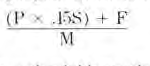
If the person is not a next-door neighbor, subtract .1. for each house away. Sure, the bad neighbor traits count for much more than the good neighbor traits, but, as Jimmy Carter said, “life isn’t fair.” If you’ve ever lived by a bad neighbor, you may think’ that 3.0 is too low! (If you live in an apartment building; multiply the bad qualities by X 10 and move!) As they say in the algebra books, our formula now looks like this: (GN — K) / T Take this quotient, we’ll call it P for Propinquity. P is then multiplied by .15 S -(S is for Sweat, determined by the number of days when the temperature is over 90 in the summer; boy that sure brings out. the worst in . people!) .P and S are then added to F (for which. as Robert Frost said. “make good neighbors- ) and divided by M (the number of days that a full moon. occurs on a weekend).
Once this is done, •the whole k kit-and-kiboodle is squared (if you’ve read this far you’re obviously square!).
We now have: ((P × .15S) + F) / M Well, friends and neighbors, there you have it: the definitive neighborhood assessment formula!
With but a-little time and energy you can assign a value to each and every one of your neighbors. Am I going to use it, you ask? Heck no, I don’t need to. Any neighbor that lives by me would have to have major problems or they’d have moved away by now! I call that the GT factor: GT -for GRAND-TURKEY!
Original photograph caption
Original “runs created” formula from the source column. The Times of Skinker-DeBaliviere, April 1986, page 8.

Originally published in The Times of Skinker-DeBaliviere, April 1986.
Read this article in the original newspaper issue.
Archival transcription note: Printed prose calls the quotient P for Propinquity; formulas and all source factors preserved without trying to make the satire mathematically consistent.
Original source: SD_Times1986_04.pdf, printed page(s) 8; PDF page(s) 8.
