Historical September 1977 People’s Clinic material. Original service details, health statistics and recommendations describe the period, not current medical guidance or present-day availability.
There are no complicated concepts to be understood in order to avoid most accidents. The majority of them can be avoided with a few basic rules, common sense and alertness. Of course this is one of those lectures you’ve heard before but here’s a suggestion: Act on one of the reminders listed below. Statistics say most of us will find a wanting item in at least one category. If you don’t, congratulations! You’re at least one up on the 4,000,000 people that have disabling accidents around the home each year. (A National Safety Council estimate)
IMMUNIZATIONS are an important front line prevention measure. They’re easy to get and effective. In fact, the State of Missouri considers immunizations important enough to require them before permitting kids to re-enter school this fall. The People’s Clinic will help out on the accessibility end of things by providing a FREE immunization clinic all day on Saturday, September 24th. It’s open to everyone.
It’s everyone, not just kids, who might need immunization updates. Those of you who are traveling outside the country probably already thought of it. But how about those of you staying home minding your own business and rehabbing houses with plenty of rusty nails? When did you have your last tetanus booster? All of you can come to the immunization clinic too.
There are other safety factors for rehabbers and smaller scale do-it-yourselfers to remember. For example, use masks when sanding. Wear hard shoes when moving things, cutting things or just walking around the work area laden with tools and scraps. Use those safety attachments even though they slow you down slightly. (Have you timed an emergency room visit lately?)
Even when thinking ahead and following good sense, accidents happen. How are you fixed for First aid? Do you have basic supplies? I won’t list them here because there’s a list in any good first aid book which is itself invaluable. The book can help you pick the right alternative in an emergency. However, some situations require immediate action. In which case, a book can’t adequately replace training which enables you to know what to do. For all those interested in a first aid class, the Clinic will hold one later this fall. Watch for the announcement in The Paper or call the clinic.
Finally, we must review the fire preparedness aspect of home safety. Do you have a fire extinguisher in the kitchen? Is it charged? Do you have an alternate exit from each room, does each household member know about it? Do you have unnecessary piles of combusitible materials around? Is any of your electrical equipment dangerously worn?
Please take the suggestion and act on one of these reminders or on another safety measure that wasn’t mentioned.
Original photograph caption
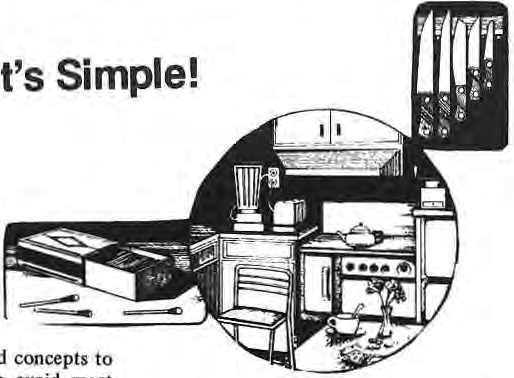
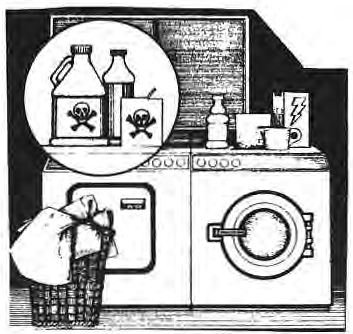
Original household-safety illustration. The Paper, September 1977, page 9. Artist not credited.
Originally published in The Paper, September 1977.
Read this article in the original newspaper issue.
Original source: SD_Times1977_09.pdf, printed page(s) 9; PDF page(s) 9.
