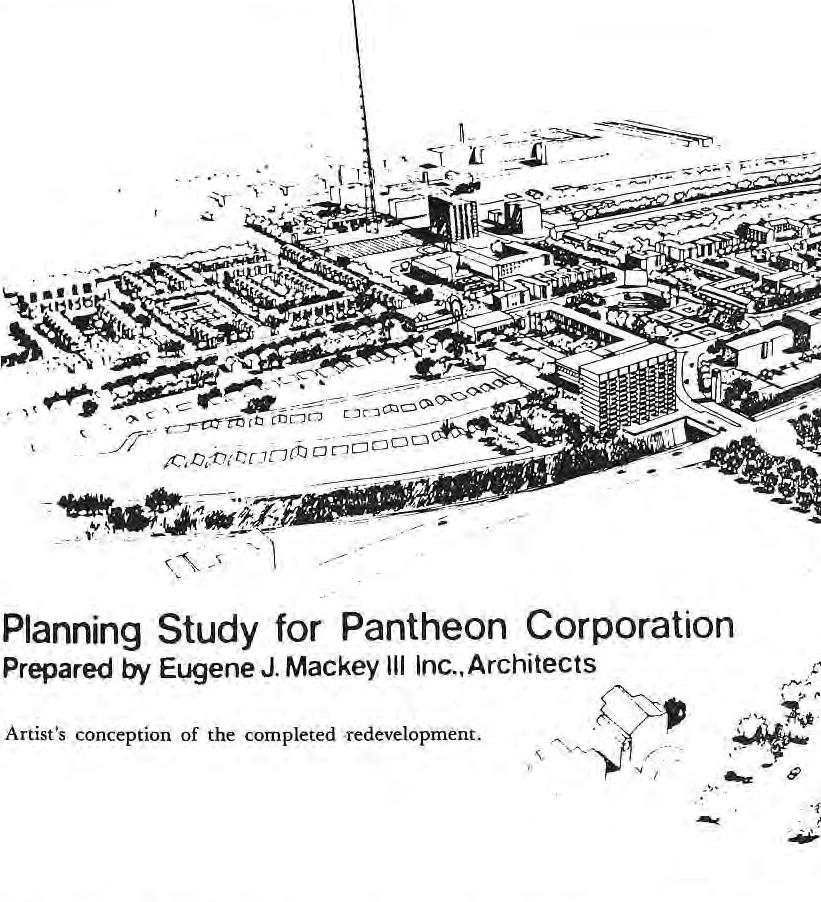
Late in 1970 residents of the SD area, especially those active on the SkinkerDebaliviere Community Council,.began to consider the prospect of redeveloping those blocks with the most deteriorated housing. The proposed redevelopment area became known as “the triangle area”. It began at the southwest corner of Delmar and DeBaliviere and extended south and west up to (but not including) DeGiverville, and included the 5700 blocks of Westminister, Kingsbury and McPherson and the 5800 and 5900 blocks of Washington.
This redevelopment seemed feasible under the Department of Housing and Urban Development’s 353 program, which allowed an area to be declared eligible for redevelopment (blighted) and new development begun. The developer had to have a plan approved by the then City Plan Commission and the Board of Alderman.
After a series of block and neighborhood meetings,
SDCC submitted a plan which was approved by the City Plan Commission. Public hearings were held and the redevelopment approved by the Board of Alderman in late ,February of 1971.
This approval gave SDCC six months to propose a specific plan for the area and get the approval of the City Plan Commission. SDCC called on Team 4, and urban planning firm. On a voluntary basis, Team 4 made a survey of the triangle area, mapping sound and unsound structures, etc. They also submitted a plan for rehabilitating sound structures and replacing the unsound. This plan followed the basic grid pattern of current streets and utilities, but replaced unsound buildings with two story townhouse buildings, mostly efficiency and onebedroom units. Provision was made for off-street parking, small green areas and walkways. (For those not familiar with the neighborhood; most of the 6- family units were built when garages were not considered necessary. Parking had become a nightmare to residents with cars.)
SDCC submitted this plan to local residents at a number of meetings and then to the City Plan Commission, which approved in October 1971.
The Skinker-DeBaliviere Community Council is an umbrella-type organization begun in the 1960’s to stabilize and improve the area. It consists of representatives from Washington Heights Neighbors, Rosedale-Skinker, the Parkview Association, Delmar Baptist Church, Grace Methodist Church, Grace and Peace Fellowship, St. Roch’s Church, St. Michael and St. George, and Washington University. Mr. Calvin Stuart is executive director. The Council office is at 6008 Kingsbury telephone Vo. 2-5122.
At this time, to supervise the redevelopment procedures, SDCC formed a wholly-owned subsidary, the
Kingsbury Redevelopment Corporation, a limited dividend corporation in the state of Missouri. Officers of that corporation were three members of the SDCC Board.
In late February of 1972, public hearings on the redevelopment plan were held before the Housing and Urban Development Committee of the St. Louis Board of Aldermen. There was some routine political pressure to have the plan disapproved, but the basic objection from local residents and other city residents came from two opposite camps. Some local residents along with Women for City Living and others, objected strenuously to the inclusion of any subsidized housing units in the plan. Another group, both local and other residents, felt that the plan did not include enough subsidized housing. (At that time this opposition was almost academic since federal regulation would have allowed few subsidized units because the area was already impacted with subsidized housing.)
The redevelopment plan as presented by
Kingsbury Redevelopment Corporation was approved by the Board of Alderman in May 1972, with the usual specification that work begin within eighteen months Kingsbury Redevelopment then began to raise the necessary $35,000 seed money and to hire professionals to handle the actual redevelopment.
About this time, the “freeze” on federal housing funds and mortgage money went into effect. The Department of Housing and Urban Development showed no interest in the area. Private lending institutions could not be convinced that a private not-forprofit corporation could successfully redevelop the area. Private development firms required far more cash upfront, at the beginning of the project, that SDCC could raise. Kingsbury Redevelopment Corporation got underway, however, and by late 1972 had hired Harvey Harris as attorney; Team 4 as planners; Anselvicius and Rupe as architects; and
Pantheon Corporation as developer; all on an if-come basis as far as payment went. KRC received several continuances from the City. The time pressure was relieved, but operations were made difficult because the contract between KRC and the City was lost three times going through channels at City Hall. Each time the requisite number of copies had to be duplicated and started again. Final approval came in April 1975.
By the end of 1974 members of the SDCC Board began to think that time had run out and that if a developer was not found soon, the project would have to be scrapped. Early in 1975 they learned that Mr. Leon Strauss of
Pantheon Corporation was interested in developing the entire 353 (blighted) area west of Union, between Delmar and the Forest Park Expressway. This included the ‘triangle area’ of SDCC. Mr. Strauss made a formal proposal for acquiring the right to work in this area to the SDCC Board in the spring of 1975. Members investigated and discussed the proposal and at a special open meeting in May 1975 gave Pantheon an option to purchase the rights of the Kingsbury Redevelopment Corporation.
A large factor in the Board’s decision was the knowledge that Pantheon had set up the proper structure to do the work and had financial support from the Mercantile Trust Company to begin. Since that time a large insurance company has expressed interest in lending financial assistance.
Another factor was the tentative but imaginative plan presented by Mr. Strauss to begin the redevelopment near Pershing and Union and move west along DeBaliviere and north to Delmar and Clara and then into the `triangle area.’ Relocation of residents in the ‘triangle area’ should not be a major factor as abandonment and fires have made many buildings uninhabitable. A generous estimate of 500 people has been made. Most of these live in owneroccupied duplexes along McPherson, which would not be affected by redevelopment.
SDCC was also impressed by Mr. Strauss’ enthusiastic reception to the proposed citizens’ advisory committee to work with Pantheon on the redevelopment planning.
In the early summer of 1975, Pantheon Corporation exercised its option and purchased the stock and rights of Kingsbury Redevelopment Corporation. Pantheon paid KRC debts of $7500 and pledged a cash payment of $5000 when development begins west of DeBaliviere. KRC and Pantheon obtained a 12 month time extension from the City in July. KRC then returned the seed money to those who advanced it and KRC continues to exist under the ownership of Pantheon Corp. Pantheon Corporation will now submit its total plan to the Community Planning and Development Agency and then to the Board of Alderman, as KRC did.
At the September 1975 meeting of the SDCC Board, approval was given to a resolution calling for the establishment of a Redevelopment Advisory Committee, a standing committee of the SDCC. This committee will represent local residents to Pantheon Corporation. The RAC is to consist of 4 members from Washington Heights, 3 members from Rosedale, 2 members from Parkview, and 2 members from the SDCC Board. The SDCC Board will appoint 1 member, the other being the executive director in a non-voting capacity. •
It is hoped that the Redevelopment Advisory Committee will be formed by the end of October 1975. It will then set up its own internal arrangements, meet with Mr. Strauss, and arrange for regular communication between developer and community.
Volunteers for service on the Redevelopment Advisory Committee are asked to contact their neighborhood organization officers or to call the SDCC office, Vo. 2-5122
Original photograph caption
Architect’s conception of the completed redevelopment, left portion. Planning study for Pantheon Corporation, prepared by Eugene J. Mackey III Inc., Architects. The Paper, October 1975, pages 4–5.
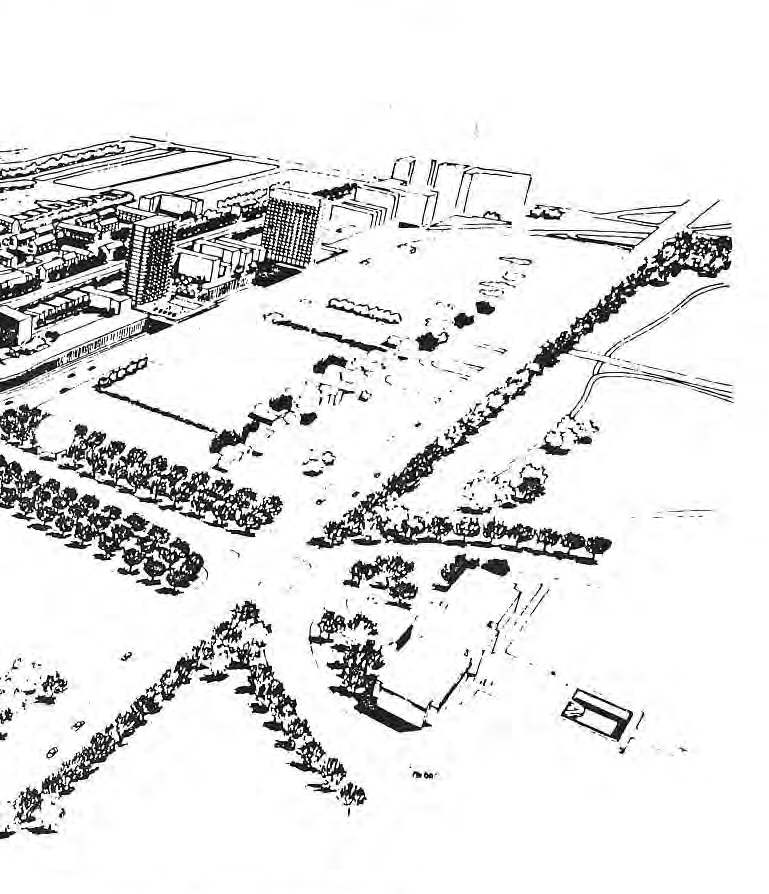
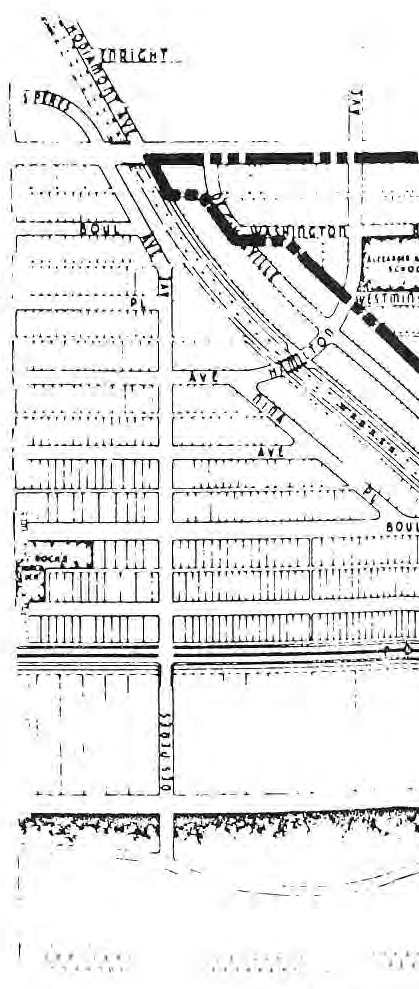
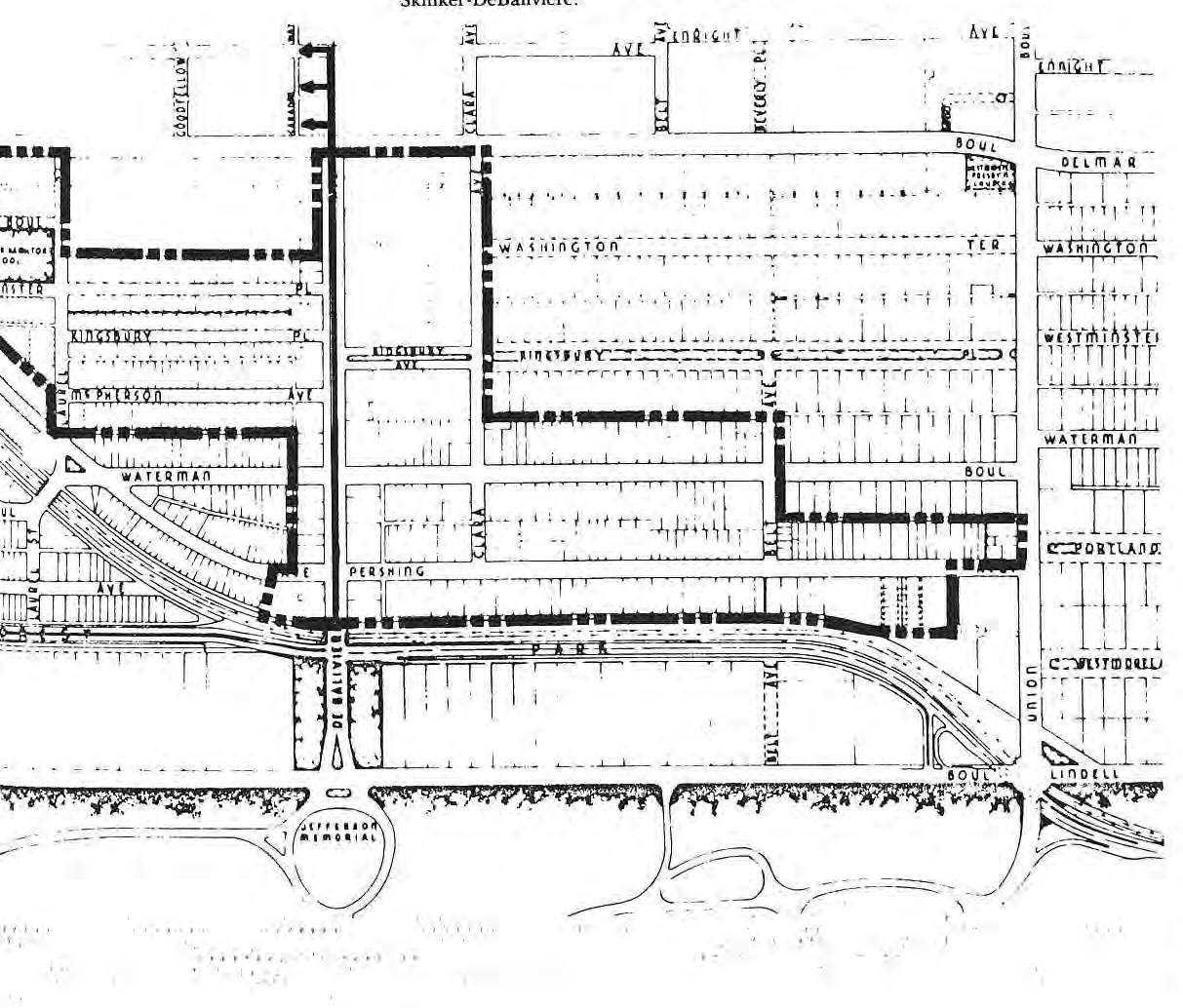
Originally published in The Paper, October 1975.
Read this article in the original newspaper issue.
Archival transcription note: The history describes the executive director as non-voting, whereas the accompanying committee rules permit voting in ties. Both printed accounts are preserved.
Original source: SD_Times1975_10.pdf, printed page(s) 4, 5; PDF page(s) 4, 5.





