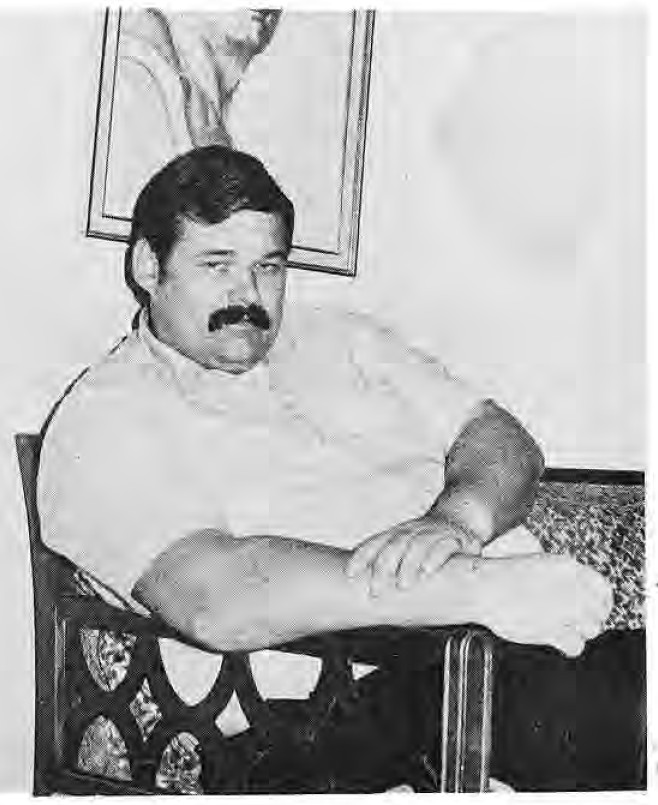
Jim L’Ecuyer has a great fondness for condemned buildings.
Jim, who has recently resigned as executive director of the Skinker-DeBaliviere Council, gets a glow in his eyes when he describes the dilapidated state of the apartment house he and his wife bought in 1966 when they first moved to this neighborhood.
“The building was condemned nothing but a shell,” he recalls. Today the apartment is one of the more attractive buildings on the 6000 block of McPherson with gold-painted brick and attractive black trim.
If he rapsodizes over his own property, he gets positively ecstatic when he describes one of the Council’s first housing ventures in the 5700 block of Westminster.
The Skinker-DeBaliviere Council got into the housing business in a rather round about way, according to Jim. “The Council was helping relocate people in derelict buildings
I got a complaint about a family of 12 in a building without heat. When we put pressure on the landlord who was in violation of the building codes, he sold to a speculator who intended to gloss over the building’s serious faults and rerent it. So we bought the buildings for $6,000 each — a very cheap price at that time,” he stated.
Then in the rennovation of the buildings Jim discovered his avocation. “I enjoyed it so much that I began to wish I had studied to be an architect.”
He has some definate theories on so-called public housing: “Too much rent-supplement and public housing is sterile looking, when for a few dollars more and sometimes the same amount, the contractor could create a much more attractive place to live.”
Jim practiced what he preached in the Westminster apartments. Using his extensive knowledge of building materials and costs, he directed the contractors to install. coppertone kitchens for only $15 more, had them lay an attractive dirt-hiding tile floor rather than the light-colored cheap marble floors common in most housing. It’s these little details that make the difference he maintains.
Because of the backwardness of the FHA office in St. Louis, rehabilitated housing has not been pursued the way it has in most other cities according to Jim. In fact, the Skinker-DeBaliviere area has 18 of the 27 units of rentsupplement apartments in the city of St. Louis. Other cities such as Boston have as many as 600 units.
Jim’s love of developmental housing is partially his reason for resigning from the Council after four and a half years. “West End Townhouse will now feel the need for rehabilitation with the Council sponsoring the work. West End will be doing the part that I like the best, working directly with the contractors, selecting materials and overseeing the property. West End has the virtue of being big enough and having enough money to make significant changes.”
Another hopeful sign as far as improving property in the area is what Jim sees as a change in attitude by the FHA office. “They are now considering rehabilitating housing where before they rejected it completely. Doors seem to be opening there.”
According to Jim another potentially good program which could help the area is the blight proposal up before the Board of Aldermen. Under this proposal the city dedares a certain area “blighted” and organizations such as West End Townhouse then submit competitive bids for redeveloping the area. Non-profit groups such as the Council could be the sponsoring organization.
Of his four and a half years he counts the support and organization of block units as one of the most important works of the Council. He recalls when he and Mrs. Blanche Reel were organizing blocks in the Washington Heights area. “Our lives were just one meeting after another,” he remembers. “Often each block would have two units, one for each side of the street. That has changed now.”
He also cites the work of the Police-Community Relations Citizens Committee as performing a necessary function in the community. “Burke Mees did an extraordinary job of heading that group. His statistics on crime helped us squelch rumors more than once.” To help cut the area crime rate Jim began a letter campaign to the Police Commissioners which eventually resulted in beat patrolmen for the area.
As could be expected Jim has some very definate ideas on the operation of the Council offices. Number one — there must be adequate money, a full-time administrative secretary to help the executive director and as many community developers as possible. “You cannot expect a skelton crew to solve $30,000,000 problems. Volunteer groups are necessary but they cannot be expected to maintain the momentum necessary to follow through on everything.
“The neighborhood institutions, while giving outstanding support, need to have more faith in the Council. Instead of setting up their own programs, they should first go to the Council and ask where the needs are. When they assign a person to work for the Council, that person should be directly responsible to the Council not to both the Council and the institution,” he says.
“We are lucky here,” he states, “to have churches and Washington University vitally interested in the Council and supporting it financially.”
“In order to progress, everyone needs to work through one organization (the Council),” he concludes.
John Roach described the job of executive director as “very bittersweet.” Jim explained, “people many times expected too much from the Council, which had And still has, very limited funds. It was frustrating at times, but never dull.”
As Jim talked, it became apparent that his deep involvement in the area was more than a job
Originally published in The Paper, October 1970.
Read this article in the original newspaper issue.
Original source: SD_Times1970_10.pdf, printed page(s) 7.
