Archival article — originally published in The Paper, April 1970. By Jody Creighton.
Archival date note: only the issue month or season is established. The first-of-month date used for chronological indexing is not a verified publication day.
Hamilton School has its problems — about 385 too many of them. This number represents the number of Hamilton children who must be bused out of the school every day.
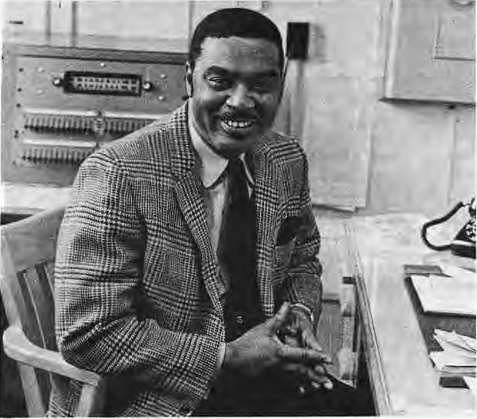
As principal Edgar A. Burnett explains, “Hamilton serves one of the most densely populated areas of the city.”
He could well have added that the school serves one of the largest school districts also. In fact, the school has so many branches that it is almost like a college campus, spread over the entire west end.
Total enrollment for the school is 1,968 children distributed thusly: Hamilton School – 1019; Hamilton Branch No. 1, 5858 Clemens – 244; Hamilton Branch No. 2, 5859 Clemens – 160; Hamilton Branch No. 3, 450 Des Peres – 160; Wheatly School, 4239 Papin St. (the entire school population consists of Hamilton children who are bused in each day) – 280; Mitchell School – 105 (bused).
Part of the overcrowding is due to a recent population explosion caused by families moving in from the projects and the West End Rehabilitation which forced many families to relocate near the school. Redistricting the Hamilton area at the present time would not help any since all nearby schools are filled to capacity.
EDUCATIONAL PROGRAMS
Despite the sheer weight of numbers, Hamilton has managed to keep its head above water with a number of innovative programs and services.
Two of the Branches (2 and 3) are special federally financed Rooms of 20 Schools for children who have average intelligence but are behind in school. In the Rooms of 20, where the classrooms are limited to 20, these pupils have a chance, under the guidance of skilled teachers to catch up in school.
At the main school, despite the huge enrollment, classes average 34 pupils per teacher.
Hamilton is one of the few schools in the city with a full-time guidance counselor, Mrs. Harriet St. James, who works with the children to help them understand their problems and build up their self-image.
In addition the school has two physical education teachers who teach three days a week and two vocal and instrumental music teachers who teach a day each.
Washington University has a special program called Triple T (Teachers of Trainers of Teachers) which is a federally-funded teacher training project. The net benefit for Hamilton students is that the apprentices not only take some of the load off the regular teachers, but they tutor children who need special help. In addition regular teachers receive free tuition at Washington U. Three regular teachers have received their masters under the program.
THE SCHOOL STAFF
The staff of the school termed “young go-getters” by Principal Burnett have organized the seventh and eighth grades into a semi-departmentalized program. In the morning the students have their regular home room teacher and in the afternoons they go to different classes in reading, math and language taught by staff members who are skilled in these fields.
In addition, the school has a math consultant, Mr. Virgil King, who comes once a week to work with the teachers and students in learning new techniques of teaching math. Teachers also use three SRA kits titled “We are Black.” The kits contain reading selections designed to help children develop a sense of pride in the Negro heritage.
V.I.P. PROGRAM
Several dedicated teachers stay after school. Mrs. Barbara Atwater sponsors an after-school Dramatics Club Tuesday and Thursday. Missouri University has an extension home economics program for sixth grade girls in grooming Wednesday after school. There is also an after-school dance class on Tuesdays. The physical education teachers sponsor after-school tumbling and folk dancing classes, as well as regular practice in volleyb. tumbling and basketball.
Adults who have not finished high school receive basic education in high school equivalency two nights a week on Tuesday and Thursday, under the V.I.P. program sponsored by the Human Development Corporation. Anyone interested in enrolling should call Pa 7-6170.
SPRING CONCERT
Presently the school is planning a series of spring concerts featuring Black musicians. The school will finance the concerts and other activities with $900 the school received recently from the Enright District Parent Congress to spend on educational programs for the entire school.
LACK OF FACILITIES
As for problems, Mr. Burnett lists the lack of facilities as the top problem which helps cause parent apathy. “We range from the worst cases of poverty to children who come from fairly affluent homes,” he states.
To get the parents from the poorer homes involved in the school is one of the toughest jobs the school faces. Recently, however, over 300 parents, many of whom came to the school for the first time, visited the school in order to get the child’s report card. Our parents never set foot inside the school door unless a child gets into difficulty. We want parents to feel free to visit the school any time. We can’t teach children in a vacuum. We need the help of the parents.”
Another major difficulty is the large number of transfers. Over one third of the entire student body moves at least once a year. This means new school, new classes and irrepairably lost educational time for the child.
Another problem is the lack of recreational facilities and supervision. The nearest playground is at Visitation Park at Belt and Cabanne.
NO PLACE TO GO
“Too, too many children have no place to go,” Mr. Burnett concludes, “Teenagers, especially, are just there — looking for someone to talk to – looking for something to fit into. And, of course, sometimes they get into trouble. I think if we as adults would try to develop rapport with these kids, listen to them and then help them find something they like to do — many of our teenage problems would be solved. I have confidence in them. Many have great leadership ability. This, if channelled right, could benefit the entire community.”
Read the original newspaper issue: Archive reader · Direct PDF fallback. Originally published in The Paper, April 1970, pages 6.
