The past session of the Board of Aldermen was a busy one and featured a number of legislative accomplishments. Among those which are of interest to the Skinker-DeBaliviere neighborhood are the passage of a comprehensive sign regulation ordinance, the first in the City’s history, which Alderman Richard Gephardt of the 14th Ward and I co-sponsored; passage of a comprehensive trash and litter regulation scheme; adoption of a number of redevelopment proposals, including those for the Washington University Medical Center, Maryland Plaza and several downtown projects; however, most important was the adoption of the ordinance authorizing application by the City for over $15,000,000. worth of Community Development Revenue Sharing money.
The passage of this ordinance, which followed hearings by the Housing and Urban Development Committee of the Board of Aldermen, of which I am a member, is particularly significant for Skinker-DeBaliviere since the application envisages a comprehensive street and city facility upgrading program in Skinker-DeBaliviere for the second year of Community Development Revenue Sharing and contains a contingency fund out of which a housing renovation fund should be made available to our area.
This proposal which was developed by Tom McPherron, who is a member of the Mayor’s Citizen Advisory Committee, with the co-operation of Cal Stuart and other members of the neighborhood, should provide the emphasis for further single family house renovation program in the area.
The upcoming session of the Board of Aldermen will feature the addition of three new Aldermen and a strengthened position for the younger members of the Board. Already there is a promised rules fight over the method of assigning Committee posts. Traditionally in the Board of Aldermen, 8 or 9 older Aldermen with long tenure have completely dominated committee deliberations. The so-called “Osborne Amendment”, which is a re-writing of Rule 19, would insure that all members of the Board would be able to participate in Committee deliberations and would have their share of Committee assignments. At this writing, it is yet unsure as to whether or not this amendment can be passed.
Most important for the upcoming session of the Board of Aldermen will be the new budget. The City has, over a period of years, and by various tricks of financial legerdemain balanced its budget by transfering funds between fiscal years, changing the dates of fiscal years, and other budgetary manipulations. The Mayor has proposed a similar set of manipulations for this year, but even with those adjustments there remains a significant gap between expected revenue and projected expenditures. In the budget deliberations so far, reductions have been proposed to neighborhood services in order to achieve as narrow a gap as currently faces this City.
However, the list of budget tricks and manipulations has about reached the end. Regardless of what is done this year, next year will face the administration and the Board of Aldermen with an enormous revenueexpenditure gap. At some time the government in this City and people are going to have to face the fact that we are performing some services which are so outrageous in cost and burden as to strain the fiscal ability of the City to the breaking point. This agonizing reappraisal, particularly in the area of health care and acute hospitals has been put off for a long time by the various manipulations which have been practiced.
The City of St. Louis has no need for two acute general hospitals, regardless of the statements that one reads in the paper; one hospital would be more than adequate to take care of the needs of the City. The City must provide for the integration of two different hospital complexes which are very different in history and tradition in the community. Despite the fact that both Starkloff Hospital and Homer G. Phillips Hospital have a largely black clientele, traditionally Homer G. Phillips has been regarded by the black community as “their” hospital. Accordingly, the medical schools who staff the Starkloff Hospital have confined their services to that hospital rather than to extend them to Homer G. Phillips. The proprietary attitude of much of the medical staff of Homer Phillips was felt to be inconsistent with the integration of that hospital into the general pattern of health care assistance provided by the 2 medical schools.
Against this background of history and community involvement, a proposal to close either one brings with it severe dislocation. This dislocation and community upset is compounded in the case of Phillips because the capacity of the Starkloff Hospital is larger than that of Homer Phillips, and the subsidiary services which are provided at Starkloff are superior in size and scope to those provided at Homer Phillips. For example, the major laboratory which serves both hospitals is located at Starkloff as are various other statellite activities. Therefore, the logical candidate for closure would be Homer Phillips but for the fact that institution has played such an important role in the City’s black community.
Despite all of this wrenching conflict, the problem must be faced in order to do anything about the financial crisis in which this City increasingly finds itself entangled. The fact of the matter is that the luxury of supplying two general hospitals is robbing money from neighborhood maintenance efforts, which those efforts can scarcely afford.
Original photograph caption
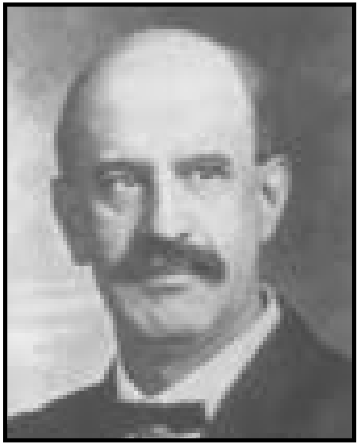
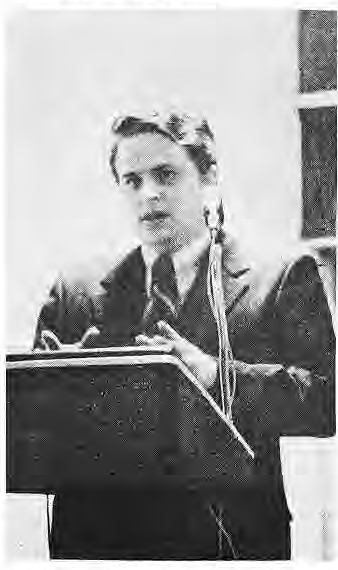
John G. Roach,28thWard Alderman. The Paper, May1975,page8. Photographer not credited.
Originally published in The Paper, May 1975.
Read this article in the original newspaper issue.
Original source: SD_Times1975_05.pdf, printed page(s) 8; PDF page(s) 8.