If you have decided to try gardening in whatever limited space is available, the next step is to provide a soil which will grow the plants you want. With ground that ranges from clay to concrete, depending on the rain, more than spading up the garden and planting seed is necessary. We have found composting to be the best answer to building fertile soil.
Compost is, very simply, decomposed organic matter. It is cheap, non-polluting, and natural. It is also easier to use and safer than commercial fertilizers. The best and most plentiful materials are leaves and grass clippings. Any kind of animal manure is helpful in generating heat to break down the other materials and to provide a source of nitrogen. Other sources of nitrogen, such as blood meal, cottonseed meal, or garbage, encourage a more rapid fermentation, building the compost heap to a temperature of 150-160 degrees, which kills disease organisms and weed seeds. Basically, a compost heap can include just about anything that will break down and is organic—weeds, wood ash, straw, finely ground limestone, rock phosphate, potash rock, sawdust, newspaper, and soil.
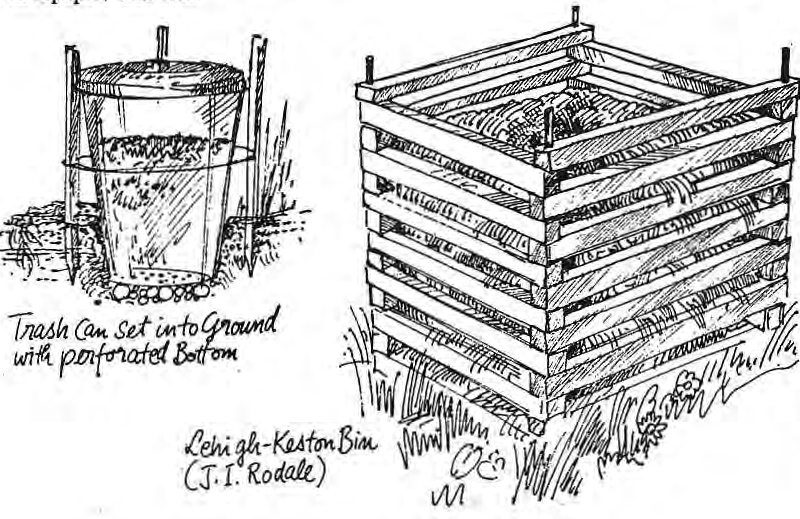
Composting does, however, require some forethought and time to prepare, particularly in urban areas where the compost heap is closer to your home and those of your neighbors. A compost pile is built in layers, the top layer always being soil or green matter. In the, city, a simple compost bin of wooden slats, fencing, concrete blocks, or even a trash can with a perforated bottom set into the ground can be used to discourage dogs and squirrels from digging. With these precautions, composting should not be a nuisance or a health hazard. If it is, you’re doing something wrong.
The pile should be turned over once a week to digest all the materials and should be kept moist, though not soaking wet. Depending on the weather, a good compost heap will produce useful fertilizer in 2-3 weeks in summer and progressively longer times in cooler weather. The real advantages to compost is that it provides a cheap but effective fertilizer which improves your soil in texture and nutrients with every shovelful that is applied. It turns garbage to groceries.
Original photograph caption
Original compost-bin drawings, including Lehigh-Keaton Bin (J.I.Rodale). The Paper, March1975,page7. Artist not credited.
Originally published in The Paper, March 1975.
Read this article in the original newspaper issue.
Original source: SD_Times1975_03.pdf, printed page(s) 7; PDF page(s) 7.