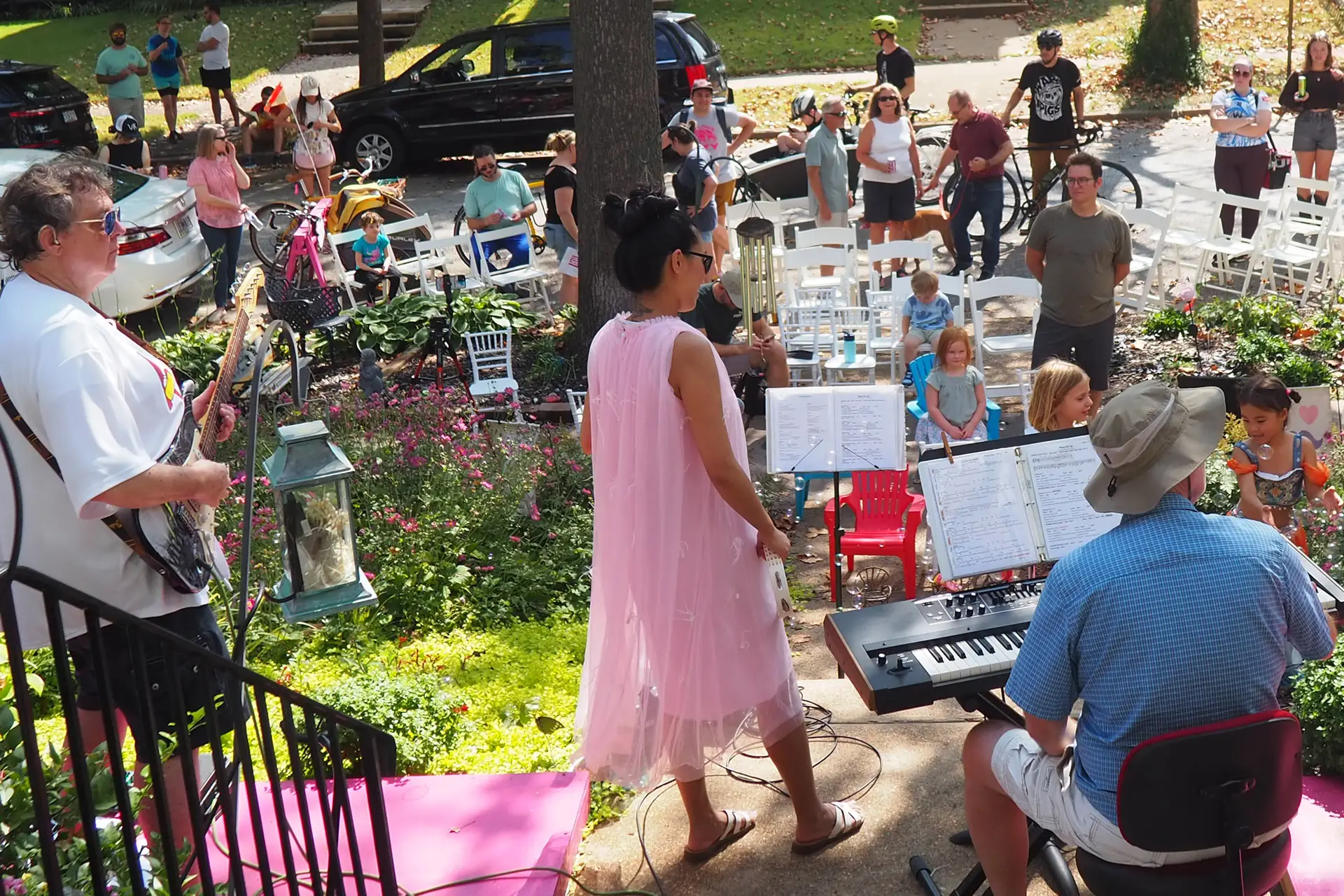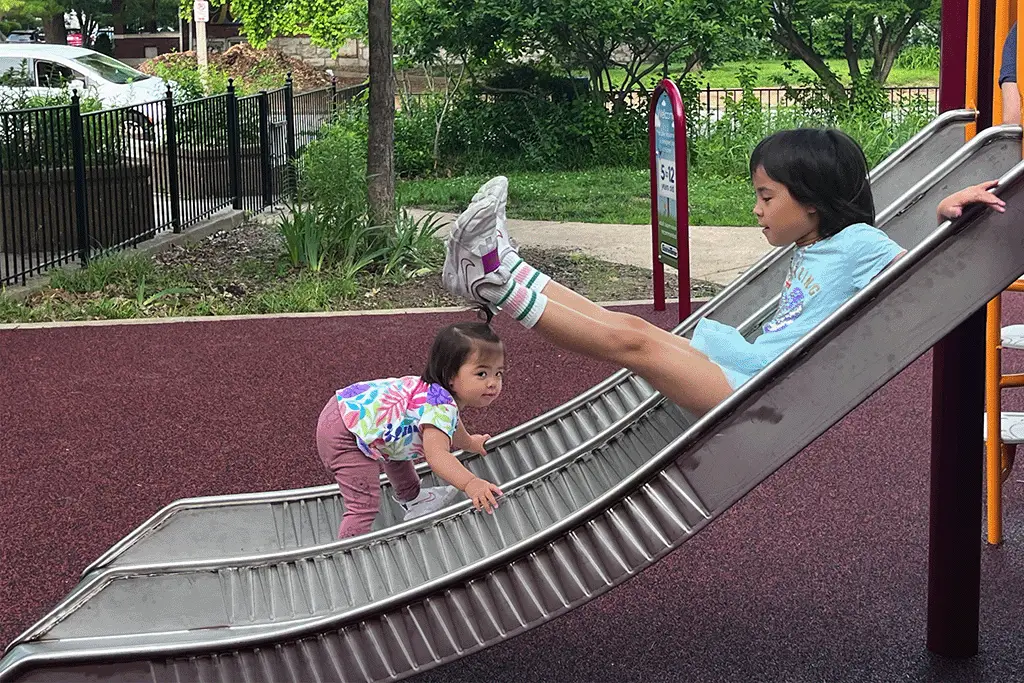
As our neighborhood is getting new playground equipment, it made me think about the importance of play but especially about the time children spend outdoors – playing.
Have you wondered about how much time your children spend outside? Do they get this opportunity at their school? When they get home do you encourage them to play outside for a bit? Do you engage them in gardening? Do you take a daily walk around the neighborhood? Do you visit the playground and have them meet other children who might be their neighbors?
Now that the daytime is longer, we have been taking walks after dinner, admiring the nature coming to life, noticing the changes in the yards of our neighbors and eventually ending up at the playground. Our son is always happy to meet other children playing there.
Our playground is lovely, having trees that keep shade, flowers and a wide variety of plants (thanks Andy for maintaining it so beautifully!)) – for such a small space it checks a lot of boxes. There is even a grassy area where you can have a picnic!
Being outdoors helps our children to feel restored, more attuned to what happens around them, it accentuates their senses and improves their capacity to focus.
Something very important that Kim John Payne mentions in his book “Simplicity Parenting” is that: “We don’t have to aim for spectacular natural settings. How satisfying it is for a child to know a place – however modest – and to know it deeply. To explore it repeatedly, to know it in all its seasonal faces, to identify one’s own favorite little spots and crevices in it. … Children feel more grounded to where they live when they can learn to identify some of the common plants, birds, and animals they see in their yards and neighborhoods.”
Richard Louv, author of “Last Child in the Woods,” suggest 100 nature activities we can initiate for our families, from which I will list five:
- Tell your children about your special childhood places in nature
- Help your child discover a hidden universe. Find a scrap board and place it on bare dirt. Come back in a day or two, lift the board and watch how many species have found their shelter there.
- Be a cloudspotter – a young person only needs a view of the sky.
- Make the “green hour” a new family tradition – give your children time for unstructured play and interaction with the natural world.
- Encourage your children to build forts and huts with sticks, rocks, boxes and ropes.
No matter the weather, let’s try to spend as much time as possible outdoors!